

Fire safety remains a critical concern for every business, especially as new risks and regulations emerge in 2026. Recent UK statistics reveal that 25 percent of dwelling fires in 2018/19 lacked alarms, contributing to 28 percent of fatalities. These numbers highlight the urgent need for robust protection.
Modern commercial fire alarm systems are evolving rapidly, with advanced technology and stricter legal requirements shaping the landscape. Staying informed about the latest solutions is essential for safeguarding both people and property.
This expert guide delivers a comprehensive overview of commercial fire alarm systems, empowering businesses to achieve compliance, reduce risk, and protect assets. Explore key areas including compliance, system types, design, installation, maintenance, cost factors, and future trends.
The Importance of Commercial Fire Alarm Compliance
Fire safety compliance is not just a legal requirement for UK businesses, but a vital measure to protect life, property, and reputation. With regulations frequently updated to address new risks, commercial fire alarm systems are at the heart of a robust safety strategy.

Legal Obligations and UK Standards
Every business in the UK must comply with the Regulatory Reform (Fire Safety) Order 2005 and meet the technical criteria set out in BS 5839-1:2023. These regulations require employers to carry out fire risk assessments and ensure that appropriate commercial fire alarm systems are installed and maintained.
Non-compliance can have serious consequences. Insurance claims may be denied if fire alarm systems are inadequate or missing. According to UK fire statistics 2025, 25 percent of dwelling fires in 2018/19 had no working alarms, resulting in 28 percent of fatalities. Penalties for non-compliance include heavy fines and potential business closure. For example, businesses have faced prosecution and closure following failed fire safety inspections.
| Compliance Risk | Potential Outcome |
|---|---|
| No fire alarm | Insurance invalidation |
| Failed audit | Fines, business closure |
| Missed review | Increased liability |
Meeting these standards with commercial fire alarm systems is essential for legal and operational peace of mind.
Early Detection and Life Safety
The primary role of commercial fire alarm systems is to provide early warning, enabling occupants to evacuate safely before conditions become critical. Early detection significantly reduces the risk of fatalities and injuries by alerting everyone in the building within seconds of smoke or heat detection.
Monitored systems can automatically notify emergency services, delivering an extra layer of protection. In one recent case, a warehouse fire was contained with minimal loss because the commercial fire alarm systems triggered an immediate response, ensuring staff evacuated and fire crews arrived rapidly.
The right system can mean the difference between a minor incident and a tragedy.
Asset and Business Continuity Protection
Commercial fire alarm systems do more than protect people—they also safeguard assets and business operations. Early alarm activation minimises property damage, allowing for a quicker response from staff and emergency services.
Insurance providers often offer reduced premiums to businesses with compliant commercial fire alarm systems, recognising the financial risk reduction. Many companies have saved thousands due to rapid detection and intervention. For instance, a retail store avoided catastrophic loss when its system detected a small electrical fire during off-hours, prompting a swift response that limited damage and downtime.
Investing in reliable systems is an investment in business resilience.
Industry-Specific Requirements
Certain sectors face even stricter requirements for commercial fire alarm systems. Healthcare, education, and listed buildings must adhere to enhanced standards, reflecting their unique risks and occupant needs.
Competitor sectors such as industrial, retail, leisure, and local authority sites also demand tailored solutions. Ensuring compliance in these environments is crucial for ongoing operations and public trust.
Types of Commercial Fire Alarm Systems
Choosing the right commercial fire alarm systems is essential for the safety and compliance of any business. With evolving risks and technologies, understanding the main system types helps you make informed decisions. Below, we outline the key categories and their features to guide your selection. For a deeper dive, you can explore this Commercial fire alarm system overview.
Conventional Fire Alarm Systems
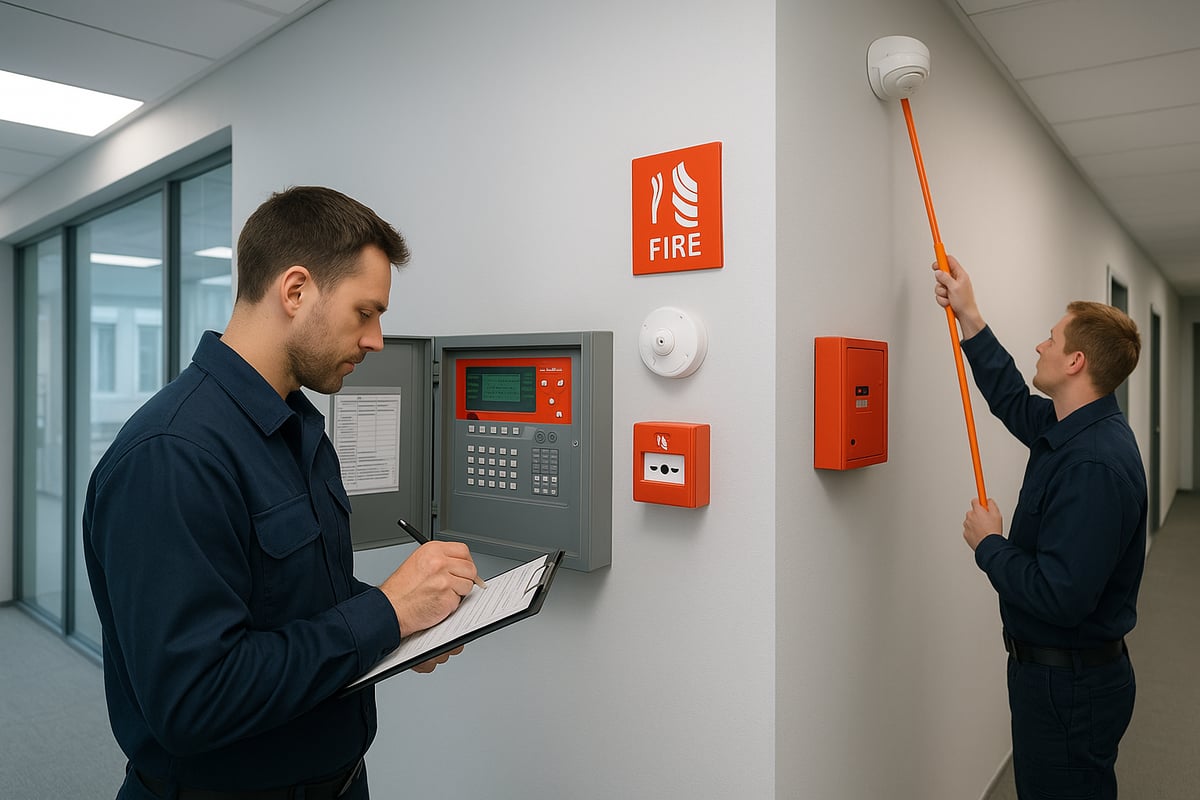
Conventional commercial fire alarm systems divide a building into distinct zones. Each zone is wired to the control panel, enabling staff to identify the general area of activation. This setup is cost-effective for smaller premises such as offices or retail spaces.
For example, a multi-storey office might use zoned detection to quickly locate which floor has triggered an alarm. This approach simplifies emergency response and minimises confusion.
However, these systems are less precise than more advanced options, as they indicate only the affected zone rather than the exact device location. For small to medium businesses prioritising budget and straightforward maintenance, conventional commercial fire alarm systems remain a solid choice.
Addressable Fire Alarm Systems
Addressable commercial fire alarm systems assign a unique address to each detection device. The system operates on a loop, supporting up to 99 devices per circuit, and provides pinpoint accuracy in identifying the exact location of an incident.
This level of detail is invaluable for larger or more complex sites. For instance, a warehouse equipped with an addressable system can rapidly isolate faults or alarms to a specific detector, ensuring swift action and minimising downtime.
Addressable commercial fire alarm systems also offer advanced fault isolation, reduced cabling, and easy expansion. These features make them ideal for businesses seeking scalability and enhanced safety monitoring.
Analogue/Intelligent Systems
Analogue or intelligent commercial fire alarm systems use sophisticated detectors that analyse environmental data. By continuously monitoring for changes in smoke, heat, or gas levels, these systems significantly reduce false alarms.
Communication protocols allow for real-time diagnostics and rapid response to genuine threats. Modern hotels often rely on analogue systems to meet their complex operational demands and provide guests with maximum safety.
With intelligent commercial fire alarm systems, facility managers can access detailed reporting and system health analytics, ensuring ongoing compliance and reliability.
Specialist Detectors and Devices
Specialist detectors within commercial fire alarm systems include heat, smoke, and carbon monoxide sensors, each designed for specific risks and environments.
Additional devices such as manual call points, voice evacuation systems, and interfaces for sprinklers further enhance protection. The right combination of specialist detectors ensures that commercial fire alarm systems are tailored to the unique needs of industrial, retail, or leisure settings.
Essential Components and System Design
A robust approach to commercial fire alarm systems begins with understanding their core elements and the principles guiding their design. Every business, regardless of size or sector, must ensure these systems are both comprehensive and compliant to safeguard occupants and assets.
Key Components of a Commercial Fire Alarm System
Commercial fire alarm systems are built from several essential parts, each with a unique role in protecting life and property. The main components include:
- Control panels: The brain of the system, managing all connected devices.
- Detectors: Smoke, heat, and carbon monoxide sensors, chosen for specific risks.
- Sounders and beacons: Audible and visual alarms to alert occupants.
- Manual call points: Allowing anyone to trigger the alarm in an emergency.
- Interfaces: Connecting with emergency lighting, fire suppression, or building management systems.
For example, a multi-storey office may use integrated voice evacuation and emergency lighting, ensuring a clear, safe exit route during incidents. Commercial fire alarm systems tailored to the building’s requirements offer both comprehensive coverage and reliable performance.
BS 5839-1:2023 Design Principles
The design of commercial fire alarm systems must follow strict standards to achieve compliance and optimal safety. BS 5839-1:2023 sets out the rules for system categories, installation, and certification. Professional design is vital—only a competent person should specify and certify the system. Categories range from L1 (maximum coverage) to M (manual only), each suited to different risks and layouts.
| Category | Description |
|---|---|
| L1 | Maximum life protection (all areas) |
| L2 | Enhanced coverage (escape routes, high-risk areas) |
| L3 | Escape routes and rooms opening onto them |
| L4 | Escape routes only |
| L5 | Customised, risk-specific |
| M | Manual call points only |
| P1/P2 | Property protection (total/partial) |
Design certificates are required for compliance, confirming the system matches legal and insurance obligations. For further detail on standards and compliance, see Fire alarm design standards.
Steps to Designing a Compliant System
Designing commercial fire alarm systems involves a clear, step-by-step process to ensure effectiveness and legal compliance:
- Fire risk assessment to identify hazards and protection needs.
- Site survey to understand the building’s layout and occupancy.
- System specification based on risk, category, and unique requirements.
- CAD design and technical drawings for precise installation.
- Approval and peer review by a competent person.
- Certification to demonstrate compliance.
Bespoke design is crucial, especially for heritage or listed buildings. For instance, wireless systems are often specified where cabling could damage historic interiors, allowing commercial fire alarm systems to meet both safety and preservation goals.
Logic Fire and Security: Your Design and Installation Partner
Logic Fire and Security provides complete solutions for commercial fire alarm systems, from design and supply to installation and maintenance. Accredited by BAFE, NICEIC, and NSI Gold, Logic delivers tailored systems for offices, warehouses, public sector, and blue chip clients.

Clients benefit from free site surveys, expert proposals, and ongoing support, ensuring both compliance and peace of mind. With a focus on bespoke solutions, Logic Fire and Security helps businesses protect people and property while meeting the highest industry standards.
Installation, Commissioning, and Integration
Successful deployment of commercial fire alarm systems begins with expert installation. Proper process ensures not only safety but also longevity and compliance. Every stage, from planning to integration, needs careful attention to detail.
Professional Installation Process
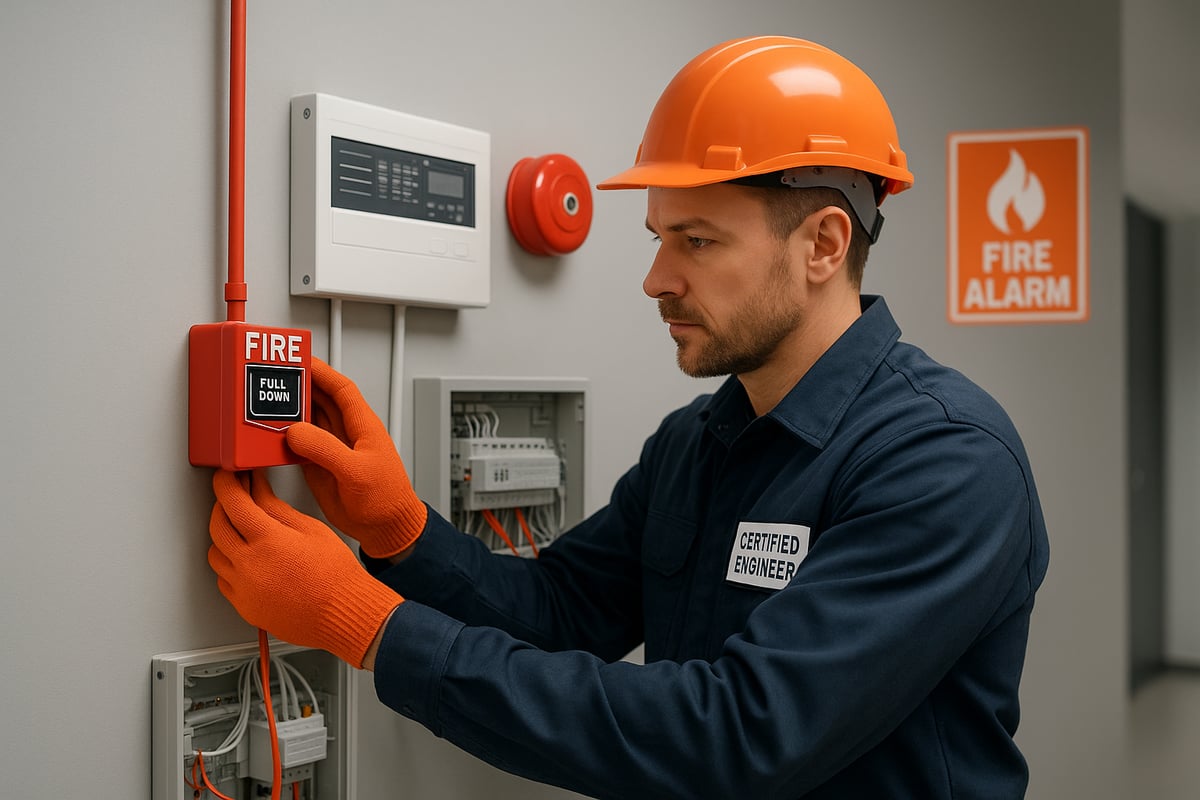
Professional installation of commercial fire alarm systems is essential for compliance and effectiveness. Certified engineers begin with a detailed pre-installation survey, identifying optimal device locations and safe cable routes.
Next, they handle cabling, ensuring minimal disruption, especially in busy retail or office environments. Technicians then install detectors, sounders, and manual call points, following the approved design plan.
The system is set up and thoroughly tested to confirm correct operation. Installers adhere strictly to health and safety regulations, as well as relevant construction standards. This meticulous approach ensures every component of commercial fire alarm systems functions as intended, reducing risk and ensuring business continuity.
Commissioning and Handover
Commissioning is a crucial step in ensuring commercial fire alarm systems are ready for use. Engineers programme control panels, verify device addresses, and test each component individually.
A cause-and-effect test follows, confirming the system responds correctly to every scenario, such as activating sounders when a detector senses smoke. Upon completion, comprehensive handover documentation is provided, including as-fitted drawings, user manuals, and compliance certificates.
Staff receive practical training, often integrated with a fire drill, ensuring everyone understands alarm procedures and responsibilities. This thorough commissioning process guarantees commercial fire alarm systems are compliant, reliable, and easy to operate from day one.
System Integration and Future-Proofing
Modern commercial fire alarm systems are designed for seamless integration with other building technologies. Fire alarms can connect with security systems, access control, and building management systems, creating a unified response platform.
Preparing for the future, these systems increasingly support IoT devices, wireless networking, and remote diagnostics. For example, a commercial campus may benefit from a single interface that manages both fire and security alerts, improving response times and operational efficiency.
By investing in integrated, future-ready commercial fire alarm systems, businesses ensure adaptability to evolving risks and technological advancements.
Maintenance, Monitoring, and Ongoing Compliance
Regular maintenance, proactive monitoring, and ongoing compliance are essential to the effectiveness of commercial fire alarm systems. These steps not only keep your premises safe but also ensure you meet legal and insurance requirements. Let us explore the critical elements that underpin a robust fire safety strategy for businesses in 2026.
Routine Maintenance and Testing
Routine maintenance is a legal requirement for all commercial fire alarm systems in the UK. Weekly, monthly, and annual checks are needed to ensure every component functions correctly. These include testing manual call points, sounders, and detectors, as well as inspecting batteries and keeping a detailed logbook.
Preventative maintenance, such as cleaning detectors and checking connections, helps reduce false alarms and system faults. Many businesses opt for maintenance contracts, which provide regular inspections and peace of mind. According to Fire alarm system inspections, keeping up with inspections is crucial for compliance and insurance validity.
A well-maintained commercial fire alarm system minimises business disruption, ensures rapid response, and keeps you compliant with UK fire safety law.
Remote Monitoring and Emergency Response
For many businesses, remote monitoring is a critical feature of commercial fire alarm systems. 24/7 alarm monitoring means that if a fire is detected, the system can automatically alert the emergency services, even outside working hours.
There are several types of monitoring available, including single path and dual path options, as well as GSM/IP connections for enhanced reliability. This approach ensures that even if one communication path fails, your premises remain protected.
A manufacturing plant recently benefitted from fire alarm monitoring services, receiving immediate fire brigade response and preventing significant loss. Remote monitoring provides confidence that your business is protected around the clock.
Fire Risk Assessment and System Review
Ongoing compliance for commercial fire alarm systems depends on regular fire risk assessments and system reviews. These should be conducted at least annually, or whenever there are changes to the building, occupancy, or after an incident.
Updating your fire alarm system to reflect new risks or regulations is vital. For example, an office refurbishment may require additional detectors or an upgraded control panel to remain compliant.
Routine reviews help identify potential vulnerabilities and ensure your commercial fire alarm systems continue to deliver effective protection as your business evolves.
Staff Training and User Responsibilities
Staff training is a core element of maintaining effective commercial fire alarm systems. Regular fire drills ensure employees know how to respond in an emergency and can evacuate quickly and safely.
Users are responsible for conducting weekly call point tests, recording results in the fire logbook, and reporting any issues promptly. Many providers offer tailored training services to help businesses meet these requirements.
By empowering your team, you strengthen the overall reliability and compliance of your commercial fire alarm systems.
Cost Factors, ROI, and Future Trends in Fire Alarm Systems
Choosing the right commercial fire alarm systems involves understanding a range of financial considerations, long-term benefits, and emerging trends. Businesses must balance upfront investment with ongoing value, compliance, and future resilience.
Factors Influencing System Cost
The cost of commercial fire alarm systems varies significantly based on several core factors. Building size and layout directly affect the number of detectors, call points, and sounders required. System complexity, such as integration with building management or security, adds to specification and installation costs.
Detector types also influence pricing, with advanced smoke, heat, or multi-sensor devices costing more than basic models. Compliance with the latest BS 5839-1:2025 fire alarm standards may require additional investment in certified equipment and professional design.
Installation, commissioning, maintenance, and regular monitoring fees should be factored into the total lifecycle cost. Systems for small offices may start from several thousand pounds, while large multi-site facilities can see costs reach into six figures.
| Factor | Impact on Cost |
|---|---|
| Building Size | More devices needed |
| System Complexity | Higher integration costs |
| Detector Types | Advanced = higher cost |
| Compliance Requirements | Certified design/equipment |
| Ongoing Maintenance | Annual service fees |
Return on Investment and Financial Benefits
Investing in commercial fire alarm systems delivers measurable financial and operational returns. Insurance providers often offer discounts for compliant, monitored systems, as they significantly reduce risk of major loss. Rapid detection and response limits property damage, minimising operational downtime and costly business interruption.
Robust systems also protect against regulatory penalties and reputational harm. The long-term savings from early detection and reduced insurance premiums often offset the initial outlay. A well-maintained alarm system can be the difference between a minor incident and catastrophic loss, making it a sound business case for any organisation.
Innovations and Future-Proofing for 2026
The landscape for commercial fire alarm systems is rapidly evolving. Wireless technology and IoT-enabled devices are making installations faster and more adaptable, especially in heritage or complex sites. AI-driven analytics and remote diagnostics offer predictive maintenance, reducing false alarms and improving reliability.
Rising fire risks, highlighted by the 2025 UK wildfires report, are driving demand for smarter, more robust detection. Regulatory standards are anticipated to become stricter, so early adoption of future-proofed systems positions businesses ahead of compliance curves.
Forward-thinking organisations are already benefiting from integrated solutions that unify fire safety, security, and building management to protect people, assets, and continuity.
As we’ve explored, staying ahead of evolving fire safety risks and compliance requirements is essential for protecting your people, property, and business reputation. Whether you’re considering a new system or reviewing your current setup, expert guidance makes all the difference. At Logic Fire and Security, we’re committed to providing tailored, BAFE-accredited solutions that meet the highest standards and future-proof your investments.
If you’d like practical advice or a clearer picture of your building’s requirements, why not Get a Free Site Survey?
Let’s make sure your business is safe, compliant, and ready for tomorrow.