

Fire safety remains one of the most critical aspects of commercial building management, with the right fire protection infrastructure potentially saving lives, protecting assets, and ensuring business continuity. Understanding the various types of fire fighting system available is essential for facilities managers, business owners, and safety professionals who must make informed decisions about protecting their premises. Modern fire suppression technology has evolved significantly, offering sophisticated solutions tailored to specific environments, from server rooms and manufacturing facilities to warehouses and office complexes.
Understanding Fire Fighting System Classifications
The types of fire fighting system deployed in commercial settings can be broadly categorised based on their suppression agent, activation mechanism, and intended application. Each system type addresses specific fire risks and environmental requirements, making proper selection crucial for effective protection.
Water-Based Fire Suppression Systems
Water remains the most commonly deployed fire suppression agent across commercial properties due to its effectiveness, availability, and relatively low cost. These systems utilise water in various forms and delivery methods to control or extinguish fires.
Key characteristics of water-based systems include:
- Proven effectiveness against Class A fires involving ordinary combustibles
- Cost-effective installation and maintenance requirements
- Wide availability of components and replacement parts
- Minimal environmental impact compared to chemical agents
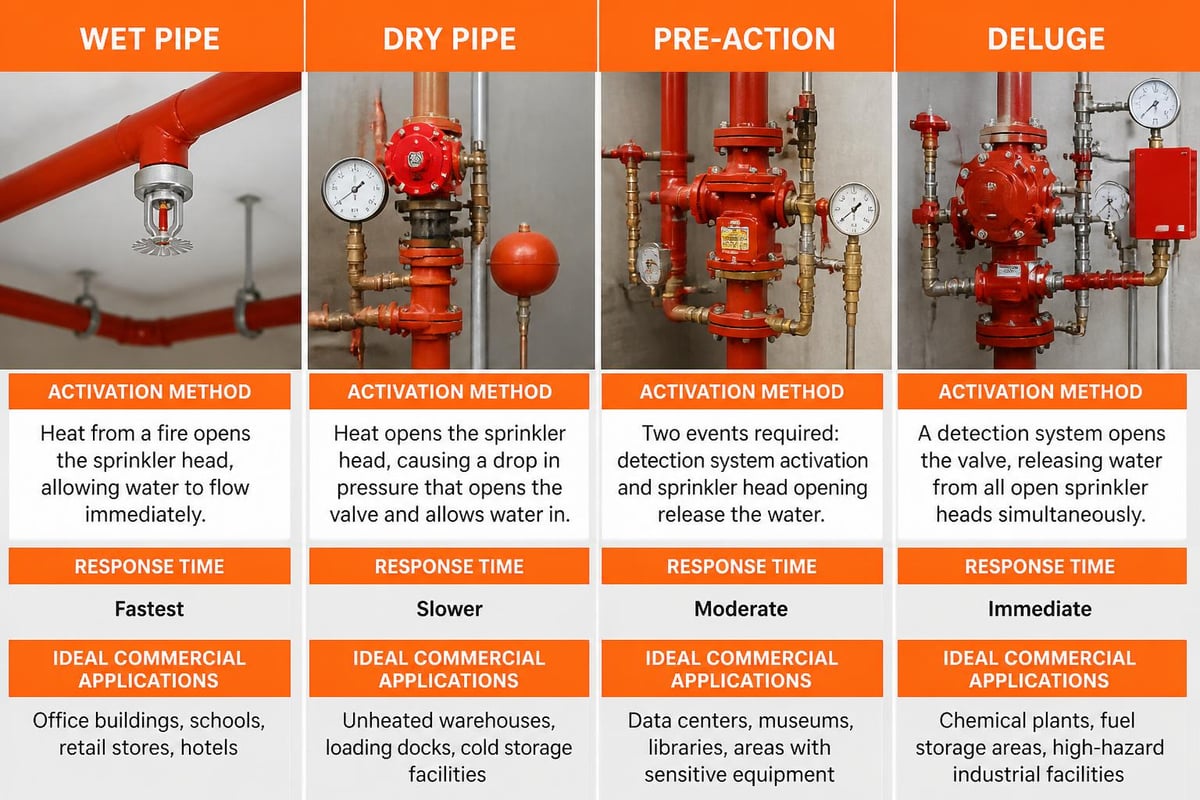
The primary types of fire fighting system within the water-based category include wet pipe, dry pipe, pre-action, and deluge systems. According to the National Fire Sprinkler Association’s classification system, each variant offers distinct advantages depending on environmental conditions and protection requirements.
Wet Pipe Sprinkler Systems
Wet pipe systems represent the most straightforward and widely installed types of fire fighting system in commercial buildings. These systems maintain water under pressure throughout the pipework at all times, enabling immediate discharge when a sprinkler head activates due to heat exposure.
The operational simplicity of wet pipe systems makes them highly reliable for most commercial applications. When fire generates sufficient heat to activate a sprinkler head, water flows instantly without requiring additional mechanical or electronic intervention. This immediate response capability proves invaluable in rapidly developing fire scenarios.
| Feature | Wet Pipe System | Dry Pipe System |
|---|---|---|
| Water presence | Continuous | Air/nitrogen charged |
| Activation speed | Immediate | 1-60 second delay |
| Freeze risk | High | Low |
| Maintenance | Simple | Moderate complexity |
| Cost | Lower | Higher |
Businesses operating in temperature-controlled environments typically favour wet pipe installations due to their reliability and cost-effectiveness. However, these systems prove unsuitable for unheated spaces where freezing temperatures could rupture water-filled pipes.
Dry Pipe and Pre-Action Systems
For commercial premises exposed to freezing conditions, dry pipe systems offer a robust alternative amongst the types of fire fighting system available. These installations maintain compressed air or nitrogen within the pipework instead of water, preventing freeze damage whilst maintaining fire protection capability.
Dry Pipe System Operation
When heat activates a sprinkler head in a dry pipe system, the air pressure drops, triggering a dry pipe valve to open and allow water to flow through the network. This process introduces a slight delay compared to wet pipe systems, but the trade-off enables fire protection in previously unprotectable spaces such as warehouses, car parks, and loading docks.
Pre-action systems combine elements of wet and dry pipe configurations, requiring two separate triggers before water discharge occurs. This dual-activation requirement makes pre-action systems ideal for environments where accidental discharge could cause significant damage, such as data centres, museums, and archives. Commercial fire detection systems often integrate with pre-action systems to provide the initial electronic trigger.
Pre-Action System Applications
Pre-action systems excel in protecting:
- Server rooms and telecommunications facilities
- Document storage areas and libraries
- Cold storage and refrigerated warehouses
- Heritage buildings and museums
- Pharmaceutical manufacturing clean rooms
The sophistication of these types of fire fighting system requires professional design and installation by qualified specialists who understand both fire dynamics and building systems integration.
Deluge Systems and Their Applications
Deluge systems represent a specialised category amongst water-based types of fire fighting system, designed for high-hazard environments requiring rapid, large-volume water application. Unlike conventional sprinkler systems where individual heads activate independently, deluge systems feature open sprinkler heads connected to piping that remains empty until activated.
When fire detection systems identify a hazard, deluge valves open simultaneously, flooding the entire protected area with water. This comprehensive approach proves essential in environments where fires spread rapidly or involve flammable liquids.
Manufacturing facilities handling combustible materials, aircraft hangars, and chemical processing plants frequently deploy deluge systems. The ability to deliver massive water quantities quickly helps prevent fire spread and provides critical cooling in high-temperature scenarios.
Gas Suppression Fire Systems
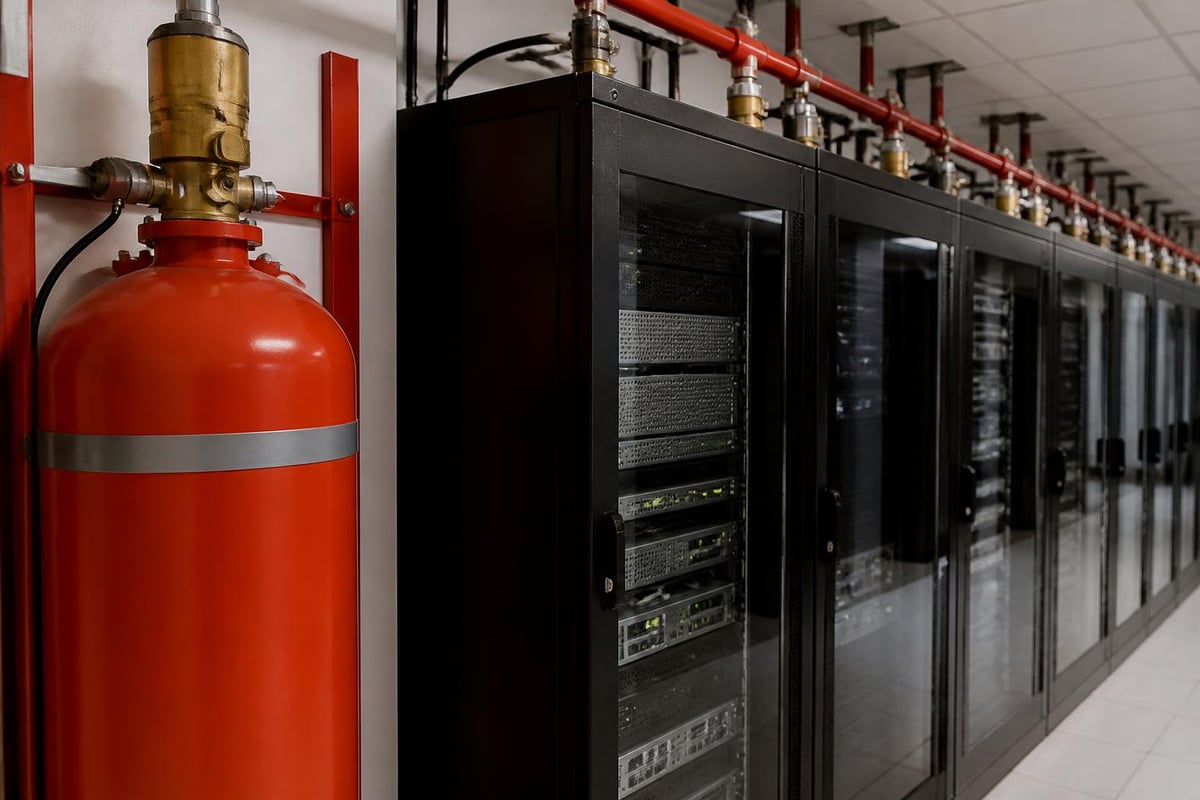
For commercial environments where water damage poses unacceptable risks, gas suppression represents one of the most sophisticated types of fire fighting system available. These systems extinguish fires by displacing oxygen or chemically interrupting the combustion process, all whilst leaving no residue that could damage sensitive equipment.
Gas suppression fire systems have become increasingly prevalent in technology-dependent businesses where equipment value and operational continuity outweigh the higher installation costs compared to water-based alternatives.
Inert Gas Systems
Inert gas systems utilise nitrogen, argon, or combinations thereof to reduce oxygen concentration below levels necessary to sustain combustion. These environmentally friendly agents pose minimal risk to occupants when properly designed, making them suitable for occupied spaces including:
- Data centres and server rooms
- Control rooms and telecommunications hubs
- Banking and financial trading floors
- Medical imaging facilities
- Research laboratories
The discharge process reduces oxygen levels from approximately 21% to between 12% and 15%, sufficient to suppress most fires whilst maintaining breathable conditions for brief periods, allowing safe evacuation.
Chemical Agent Systems
Chemical-based gas suppression systems employ agents such as FM-200, Novec 1230, or carbon dioxide to interrupt the chemical reaction of fire. These types of fire fighting system offer rapid suppression with minimal agent quantities, making them space-efficient for retrofit installations.
Carbon dioxide systems prove particularly effective in electrical equipment rooms and industrial applications, though their use in occupied spaces requires careful consideration due to suffocation risks at suppression concentrations. Modern alternatives like FM-200 and Novec 1230 provide effective suppression whilst maintaining better safety margins for human occupancy.
| Suppression Agent | Environmental Impact | Space Requirements | Discharge Time | Suitable for Occupied Spaces |
|---|---|---|---|---|
| Inert gases | Zero ODP, Zero GWP | High | 60-120 seconds | Yes |
| FM-200 | Zero ODP, Low GWP | Low | 10 seconds | Yes (limited exposure) |
| Novec 1230 | Zero ODP, Near-zero GWP | Low | 10 seconds | Yes (limited exposure) |
| CO₂ | Zero ODP, Minimal GWP | Moderate | 30-60 seconds | No (evacuation required) |
Foam Fire Suppression Systems
Foam-based systems constitute specialised types of fire fighting system designed primarily for flammable liquid fires (Class B) where water proves ineffective or potentially dangerous. These systems generate foam by mixing water with foam concentrate and aerating the solution, creating a blanket that suppresses vapour release whilst cooling the fuel.
Commercial applications for foam systems include:
Industrial facilities:
- Petroleum refineries and tank farms
- Chemical processing plants
- Aviation fuelling areas
- Paint manufacturing facilities
Storage operations:
- Flammable liquid warehouses
- Bulk fuel storage depots
- Hazardous material storage areas
The foam blanket prevents oxygen from reaching the fuel surface whilst simultaneously cooling the liquid, providing dual-action fire suppression. Different foam types suit specific applications, with aqueous film-forming foam (AFFF), alcohol-resistant foam, and protein-based foams each offering distinct advantages.
Understanding the various types of fire suppression systems helps facilities managers select appropriate protection for their specific hazards.
Water Mist Systems
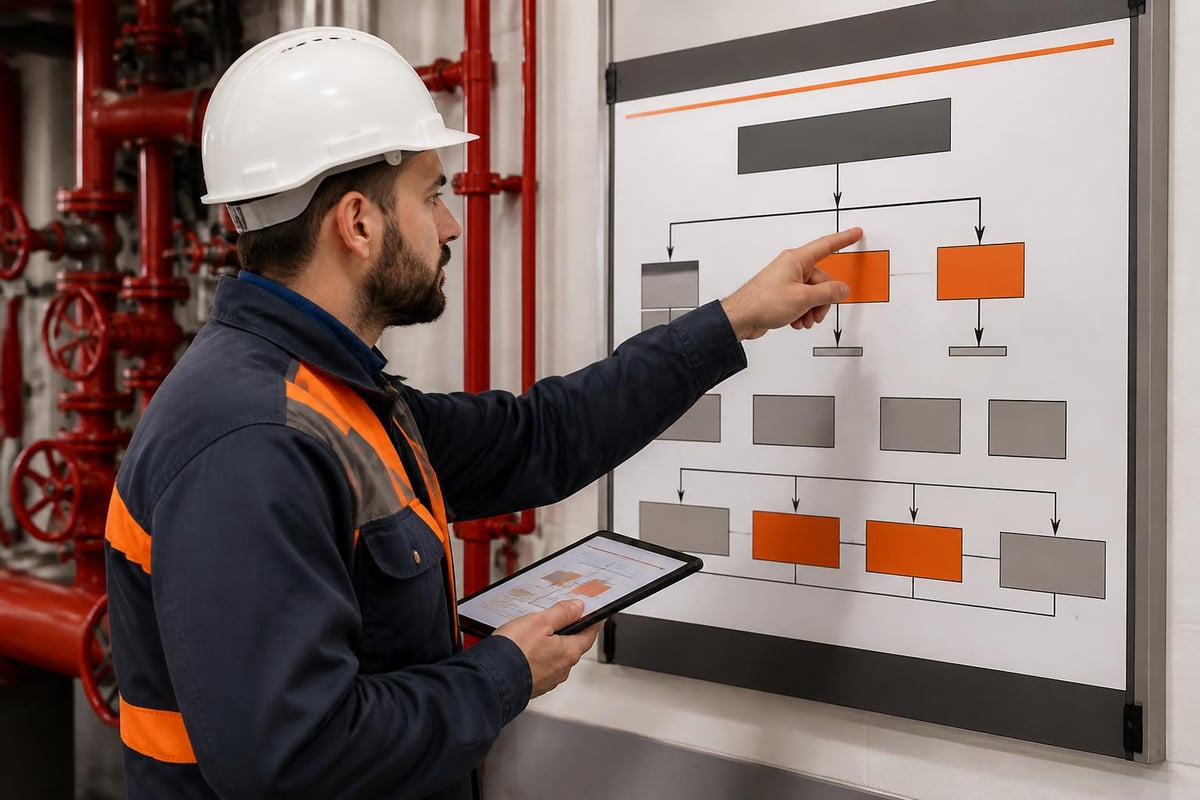
Water mist technology represents one of the newer types of fire fighting system gaining traction in commercial applications. These systems discharge ultra-fine water droplets that cool flames, displace oxygen through steam generation, and absorb radiant heat more efficiently than conventional sprinklers.
Advantages of Water Mist Technology
The fine droplet size enables water mist systems to achieve fire suppression using significantly less water than conventional sprinklers, minimising water damage whilst maintaining effectiveness. This characteristic makes water mist particularly suitable for heritage buildings, museums, and commercial properties where water damage presents significant concerns.
Water mist systems also demonstrate effectiveness against various fire classes, including Class A combustibles, Class B flammable liquids, and Class C electrical fires, providing versatile protection within a single system type. The reduced water consumption additionally benefits buildings with limited water supply infrastructure.
Installation considerations include:
- Higher pump pressures compared to conventional sprinklers
- Specialised nozzle technology requiring precise specification
- Pipe sizing calculations based on unique hydraulic characteristics
- Integration with building management systems for monitoring
Kitchen Fire Suppression Systems
Commercial kitchens present unique fire hazards requiring specialised types of fire fighting system designed specifically for cooking appliances and grease fires. These systems typically employ wet chemical agents that react with cooking oils to create a foam blanket, suppressing flames whilst preventing re-ignition.
Modern kitchen suppression systems integrate with cooking equipment controls, automatically shutting down gas or electricity supplies when activated. This integration prevents fuel from continuing to feed the fire after suppression discharge.
Restaurant chains, hotel kitchens, hospital catering facilities, and commercial food preparation operations must install kitchen-specific suppression systems to comply with building regulations and insurance requirements. These systems require regular professional maintenance to ensure nozzles remain unobstructed and chemical agents maintain proper concentration.
Fire alarm systems often incorporate kitchen suppression system activation into building-wide notification protocols, ensuring appropriate emergency response.
Hybrid and Combined Systems
Sophisticated commercial premises increasingly deploy hybrid approaches combining multiple types of fire fighting system to address diverse protection requirements within a single facility. A modern office complex might utilise wet pipe sprinklers in general areas, pre-action systems in server rooms, and gas suppression in telecommunications equipment spaces.
System Integration Strategies
Effective integration requires careful coordination between different system types to prevent conflicts whilst maximising protection. For instance, gas suppression systems in computer rooms should integrate with HVAC controls to shut down air handling during discharge, preventing agent dispersal before suppression occurs.
Building management systems increasingly coordinate various fire protection elements, monitoring system status, controlling activation sequences, and providing centralised alarm management. This integration enables faster emergency response whilst simplifying maintenance scheduling across multiple system types.
Selecting Appropriate Fire Fighting Systems
Determining which types of fire fighting system suit particular commercial applications requires comprehensive assessment of multiple factors including building construction, occupancy classification, protected contents, environmental conditions, and regulatory requirements.
Critical selection criteria include:
- Fire hazard classification and potential fuel sources
- Building occupancy patterns and evacuation capabilities
- Environmental conditions (temperature, humidity, contamination)
- Protected asset value and water damage sensitivity
- Regulatory compliance requirements and insurance specifications
- Maintenance accessibility and ongoing operational costs
- System reliability and response time requirements
Professional fire safety consultants conduct detailed risk assessments to identify optimal protection strategies. The assessment process examines fire load, compartmentation, means of escape, and external firefighting access, developing comprehensive protection specifications aligned with both regulatory compliance and business continuity objectives.
Companies like Logic Fire and Security bring extensive experience in designing integrated fire protection solutions that balance effectiveness, compliance, and operational efficiency for commercial clients.
Regulatory Compliance and Standards
All types of fire fighting system installed in commercial premises must comply with relevant British Standards, building regulations, and fire safety legislation. The Regulatory Reform (Fire Safety) Order 2005 places responsibility on business owners to ensure adequate fire safety measures, including appropriate suppression systems.
Key Standards and Regulations
British Standards provide detailed specifications for design, installation, and maintenance of various system types:
- BS EN 12845: Fixed firefighting systems – Automatic sprinkler systems
- BS 5306: Fire extinguishing installations and equipment on premises
- BS 7273: Code of practice for operation of fire protection measures
- BS 9251: Fire sprinkler systems for domestic and residential occupancies
Professional installation companies must demonstrate competence through industry accreditations and third-party certification schemes. Quality and accreditations provide assurance that fire system installers meet required professional standards.
Regular inspection and maintenance ensure systems remain operational throughout their service life. Different types of fire fighting system require specific maintenance protocols, with frequencies ranging from weekly testing for critical systems to annual comprehensive inspections for standard installations.
Maintenance and Testing Requirements
Proper maintenance proves essential for ensuring all types of fire fighting system remain operational when needed. Neglected systems may fail during emergencies, potentially resulting in catastrophic consequences including loss of life, property damage, and business interruption.
Routine Maintenance Schedules
Water-based systems require regular inspections of valves, gauges, piping, and sprinkler heads to identify corrosion, leakage, or mechanical faults. Quarterly inspections typically examine system pressure, alarm device functionality, and control valve accessibility.
Gas suppression systems demand more frequent attention due to their complexity and the critical nature of protected assets. Monthly inspections verify cylinder pressure, control panel operation, and detection system functionality, whilst annual maintenance includes comprehensive testing of all system components.
| System Type | Weekly Checks | Monthly Inspections | Quarterly Service | Annual Testing |
|---|---|---|---|---|
| Wet pipe | Visual inspection | Alarm tests | Valve operation | Full flow test |
| Dry pipe | Gauge readings | Air pressure verification | Trip tests | System drainage |
| Gas suppression | Panel status | Cylinder pressure | Detection tests | Full discharge simulation |
| Foam systems | Visual inspection | Concentrate testing | Proportioner calibration | System flow test |
Professional maintenance contracts ensure compliance with manufacturer recommendations and insurance requirements. Fire alarm monitoring services provide continuous oversight, immediately alerting maintenance teams to system faults requiring attention.
Cost Considerations and Return on Investment
Investment in appropriate types of fire fighting system represents significant capital expenditure, particularly for comprehensive protection across large commercial premises. However, the costs of inadequate fire protection far exceed installation expenses when considering potential losses from uncontrolled fires.
Evaluating Total Cost of Ownership
Initial installation costs vary substantially between system types, with basic wet pipe installations representing the most economical option and sophisticated gas suppression systems commanding premium prices. However, total cost of ownership includes ongoing maintenance, testing, and potential replacement expenses over the system’s operational lifetime.
Water damage from sprinkler activation, whilst minimal compared to fire damage, may impact business operations and asset replacement costs. Gas suppression systems eliminate water damage concerns but require more expensive maintenance and agent replacement following discharge.
Insurance premiums typically reflect fire protection adequacy, with comprehensive systems qualifying for reduced rates that partially offset installation costs over time. Additionally, effective fire protection preserves business continuity, preventing the revenue losses and reputation damage associated with extended operational interruptions following fire incidents.
Emerging Technologies and Future Trends
Innovation continues advancing the capabilities and efficiency of various types of fire fighting system deployed in commercial settings. Smart detection technologies, artificial intelligence algorithms, and enhanced suppression agents promise improved protection whilst reducing false alarms and minimising environmental impact.
Wireless detection networks simplify installation in heritage buildings and retrofit applications where conventional wiring proves challenging. These systems integrate with building management platforms, providing real-time monitoring and predictive maintenance capabilities that identify potential failures before they compromise protection.
According to research into autonomous fire fighting systems, emerging technologies may eventually incorporate robotic response capabilities for industrial applications, though human oversight remains essential for ensuring appropriate emergency response in occupied commercial premises.
Environmental considerations increasingly influence system selection, with regulations phasing out suppressants with high global warming potential. Modern alternatives demonstrate comparable or superior suppression performance whilst minimising environmental impact, aligning fire protection strategies with broader sustainability objectives.
Understanding the diverse fire fighting system types, components, and building design integration enables informed decision-making that balances protection effectiveness, regulatory compliance, and operational efficiency.
Selecting and maintaining appropriate types of fire fighting system requires professional expertise to ensure optimal protection aligned with specific commercial requirements. Logic Fire and Security specialises in designing, installing, and maintaining comprehensive fire protection solutions for businesses throughout the UK, working with Blue Chip companies and public agencies to deliver reliable systems that safeguard lives, protect assets, and ensure regulatory compliance. Contact Logic Fire and Security today to discuss your commercial fire protection requirements with experienced professionals who understand the complexities of modern fire safety systems.