


The safety and security of commercial premises depend on more than just installing advanced systems. For businesses across the United Kingdom, effective security monitoring services represent the critical difference between detecting threats and experiencing devastating losses. These professional services provide round-the-clock surveillance, immediate threat response, and comprehensive oversight of fire detection, intrusion alarms, CCTV networks, and environmental hazards. As regulatory requirements intensify and operational risks become increasingly sophisticated, understanding how security monitoring services function has become essential for business leaders, facilities managers, and security professionals.
Understanding Security Monitoring Services in Commercial Environments
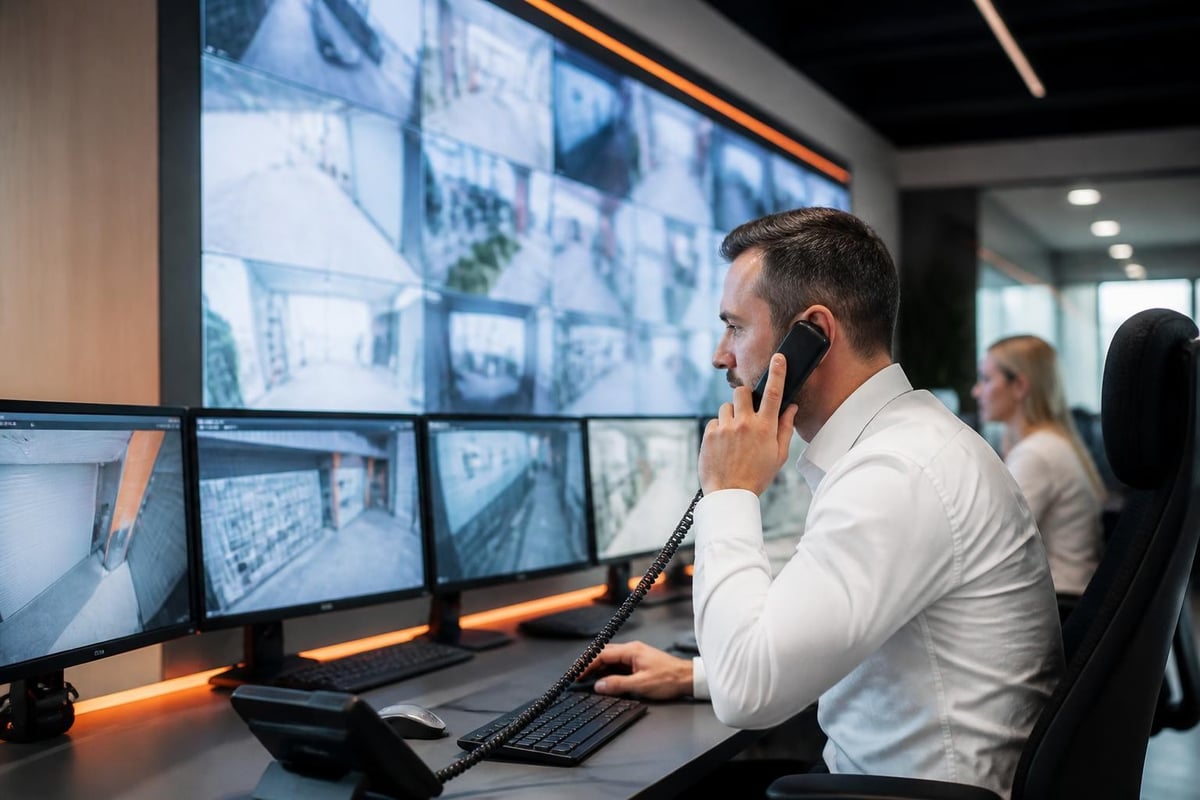
Security monitoring services encompass the continuous surveillance and management of integrated security systems protecting commercial facilities. Unlike basic alarm installations that simply sound when triggered, professional monitoring involves trained operators at approved receiving centres who respond to alerts, verify incidents, and coordinate appropriate emergency responses. These services form the backbone of comprehensive security strategies for offices, manufacturing facilities, warehouses, retail establishments, and critical infrastructure sites.
The fundamental architecture of security monitoring services connects on-site detection equipment with off-site monitoring stations through dedicated communication pathways. When sensors detect fire, intrusion, environmental anomalies, or system failures, signals transmit immediately to monitoring centres where operators assess the situation according to established protocols. This continuous oversight ensures that businesses benefit from professional vigilance even outside operating hours, during holidays, and when premises stand vacant.
Core Components of Effective Monitoring Systems
Professional security monitoring services integrate multiple technological layers that work cohesively to protect business assets:
- Signal transmission infrastructure connecting on-site systems to monitoring centres via IP networks, cellular pathways, or redundant communication channels
- Alarm receiving equipment that processes signals from fire panels, intrusion detectors, CCTV systems, and environmental sensors
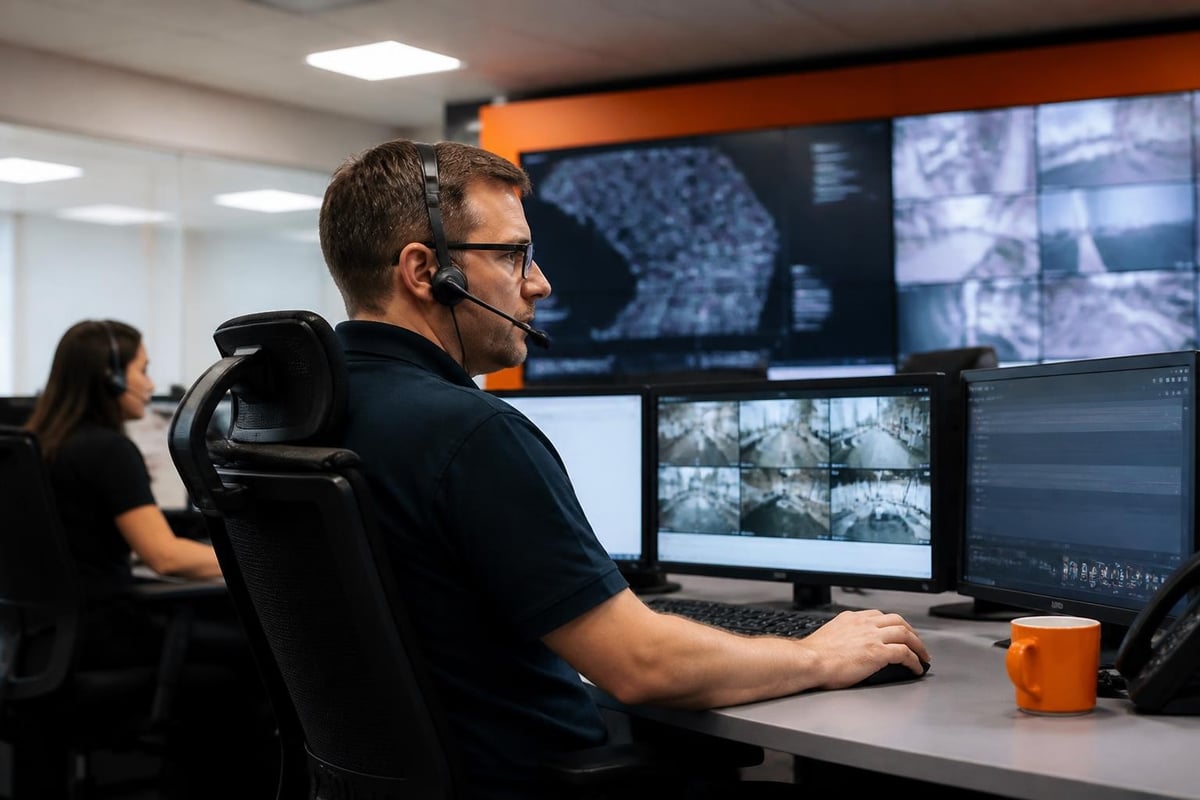
- Operator workstations equipped with geographic information systems, building floor plans, and contact escalation procedures
- Incident management software that logs events, tracks response actions, and generates compliance documentation
- Communication systems enabling operators to contact emergency services, key holders, and designated personnel
The National Cyber Security Centre emphasizes that effective logging and monitoring practices form essential elements of comprehensive security strategies, highlighting the importance of systematic oversight across all protection layers.
Types of Commercial Security Monitoring Services
Different business environments require tailored monitoring approaches that address specific operational risks, regulatory obligations, and protection priorities. Understanding these distinct categories helps organisations select appropriate services that align with their security objectives.
Fire Alarm Monitoring
Fire detection monitoring represents perhaps the most critical security monitoring service for commercial premises. When fire alarm panels detect smoke, heat, or manual activation, signals transmit instantly to monitoring centres where operators follow strict protocols. These procedures typically involve verifying the alert, contacting designated personnel, and immediately notifying fire and rescue services. Fire alarm monitoring services provide businesses with regulatory compliance whilst ensuring life safety systems receive professional oversight around the clock.
Modern fire monitoring integrates with building management systems, enabling operators to identify specific detector zones, acknowledge alerts, and track system health remotely. This integration proves particularly valuable for multi-site organisations requiring centralised oversight across dispersed facilities.
Intrusion Detection Monitoring
Commercial intrusion monitoring protects business premises from unauthorised access, theft, and vandalism. Intruder alarm monitoring connects door contacts, motion detectors, glass break sensors, and perimeter protection devices to monitoring centres that respond immediately to activation events. Operators distinguish between genuine security breaches and false alarms through verification procedures, which may include audio monitoring, video confirmation, or sequential sensor analysis.
The effectiveness of intrusion monitoring depends significantly on proper system configuration, including correctly programmed entry and exit routes, appropriate detection zones, and accurate contact information for response personnel. Businesses benefit from reduced false alarm rates whilst maintaining robust protection against security incidents.
Video Surveillance Monitoring
CCTV monitoring services extend beyond passive recording to provide active surveillance and incident verification. Monitoring centres receive video feeds that operators can access when alarms trigger, enabling visual confirmation before dispatching emergency services. This verification capability dramatically reduces false alarm responses whilst providing valuable evidence for incident investigation.
Advanced video analytics now enable automated detection of unusual behaviours, loitering, unauthorised area access, and crowd formation. These capabilities prove particularly valuable for retail environments, logistics facilities, and public-facing premises where proactive surveillance enhances both security and operational efficiency.
| Monitoring Type | Primary Function | Typical Response Time | Regulatory Requirements |
|---|---|---|---|
| Fire Alarm | Life safety protection | Immediate (seconds) | Mandatory for most commercial premises |
| Intrusion Detection | Asset protection | 30-60 seconds | Required by insurers for many sectors |
| CCTV Surveillance | Visual verification | 1-2 minutes | Increasing regulatory oversight |
| Environmental | Equipment protection | 2-5 minutes | Industry-specific requirements |
Regulatory Compliance and Industry Standards
Security monitoring services in the United Kingdom operate within a comprehensive regulatory framework that ensures quality, reliability, and professional competence. Businesses selecting monitoring providers must verify compliance with relevant standards to meet insurance requirements, satisfy regulatory obligations, and guarantee effective protection.
The British Standard BS 5979 provides the code of practice for remote centres receiving signals from security systems. Monitoring centres must achieve accreditation to demonstrate compliance with operational procedures, staff training requirements, communication protocols, and incident response standards. Similarly, BS 8484 specifies requirements for monitoring centres receiving alarm transmissions from lone worker devices and related systems.
For fire detection specifically, BS 5839 parts 1 and 6 establish requirements for fire alarm systems in commercial buildings, including provisions for remote monitoring connections. Compliance with these standards ensures that fire detection systems integrate properly with monitoring services and maintain the reliability expected by regulatory authorities.
Third-Party Certification Requirements
Professional security monitoring services typically hold certifications from recognised industry bodies that validate operational standards:
- NSI Gold certification demonstrating compliance with relevant British Standards and regular independent auditing
- SSAIB approval confirming adherence to codes of practice for monitoring centre operations
- ISO 9001 quality management certification ensuring systematic approaches to service delivery
- BS 7858 staff vetting standards protecting against insider threats and ensuring personnel reliability
These certifications provide businesses with confidence that monitoring services meet stringent professional standards. Quality and accreditation frameworks establish the foundation for reliable security partnerships that organisations can trust with their most critical protection systems.
Technology Architecture and Communication Pathways
The technical infrastructure supporting security monitoring services has evolved dramatically with digital transformation and network connectivity. Modern systems leverage multiple communication technologies to ensure reliable signal transmission even when primary pathways fail.
Signal Transmission Methods
Contemporary security monitoring services employ several transmission technologies, often in combination, to maximise reliability:
IP-based communication utilises existing network infrastructure to transmit alarm signals, video streams, and system health data. This approach offers high bandwidth for rich data transmission whilst enabling remote system management and diagnostics. However, businesses must ensure network security to prevent cyber threats from compromising monitoring pathways.
Cellular transmission provides independence from premises-based networks, ensuring signal transmission continues even during network outages or deliberate interference. Dual-path systems combine IP and cellular connections, automatically switching to cellular when primary pathways fail.
Traditional telephone lines remain in use for some legacy systems, though telecom providers’ migration away from analogue infrastructure necessitates transition planning for organisations still dependent on these connections.
The Monitoring Association provides resources and standards that help businesses understand evolving technologies in security system monitoring, ensuring organisations stay current with industry developments.
Redundancy and Path Diversity
Professional security monitoring services implement redundancy at multiple levels to prevent single points of failure. Communication path diversity ensures that severed cables, network failures, or power outages don’t compromise protection. Similarly, monitoring centres themselves maintain backup power supplies, redundant equipment, and disaster recovery procedures that guarantee continuous operations.
For critical facilities, dual monitoring arrangements route signals to geographically separated centres, ensuring that regional incidents affecting one location don’t disrupt protection oversight. These sophisticated architectures prove essential for organisations where security monitoring services protect life safety systems, critical infrastructure, or high-value assets.
Integration with Building Management Systems
Security monitoring services increasingly integrate with broader building management platforms that oversee HVAC, lighting, access control, and environmental systems. This convergence creates opportunities for enhanced protection whilst improving operational efficiency across commercial facilities.
When fire detection systems connect with building management platforms, monitoring centres can access information about ventilation settings, elevator positions, and access control status during emergencies. This contextual awareness enables more informed decisions about evacuation procedures, emergency response coordination, and incident management.
Similarly, plant monitoring services track critical building systems like generators, pumps, and environmental controls. When these systems deviate from normal operating parameters, monitoring centres alert facilities managers before failures occur, preventing equipment damage and operational disruption.
Access Control Integration
Modern access control systems generate valuable security data that monitoring services can leverage for enhanced protection. Unusual access patterns, failed authentication attempts, or door forced alarms provide early warning of security incidents that operators can verify through associated CCTV cameras.
For organisations managing complex visitor workflows, integrated monitoring enables reception staff to coordinate with monitoring centres during unusual circumstances, creating layered security that addresses both physical and procedural vulnerabilities.
Advanced facilities now deploy specialised detection technologies that monitoring services can incorporate into comprehensive oversight strategies. For example, Vape Guardian provides vaping detection and air quality monitoring solutions that alert monitoring centres to vaping incidents, drug use, and anti-social behaviour in schools, offices, and leisure facilities. These sophisticated sensors demonstrate how security monitoring services expand beyond traditional fire and intrusion detection to address emerging operational challenges.
Selecting and Implementing Security Monitoring Services
Choosing appropriate security monitoring services requires systematic evaluation of provider capabilities, technical compatibility, and service alignment with business requirements. Organisations should approach this selection process with the same diligence applied to other critical business partnerships.
Provider Evaluation Criteria
When assessing potential monitoring service providers, businesses should investigate several fundamental capabilities:
- Certification and compliance verification through independent audit reports and standards body accreditation
- Monitoring centre facilities including redundant equipment, backup power, and geographic diversity
- Operator training programmes ensuring staff competence in emergency response, system troubleshooting, and customer communication
- Response protocols defining escalation procedures, verification methods, and emergency service coordination
- Technology compatibility confirming support for existing equipment whilst accommodating future system expansion
- Service level agreements establishing measurable performance standards for response times, availability, and incident documentation
The Vectra AI resource on security monitoring explores delivery models and common gaps that organisations should address when implementing monitoring services, providing valuable context for these evaluation criteria.
Implementation Best Practices
Successful deployment of security monitoring services requires careful planning that addresses technical, operational, and human factors:
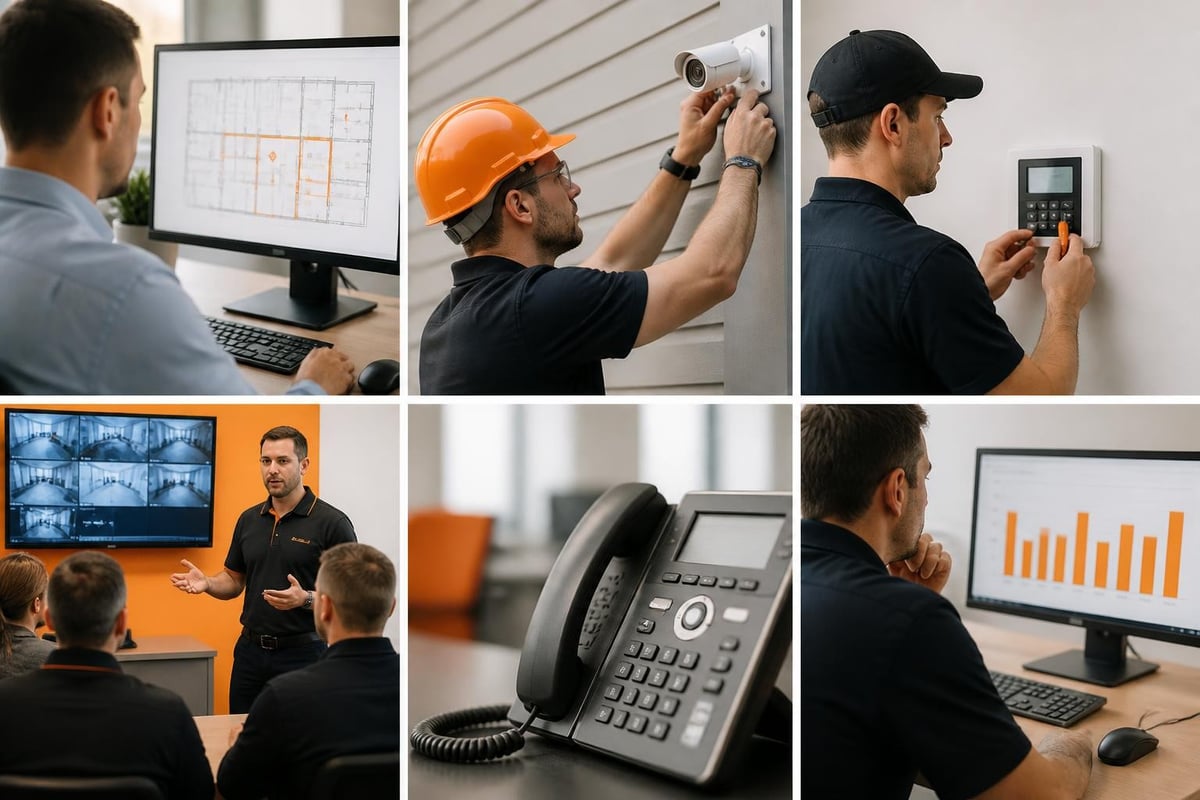
System commissioning should include comprehensive testing of signal transmission, verification of alarm zones, and validation that monitoring centre operators receive complete information needed for appropriate responses. This testing phase identifies configuration errors before systems go live, preventing false alarms and missed incidents.
Contact list accuracy represents a critical yet frequently overlooked implementation element. Monitoring centres require current contact information for key holders, facilities managers, emergency coordinators, and designated personnel. Regular reviews ensure that staff changes, role adjustments, and organisational restructuring don’t compromise response effectiveness.
User training equips on-site personnel with understanding of how monitoring services function, proper arming and disarming procedures, and appropriate actions during alarm events. Well-trained users generate fewer false alarms whilst supporting effective incident response.
Operational Management and Performance Optimisation
Security monitoring services require ongoing management to maintain effectiveness and adapt to changing business conditions. Organisations that treat monitoring as a set-and-forget service miss opportunities for optimisation whilst potentially allowing degraded performance to compromise protection.
False Alarm Management
Excessive false alarms represent the primary challenge in security monitoring services, creating complacency, wasting resources, and potentially incurring fines from emergency services. Professional approaches to false alarm reduction include:
- Root cause analysis investigating each false alarm to identify equipment faults, environmental factors, or procedural issues
- Detection device optimisation adjusting sensitivity settings, relocating sensors away from false alarm sources, and upgrading aging equipment
- User procedure enhancement addressing behavioural patterns that generate unnecessary activations through better training or process modification
- Technology upgrades implementing verification technologies like video confirmation or sequential detection that reduce false dispatches
Monitoring service providers should collaborate with businesses to analyse alarm patterns, identify improvement opportunities, and implement corrective measures. This partnership approach demonstrates the difference between basic alarm receiving services and professional security monitoring services committed to optimal performance.
Performance Metrics and Reporting
Effective oversight of security monitoring services requires measurement frameworks that quantify performance and identify trends. Key metrics include:
| Metric | Target Range | Significance |
|---|---|---|
| Signal receipt acknowledgement time | <10 seconds | Measures monitoring centre responsiveness |
| False alarm rate | <2 per month per system | Indicates system reliability and user training effectiveness |
| Emergency service dispatch accuracy | >95% | Reflects verification procedure effectiveness |
| System availability | >99.5% | Demonstrates communication pathway reliability |
| Operator action compliance | 100% | Confirms adherence to response protocols |
Regular reporting against these metrics enables businesses to hold monitoring providers accountable whilst identifying opportunities for continuous improvement. Organisations should review performance quarterly, addressing anomalies promptly and recognising excellent service delivery.
Emerging Trends and Future Developments
Security monitoring services continue evolving as new technologies, threat landscapes, and business requirements reshape protection strategies. Forward-thinking organisations monitor these developments to ensure their security monitoring services remain effective against contemporary challenges.
Artificial Intelligence and Automated Analysis
Machine learning algorithms now analyse video streams, alarm patterns, and environmental data to identify anomalies that human operators might miss. These AI-powered capabilities enable monitoring services to detect subtle indicators of security incidents, predict equipment failures before they occur, and prioritise operator attention on genuinely threatening situations.
Video analytics distinguish between authorised personnel and potential intruders, track unusual movement patterns, and alert operators to abandoned objects or perimeter breaches. As these technologies mature, security monitoring services will increasingly leverage automation whilst maintaining human judgment for complex decision-making.
Cloud-Based Monitoring Platforms
Traditional monitoring architectures route signals from on-site equipment to dedicated receiving centres through proprietary communication networks. Cloud-based platforms fundamentally reimagine this model, enabling distributed monitoring where authorised personnel access system status, video feeds, and alarm history from any location with appropriate credentials.
This flexibility proves particularly valuable for multi-site organisations requiring centralised oversight across dispersed facilities. Cloud platforms also enable more sophisticated remote monitoring capabilities that combine professional monitoring centre services with internal security team access.
Integration with Cyber Security Operations
As physical and cyber security converge, monitoring services increasingly coordinate with Security Operations Centres (SOCs) that oversee network threats, data breaches, and digital vulnerabilities. This integration recognises that comprehensive protection requires unified approaches addressing both physical and digital risks.
CSO Online’s coverage of security monitoring software explores how organisations implement integrated monitoring strategies that span traditional security systems and cybersecurity infrastructure, creating holistic protection frameworks for modern businesses.
Cost Considerations and Return on Investment
Security monitoring services represent ongoing operational expenses that businesses must justify through demonstrable value delivery. Understanding cost structures and quantifying benefits enables informed investment decisions that balance protection requirements with budget constraints.
Service Pricing Models
Monitoring service providers typically offer several pricing structures:
Per-device pricing charges monthly fees for each monitored point, including fire zones, intrusion detectors, and camera channels. This transparent model scales with system size but may become expensive for large installations.
Flat-rate monitoring establishes fixed monthly fees regardless of device count, providing budget predictability for organisations with extensive systems. However, this approach may prove uneconomical for smaller installations.
Tiered service levels offer basic monitoring at lower price points whilst premium services include enhanced verification, faster response times, and additional features. This flexibility enables businesses to align service levels with risk tolerances and budget availability.
Beyond monitoring fees, organisations should budget for communication pathway costs, equipment maintenance, system upgrades, and periodic testing requirements. Comprehensive cost analysis ensures realistic financial planning that prevents unexpected expenses.
Quantifying Protection Value
Justifying security monitoring services investment requires demonstrating tangible benefits that offset ongoing costs:
- Insurance premium reductions often available when certified monitoring services protect commercial premises
- Loss prevention through early incident detection that minimises theft, vandalism, and property damage
- Regulatory compliance avoiding fines and operational restrictions resulting from inadequate protection systems
- Business continuity maintaining operations through rapid incident response and minimised downtime
- Liability mitigation demonstrating due diligence in protecting employees, visitors, and assets
For many organisations, security monitoring services deliver returns that substantially exceed costs through prevented losses and enhanced operational efficiency. Documenting these benefits strengthens business cases for appropriate protection investment.
Multi-Site Monitoring Coordination
Organisations operating multiple facilities face unique challenges coordinating security monitoring services across dispersed locations. Effective multi-site strategies balance standardisation benefits with site-specific requirements whilst maintaining consistent protection standards.
Centralised Versus Distributed Approaches
Businesses can route signals from all locations to a single monitoring centre, creating centralised oversight that simplifies management and enables consistent response protocols. Alternatively, distributed approaches assign different sites to regional monitoring centres that better understand local conditions and maintain closer relationships with area emergency services.
Many organisations adopt hybrid models where primary monitoring occurs centrally whilst backup arrangements route to alternative centres during outages or major incidents affecting the primary facility. These sophisticated architectures require careful coordination but deliver resilience that justifies the additional complexity.
NIST’s guidance on information security continuous monitoring provides frameworks that multi-site organisations can adapt for physical security oversight, establishing systematic approaches to distributed monitoring coordination.
Standardisation and Local Adaptation
Successful multi-site monitoring balances standardised equipment, procedures, and documentation with necessary adaptations addressing site-specific conditions. Common platforms and consistent response protocols enable operational efficiency whilst site variations accommodate different building layouts, operational patterns, and local regulatory requirements.
Regular audits verify that individual sites maintain standards whilst identifying improvement opportunities that can be shared across the organisation. This continuous improvement culture ensures that security monitoring services evolve with changing business needs and emerging best practices.
Security monitoring services form the essential operational component that transforms installed systems into active protection delivering genuine safety and security benefits. By understanding the technologies, standards, and best practices that define effective monitoring, businesses can implement solutions that provide reliable 24/7 oversight whilst meeting regulatory obligations and operational requirements. Whether protecting single facilities or coordinating multi-site operations, professional monitoring services deliver the continuous vigilance that modern commercial environments demand. Logic Fire and Security provides comprehensive monitoring and support services backed by industry-leading certifications and decades of experience protecting Blue Chip companies and public agencies across the United Kingdom, ensuring your critical systems receive the professional oversight they deserve.