

Fire alarm systems represent one of the most critical safety investments any commercial organisation can make. These sophisticated networks of sensors, control panels, and alert mechanisms stand ready to detect threats and protect lives twenty-four hours a day. However, even the most advanced fire detection technology cannot perform reliably without proper ongoing care. Regular fire alarm servicing and maintenance ensures these vital systems function correctly when seconds matter most, whilst simultaneously keeping your organisation compliant with UK fire safety regulations.
Understanding the Regulatory Framework for Fire Alarm Systems
British businesses operate under stringent fire safety legislation that mandates regular maintenance of all fire detection equipment. The Regulatory Reform (Fire Safety) Order 2005 places legal responsibility on the "responsible person" within an organisation to ensure fire safety measures, including alarm systems, remain functional and fit for purpose.
Beyond UK-specific regulations, international standards provide comprehensive guidance on maintenance protocols. The NFPA 72 National Fire Alarm and Signaling Code establishes detailed requirements for inspection, testing, and maintenance activities, offering a globally recognised benchmark for fire alarm system care.
Legal Obligations and Compliance Requirements
Commercial property owners and facilities managers must demonstrate due diligence in maintaining fire safety systems. Regular fire alarm servicing and maintenance forms a cornerstone of this obligation, with documented service records serving as evidence of compliance during inspections.
Key regulatory requirements include:
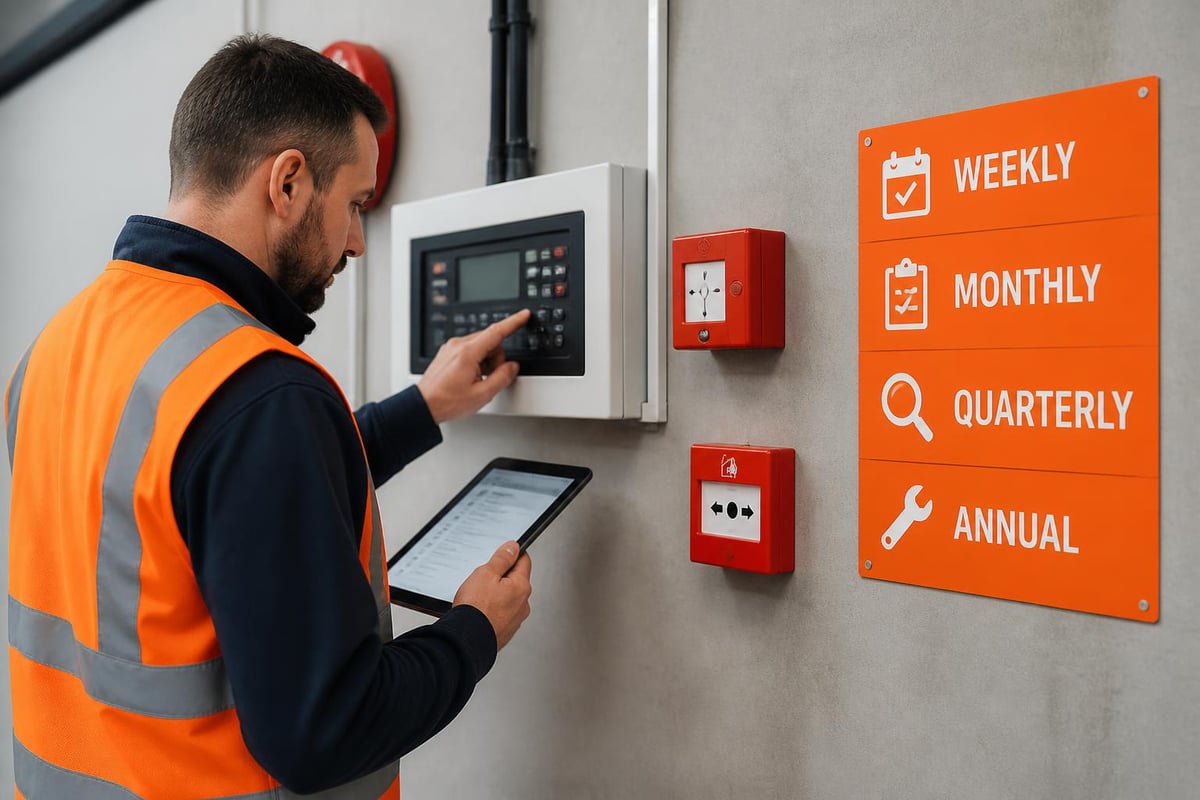
- Weekly testing of alarm sounders and detection devices on a rotational basis
- Monthly inspection of control panel indicators and power supplies
- Quarterly verification of system batteries and backup power sources
- Annual comprehensive servicing by qualified technicians
- Detailed record-keeping of all maintenance activities and findings
Failure to maintain fire alarm systems adequately can result in enforcement notices, financial penalties, invalidated insurance policies, and in the most serious cases, prosecution following fire-related incidents. Professional fire alarm monitoring services can provide additional assurance and rapid response capabilities.
Components Requiring Regular Maintenance and Inspection
Modern fire alarm systems comprise numerous interconnected components, each requiring specific maintenance attention. Understanding these elements helps facilities managers appreciate the complexity of proper fire alarm servicing and maintenance programmes.
Detection Devices and Sensors
Smoke detectors, heat sensors, and multi-criteria detectors form the sensory network of fire alarm systems. These devices accumulate dust, debris, and environmental contaminants that can trigger false alarms or, more dangerously, prevent proper fire detection.
| Component | Maintenance Frequency | Key Activities |
|---|---|---|
| Smoke Detectors | Monthly visual / Annual service | Clean chambers, test sensitivity, verify LED indicators |
| Heat Detectors | Quarterly check / Annual service | Test activation temperature, inspect mounting, clean exterior |
| Manual Call Points | Weekly test rotation | Verify glass/operation, check indicator lights, test signal transmission |
| Beam Detectors | Monthly alignment / Quarterly clean | Check beam path, clean lenses, verify detection range |
The comprehensive preventive maintenance checklist for fire alarm systems emphasises the importance of systematic component inspection to prevent system failures.
Control Panels and Power Systems
The fire alarm control panel serves as the system's brain, processing signals from detectors and initiating appropriate responses. Regular servicing ensures these critical components maintain operational integrity.
Control panel maintenance encompasses battery testing, power supply verification, processor diagnostics, and communication link confirmation. Backup batteries typically require replacement every four to five years, though testing should occur quarterly. Systems with 24/7 protection monitoring can provide real-time alerts to panel faults or power issues.
Developing an Effective Maintenance Schedule
Creating a robust fire alarm servicing and maintenance programme requires balancing regulatory requirements, manufacturer recommendations, and site-specific risk factors. Different commercial environments present unique challenges that influence optimal maintenance frequencies.
Risk-Based Maintenance Planning
High-risk environments such as manufacturing facilities, chemical plants, or healthcare settings demand more frequent inspection intervals than standard office spaces. Environmental factors including dust levels, humidity, temperature extremes, and vibration all impact system reliability and maintenance needs.
Critical considerations for maintenance scheduling:
- System age and technology generation – Older systems require more frequent attention
- Environmental conditions – Harsh environments accelerate component degradation
- Building occupancy patterns – Higher occupancy increases system criticality
- Previous fault history – Recurring issues may indicate underlying problems
- Insurance requirements – Policies often mandate specific maintenance frequencies
Organisations with commercial fire detection systems should consult with specialist providers to develop tailored maintenance schedules aligned with their operational requirements.
Integrating Preventive and Corrective Maintenance
Effective fire alarm servicing and maintenance programmes combine scheduled preventive work with responsive corrective actions. Preventive maintenance identifies potential issues before they cause system failures, whilst corrective maintenance addresses faults promptly when they occur.
Best practices for fire alarm inspections emphasise the value of comprehensive documentation, enabling trend analysis and predictive maintenance strategies.
Essential Tasks in Annual Fire Alarm Servicing
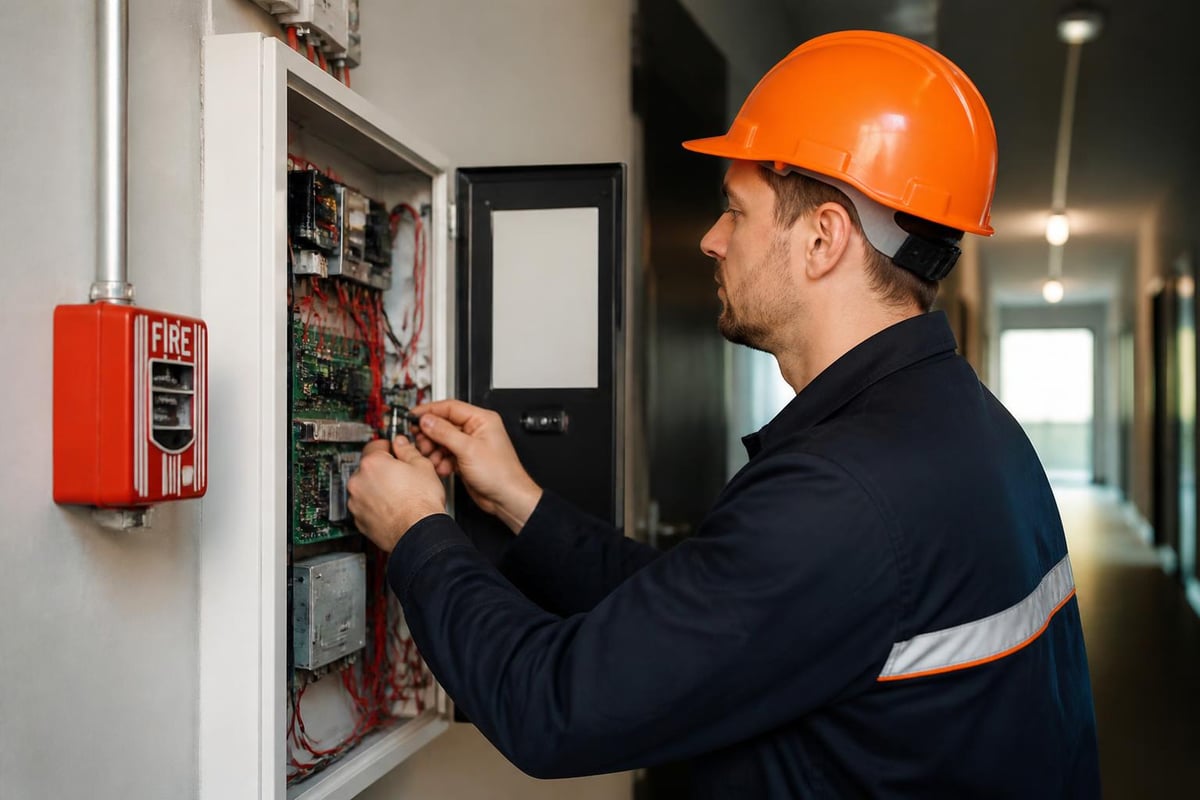
Annual comprehensive servicing represents the most thorough level of fire alarm maintenance, involving detailed testing of every system component. These extensive inspections typically require several hours or even days for large commercial installations.
Systematic Component Testing
Qualified technicians methodically work through the entire system during annual service visits. This process includes testing every detector's functionality, verifying all alarm sounders achieve required decibel levels throughout the premises, and confirming communication links between system components.
Annual service activities include:
- Full system functional testing from detection through to alarm activation
- Sensitivity testing of smoke detectors with calibrated test equipment
- Heat detector activation testing using controlled heat sources
- Manual call point operation verification across all units
- Sounder circuit testing to confirm adequate volume coverage
- Visual indicator and LED functionality checks
- Battery load testing and capacity verification
- Communication pathway testing for monitored systems
- Review and update of system programming and zoning
- Documentation of all findings and recommendations
The detailed maintenance schedule and checklist for fire alarm systems provides comprehensive guidance on conducting thorough annual inspections.
Replacement Parts and Component Lifecycle
During fire alarm servicing and maintenance visits, technicians identify components approaching end-of-life and recommend replacements. Understanding which parts get replaced during NFPA 72 inspections helps organisations budget appropriately for system upkeep.
| Component | Typical Lifespan | Replacement Indicators |
|---|---|---|
| Smoke Detector Chambers | 10-15 years | Persistent false alarms, sensitivity drift |
| Control Panel Batteries | 4-5 years | Failed load tests, reduced capacity |
| Sounder Units | 15-20 years | Inconsistent operation, volume reduction |
| Manual Call Points | 20+ years | Physical damage, contact wear |
| Control Panels | 15-25 years | Obsolete technology, parts unavailability |
The Role of Qualified Service Engineers
Professional fire alarm servicing and maintenance requires specialist knowledge, technical qualifications, and appropriate certification. Not all maintenance tasks can or should be performed by in-house facilities teams.
Essential Qualifications and Accreditations
Reputable fire alarm service providers employ engineers with industry-recognised qualifications, including FIA (Fire Industry Association) certification and manufacturer-specific training. These credentials demonstrate competence in fire alarm system technology, testing methodologies, and current regulatory requirements.
Organisations should verify that their maintenance provider holds appropriate certifications, including third-party accreditation schemes. Quality and accreditations provide assurance of professional standards and technical competence.
In-House Responsibilities Versus Professional Services
Whilst certain routine tasks such as weekly alarm tests can be performed by trained facilities staff, comprehensive servicing requires specialist equipment and expertise. The code considerations for inspecting, testing, and maintaining fire alarm systems highlight the technical complexity involved in proper system maintenance.
Facilities team responsibilities:
- Weekly alarm sounder tests on rotation
- Visual inspection of accessible components
- Basic fault reporting and documentation
- Ensuring clear access to system components
Professional engineer responsibilities:
- Annual comprehensive system testing
- Detector sensitivity testing with calibrated equipment
- Control panel programming and configuration
- Component replacement and repair
- Compliance certification and documentation
Documenting Maintenance Activities and Records
Comprehensive record-keeping forms an essential element of fire alarm servicing and maintenance programmes. These documents provide evidence of regulatory compliance, support insurance claims, aid troubleshooting, and inform future maintenance planning.
Required Documentation Standards
UK fire safety regulations require detailed records of all maintenance activities, including dates, findings, actions taken, and engineer details. These records must remain accessible for inspection by authorities and insurance assessors.
Essential documentation includes:
- Service logbooks recording all maintenance visits
- Test certificates confirming annual comprehensive servicing
- Fault reports detailing issues discovered and remedial actions
- Component replacement records tracking parts changed and dates
- System modifications documenting any alterations or upgrades
- False alarm logs identifying patterns requiring investigation
Digital record-keeping systems increasingly replace traditional paper logbooks, offering advantages in searchability, backup, and accessibility. However, the fundamental requirement for comprehensive documentation remains unchanged regardless of format.
Leveraging Data for Predictive Maintenance
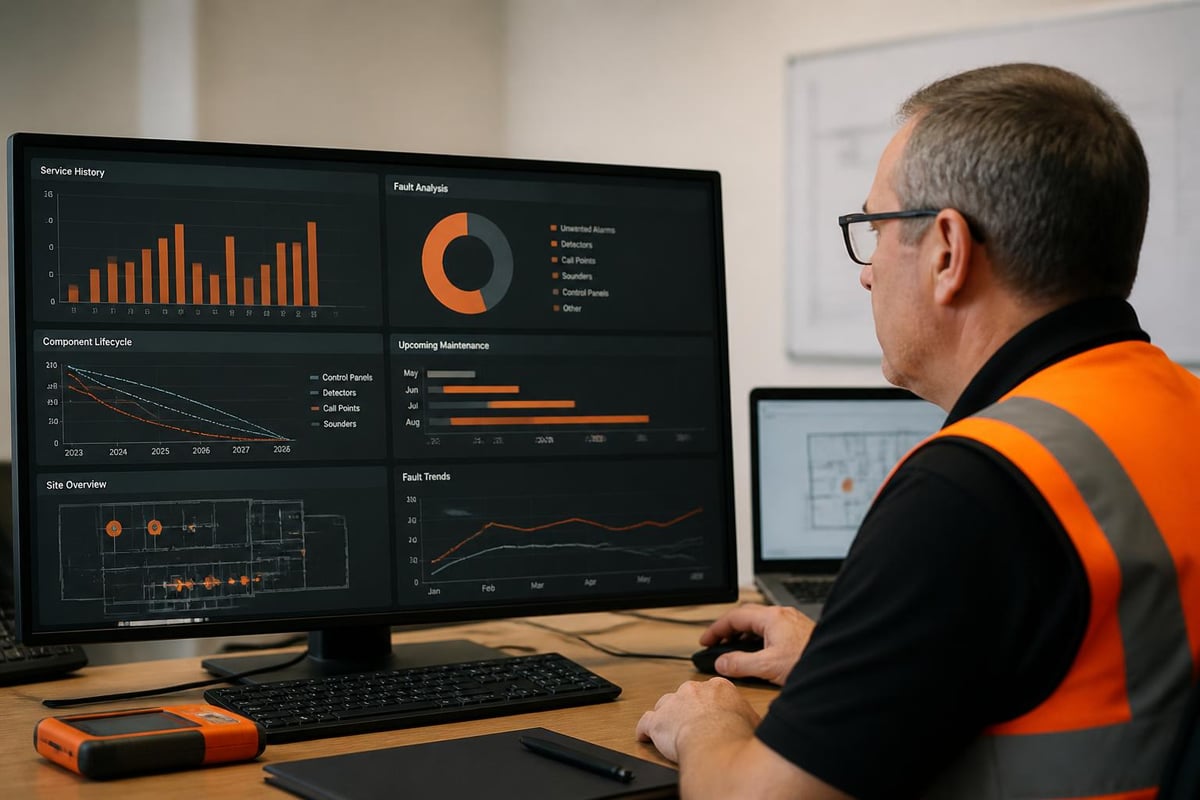
Advanced fire alarm servicing and maintenance strategies utilise historical data to predict component failures before they occur. Analysing patterns in false alarms, component faults, and environmental factors enables proactive replacement of at-risk elements.
This data-driven approach reduces unexpected system failures, optimises maintenance spending, and enhances overall system reliability. Integration with fire alarm system monitoring platforms can automate data collection and analysis.
Cost Considerations and Return on Investment
Fire alarm servicing and maintenance represents an ongoing operational expense that organisations must budget for appropriately. Understanding cost drivers and the value delivered helps justify necessary investment in system upkeep.
Factors Influencing Service Costs
Maintenance costs vary significantly based on system size, complexity, technology type, site accessibility, and service frequency. A small office fire alarm system costs considerably less to maintain than a multi-building campus installation with hundreds of devices.
| Cost Factor | Impact Level | Typical Variation |
|---|---|---|
| Number of Devices | High | £200-£2,000+ annually |
| System Complexity | Medium | +20-40% for addressable systems |
| Site Accessibility | Medium | +15-30% for difficult access |
| Service Frequency | High | Quarterly vs annual: 3x cost |
| Emergency Callouts | Variable | £150-£400 per visit |
Value Beyond Compliance
Whilst regulatory compliance drives minimum maintenance requirements, the broader value of fire alarm servicing and maintenance extends to risk reduction, insurance premiums, business continuity, and reputational protection.
Regular maintenance reduces false alarms that disrupt operations and incur fire brigade charges. Well-maintained systems provide faster, more reliable fire detection, potentially saving lives and minimising property damage. Insurance providers typically offer premium reductions for documented maintenance programmes, partially offsetting service costs.
Integration with Broader Fire Safety Strategies
Fire alarm servicing and maintenance should not exist in isolation but rather form part of comprehensive fire safety management. Effective integration with other safety systems and procedures maximises protection whilst optimising resource utilisation.
Coordinated Safety System Maintenance
Commercial buildings typically incorporate multiple fire safety elements, including detection systems, emergency lighting, fire suppression equipment, and evacuation systems. Coordinating maintenance activities across these systems improves efficiency and ensures compatibility.
Organisations can benefit from unified service contracts covering multiple safety systems. This approach enables single-vendor accountability, coordinated scheduling, and potential cost savings through bundled services. Fire extinguisher servicing and emergency lighting maintenance can be scheduled concurrently with fire alarm work.
Supporting Fire Risk Assessment Requirements
Regular fire alarm servicing and maintenance directly supports the fire risk assessment process required under UK fire safety legislation. Service records provide evidence that control measures remain effective, whilst maintenance findings may identify new risks requiring assessment updates.
Professional fire risk assessment services should review fire alarm maintenance records to verify that detection systems continue to meet identified needs and remain appropriate for current building use.
Common Issues and Troubleshooting Approaches
Understanding frequent fire alarm system problems helps organisations recognise when professional intervention becomes necessary and informs preventive maintenance priorities.
Persistent False Alarms
False alarms represent the most common fire alarm system complaint, causing operational disruption and potentially leading to alarm fatigue where occupants fail to respond appropriately. Root causes include detector contamination, environmental factors, system configuration issues, and equipment faults.
Systematic false alarm investigation involves:
- Reviewing alarm history to identify patterns
- Inspecting detectors in affected zones for contamination
- Assessing environmental conditions causing spurious activation
- Verifying system configuration and sensitivity settings
- Testing detector response with calibrated equipment
- Replacing or relocating problematic devices
Professional fire alarm servicing and maintenance addresses these issues through regular cleaning, sensitivity testing, and environmental assessment.
Communication and Power Failures
Modern fire alarm systems rely on continuous power and communication connectivity. Battery failures, power supply faults, and communication pathway disruptions can compromise system reliability without necessarily generating obvious faults.
Regular testing identifies these hidden issues before they result in complete system failure during an actual emergency. Inspection, testing, and maintenance of life safety systems emphasises the importance of comprehensive power and communication verification.
Upgrading and Modernising Legacy Systems
Many commercial buildings operate fire alarm systems installed decades ago. Whilst older technology can remain functional with proper maintenance, eventually all systems require replacement or significant upgrading to maintain reliability and compliance.
Recognising When Replacement Becomes Necessary
Fire alarm servicing and maintenance professionals assess system condition and advise when continued repair becomes uneconomical compared to replacement. Key indicators include obsolete technology, parts unavailability, incompatibility with modern building systems, and persistent reliability issues.
Replacement triggers include:
- Manufacturer discontinuation of spare parts
- System age exceeding twenty-five years
- Incompatibility with building management systems
- Inadequate capacity for building modifications
- Excessive false alarm rates despite maintenance
- Insurance or regulatory compliance concerns
Balancing Maintenance Investment with System Lifecycle
Organisations must balance ongoing maintenance costs against the eventual need for system replacement. A well-maintained fire alarm system can deliver reliable service for twenty years or more, whilst neglected systems may require premature replacement.
Strategic planning involves evaluating current system condition, projecting remaining useful life, and budgeting for eventual replacement. Professional service providers offer guidance on optimising this balance based on specific system characteristics and organisational requirements.
Selecting the Right Maintenance Service Provider
Choosing an appropriate fire alarm servicing and maintenance partner significantly impacts system reliability, compliance assurance, and cost-effectiveness. Several factors distinguish professional service providers from less capable alternatives.
Evaluation Criteria for Service Providers
Beyond basic pricing considerations, organisations should assess potential maintenance providers across multiple dimensions including technical expertise, industry accreditation, response capabilities, and customer support quality.
Critical selection factors:
- Technical qualifications – FIA certification, manufacturer training
- Industry accreditation – Third-party certification schemes
- Response times – Availability for emergency callouts
- Geographic coverage – Service areas and local presence
- Customer references – Testimonials from similar organisations
- Service level agreements – Defined response and resolution commitments
- Documentation standards – Quality of service records provided
- Value-added services – Training, consulting, system optimisation
Long-Term Partnership Benefits
Engaging a consistent maintenance provider enables them to develop deep familiarity with your specific systems, building relationships that enhance service quality. Long-term partnerships facilitate proactive maintenance recommendations, efficient fault resolution, and strategic planning for system upgrades.
Established providers with proven track records serving Blue Chip companies and public agencies offer assurance of professional standards and reliability.
Effective fire alarm servicing and maintenance protects lives, ensures regulatory compliance, and delivers long-term cost savings through reliable system performance. By implementing structured maintenance programmes, maintaining comprehensive documentation, and partnering with qualified service providers, organisations safeguard their most critical fire safety investment. Logic Fire and Security delivers expert fire alarm servicing and maintenance across the UK, combining technical excellence with responsive customer support to keep your fire detection systems operating at peak performance when they matter most.