

When seconds count during an emergency, an effective evacuation alert system can mean the difference between orderly egress and chaos. For UK businesses, implementing robust alert infrastructure has become essential not only for regulatory compliance but for demonstrating duty of care to employees, visitors, and contractors. Modern evacuation alert systems integrate seamlessly with fire detection, security monitoring, and building management platforms to deliver coordinated, intelligent responses during critical incidents. Understanding the capabilities, compliance requirements, and implementation considerations for these life-safety systems enables facility managers and business owners to make informed decisions that protect both people and property.
Understanding Modern Evacuation Alert Systems
An evacuation alert system comprises interconnected hardware and software components designed to detect emergencies, determine appropriate responses, and communicate instructions to building occupants. Unlike standalone alarms that simply sound a tone, contemporary systems deliver intelligent, zone-specific alerts with clear voice instructions tailored to the nature and location of the threat.
These systems integrate multiple detection technologies. Smoke detectors, heat sensors, manual call points, and security inputs all feed into a central control panel that processes data and determines the appropriate alert level. When properly configured, the system can distinguish between localised incidents requiring staged evacuation and building-wide emergencies demanding immediate total evacuation.
The communication infrastructure represents the visible face of the evacuation alert system. Sounders, voice alarm systems, visual indicators, and increasingly mobile notification platforms ensure occupants receive clear, actionable guidance regardless of their location or sensory abilities.
Components and Integration Points
A comprehensive evacuation alert system typically includes:
- Detection layer: Smoke, heat, flame, gas sensors and manual activation points
- Processing layer: Addressable fire panels, control systems, and monitoring stations
- Communication layer: Voice evacuation systems, visual alarms, and mobile alerts
- Power infrastructure: Mains supply, battery backup, and generator integration
- Monitoring connections: Alarm receiving centres and emergency services links
Modern systems increasingly connect with commercial fire alarm installation frameworks and broader building management systems. This integration allows evacuation protocols to trigger automated responses such as unlocking access-controlled doors, recalling lifts to the ground floor, shutting down ventilation systems, and activating smoke control equipment.
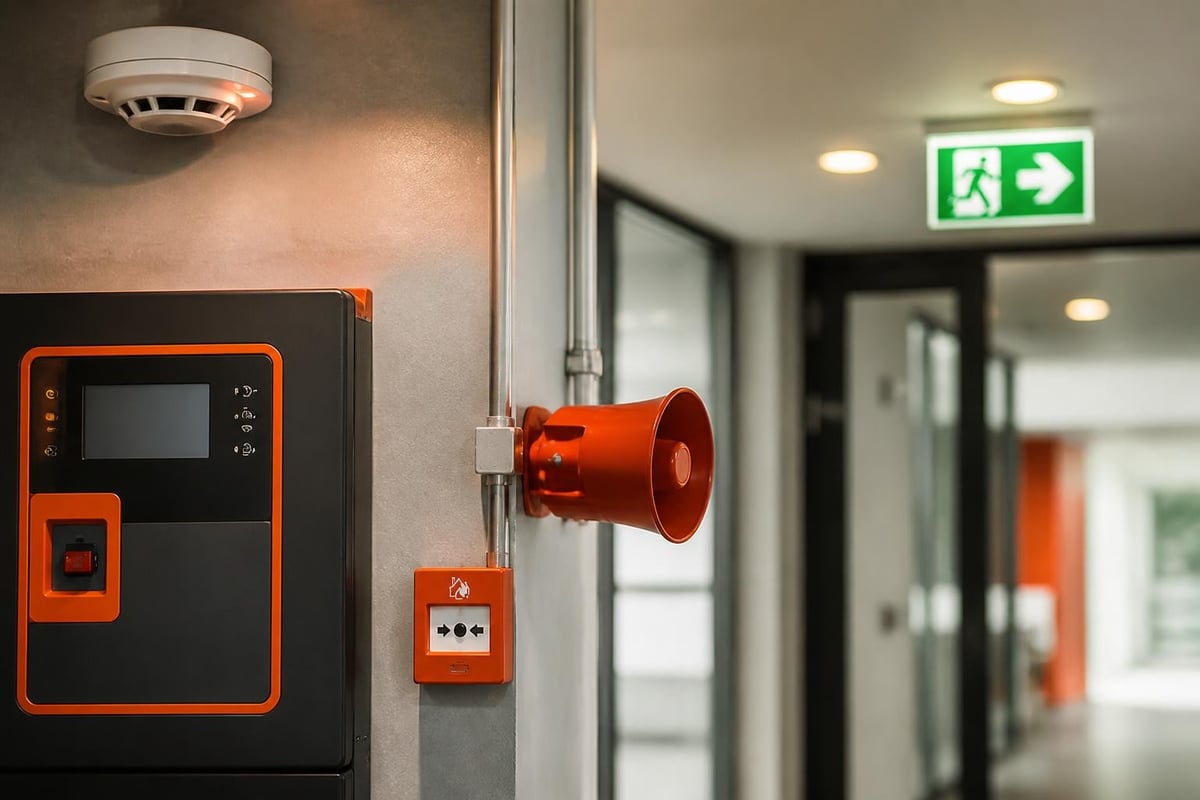
The distinction between conventional and addressable systems matters significantly. Addressable systems identify the specific device that triggered an alarm, enabling precise incident location and more intelligent staged evacuation strategies. For large or complex facilities, this granular information proves invaluable for emergency response coordination.
Regulatory Framework and Compliance Requirements
UK businesses operate under stringent regulatory requirements governing life-safety systems. The Regulatory Reform (Fire Safety) Order 2005 places responsibility on the “responsible person” to conduct fire risk assessments and implement appropriate fire safety measures, including adequate means of detecting fire and giving warning in case of fire.
British Standard BS 5839 provides the technical specification framework for fire detection and fire alarm systems. Part 1 addresses code of practice for design, installation, commissioning, and maintenance of systems in non-domestic premises. Part 8 specifically covers voice alarm systems, which form the communication backbone of modern evacuation alert systems.
| Standard | Application | Key Requirements |
|---|---|---|
| BS 5839-1:2017 | Fire detection and alarm systems | System design, zoning, detection coverage, testing protocols |
| BS 5839-8:2013 | Voice alarm systems | Intelligibility standards, backup power, message content |
| BS 7273 | Fire safety system operation | Interface between systems, cause-and-effect programming |
| BS 8629:2019 | Evacuation of disabled persons | Alert system accessibility, refuge communication |
Beyond fire-specific regulations, the Equality Act 2010 mandates that evacuation alert systems accommodate individuals with disabilities. Visual alarm devices serve deaf and hard-of-hearing occupants, whilst voice systems with clear speech intelligibility assist those with visual impairments or cognitive challenges.
Testing and Maintenance Obligations
The responsible person must ensure fire alarm servicing and maintenance occurs at prescribed intervals. Weekly testing of a representative sample of call points and sounders confirms basic functionality. Quarterly inspections verify power supplies, batteries, and standby equipment. Annual servicing by competent persons validates full system operation and documentation.
Documentation requirements extend beyond maintenance logs. The evacuation alert system must have clearly defined zones, documented cause-and-effect matrices showing which detectors trigger which alerts, and comprehensive user manuals accessible to responsible persons and emergency wardens.
Designing Effective Alert Strategies
Not all emergencies warrant identical responses. Sophisticated evacuation alert systems implement tiered alert protocols matched to threat severity and building characteristics. A single-stage evacuation immediately alerts all occupants to evacuate simultaneously. Multi-stage systems use localised alerts in affected zones whilst placing other areas on standby, reducing congestion and panic.
Voice evacuation systems deliver the greatest flexibility. Pre-recorded messages can communicate specific instructions: “Attention please. A fire alarm has been activated in the eastern wing. Please proceed calmly to your nearest fire exit.” Live override capabilities allow fire wardens to provide real-time updates as situations develop.
Zone Configuration and Intelligent Routing
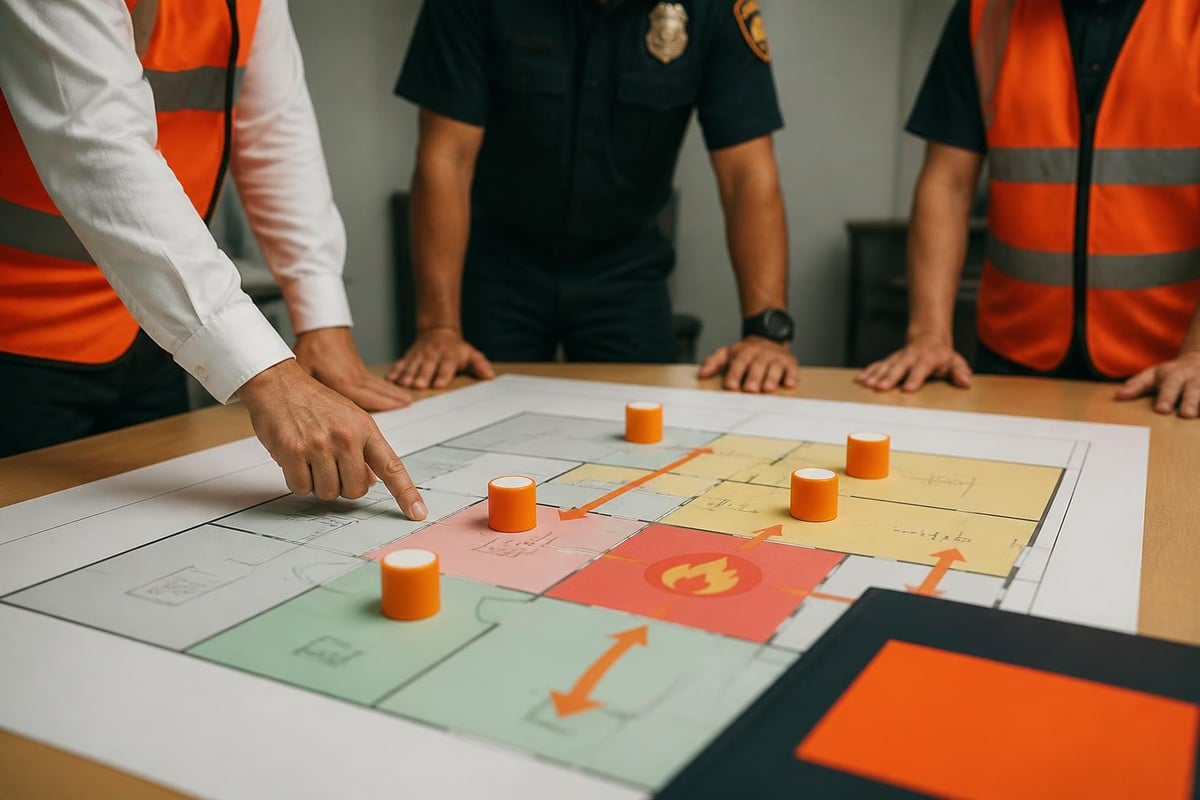
Proper zoning design considers building layout, occupancy patterns, and egress routes. Each zone should align with natural compartmentation boundaries and contain sufficient detection points to pinpoint incident locations. For multi-storey buildings, vertical zoning often proves most effective, with phased evacuation moving occupants away from affected floors in coordinated sequence.
The cause-and-effect programming determines system behaviour. When a detector in Zone 3 activates:
- Immediate actions: Sounders activate in Zone 3, voice message initiates, fire brigade signalling equipment transmits alert
- Secondary actions: Adjacent zones (2 and 4) receive alert tone, access control releases exit doors, HVAC systems shut down
- Monitoring actions: Control panel logs event timestamp and location, remote monitoring station receives notification
Alert escalation protocols define timeframes for transitioning between stages. If occupants in alert zones fail to silence the system within two minutes (suggesting inability to investigate or control the situation), the system automatically escalates to full building evacuation.
Technology Advances and Smart Building Integration
The evolution toward smart building ecosystems has transformed evacuation alert system capabilities. Integration with Internet of Things (IoT) sensors, artificial intelligence analytics, and cloud-based monitoring platforms enables predictive maintenance, faster emergency response, and more sophisticated threat assessment.
Modern systems leverage multiple communication channels simultaneously. Beyond traditional sounders and voice alarms, mobile applications push notifications to registered occupants’ smartphones. Digital signage displays evacuation routes and real-time guidance. Integration with security monitoring services ensures off-site personnel receive immediate notification and can coordinate emergency service response.
Cybersecurity Considerations for Connected Systems
As evacuation alert systems connect to networks and cloud platforms, cybersecurity becomes paramount. A compromised system could trigger false evacuations, silence genuine alerts, or provide incorrect emergency information. Working with specialists like F&C, who provide managed cybersecurity and compliance services, ensures that connected life-safety systems maintain appropriate security postures without compromising reliability.
Recommended security measures include:
- Network segmentation isolating life-safety systems from general IT infrastructure
- Encrypted communications between system components and monitoring stations
- Multi-factor authentication for system configuration access
- Regular vulnerability assessments and penetration testing
- Documented incident response procedures for cyber-related system failures
The balance between connectivity benefits and security risks requires careful assessment. For many organisations, hybrid approaches that maintain standalone operation whilst enabling monitored connectivity through secured pathways offer optimal configurations.
Mobile and Public Alert System Integration
Whilst building-based evacuation alert systems serve occupants within facilities, broader emergency management increasingly involves mobile alerting infrastructure. The UK Government’s Emergency Alerts service demonstrates how national-level systems broadcast location-based warnings to mobile devices during life-threatening emergencies such as severe flooding, wildfires, or industrial incidents.
For businesses operating across multiple sites or managing dispersed workforces, commercial mass notification systems complement building-based alerts. These platforms send coordinated messages via SMS, email, voice calls, and mobile applications, ensuring personnel receive evacuation instructions regardless of location.
Lessons from Emergency Response Cases
Real-world emergency situations provide valuable insights into effective alert system design. The British Columbia wildfires in 2023 demonstrated the importance of geo-targeted evacuation alerts that provide specific, actionable instructions tailored to threatened areas. Clear messaging about routes, assembly points, and timeframes helped coordinate orderly evacuations despite rapidly changing conditions.
In complex humanitarian emergencies, organisations like the International Committee of the Red Cross emphasise that evacuation alerts must consider civilian protection, provide adequate notice, and offer safe passage routes. Whilst most UK businesses face less extreme scenarios, the principles of clarity, timeliness, and actionable guidance remain universally applicable.
| Alert Characteristic | Effective Practice | Ineffective Practice |
|---|---|---|
| Timing | Immediate upon threat detection with clear escalation timeline | Delayed alerts hoping situation resolves |
| Content | Specific location, nature of threat, required actions | Generic “emergency” messages |
| Delivery | Multi-channel redundancy (audio, visual, mobile) | Single communication pathway |
| Authority | Designated personnel with override capabilities | Confusion about who authorises evacuation |
Selecting and Implementing Systems for Your Facility
Choosing an appropriate evacuation alert system requires thorough assessment of building characteristics, occupancy patterns, and regulatory obligations. Single-tenancy facilities with simple layouts may function adequately with conventional systems, whilst complex multi-occupancy buildings typically require addressable, voice-capable infrastructure.
Key selection criteria include:
Building factors: Size, height, layout complexity, construction type, compartmentation, occupancy capacity
Occupancy factors: Population density, mobility characteristics, familiarity with premises, shift patterns, visitor volumes
Operational factors: Activities conducted, hazardous materials present, security requirements, existing infrastructure
Regulatory factors: Building Regulations compliance, insurance requirements, industry-specific standards
Working with experienced providers ensures systems meet both current needs and future expansion requirements. Companies like Logic Fire and Security bring expertise in designing integrated solutions that coordinate fire detection, evacuation alerts, access control systems, and security monitoring.
Installation and Commissioning Best Practices
Professional installation follows structured methodologies. Initial design reviews confirm detection coverage, zone definitions, and alert device placement meet standards. Cable routing follows fire-resistant pathways with appropriate segregation from power and data cabling. Device addressing and programming occur systematically with comprehensive documentation.
Commissioning validates end-to-end functionality. Testing confirms:
- Detection devices trigger appropriate zone alerts
- Voice messages broadcast with required intelligibility levels
- Visual indicators activate in compliance with disability access requirements
- Interface signals reach building management systems correctly
- Battery backup sustains operations for mandated durations
- Monitoring station communications function reliably
Occupant familiarisation represents the final critical step. Staff training covers system operation, evacuation procedures, and assembly point protocols. Regular evacuation drills validate that theoretical system capabilities translate to effective real-world responses.
Ongoing Management and Continuous Improvement
An evacuation alert system requires active management throughout its operational life. Beyond statutory maintenance, effective programmes include performance monitoring, incident analysis, and continuous improvement initiatives.
System logs provide valuable data. Analysing false alarm patterns identifies environmental factors, equipment degradation, or operational issues requiring attention. Response time metrics for different zones reveal whether evacuation routes function as designed. Drill observations highlight areas where communication could improve or where physical infrastructure creates bottlenecks.
Adaptation to Changing Circumstances
Buildings evolve. Refurbishments alter layouts, occupancy patterns shift, and operational requirements change. The evacuation alert system must adapt accordingly. Regular reviews should assess whether:
- Detection coverage remains adequate after layout modifications
- Zone definitions still align with compartmentation and escape routes
- Alert messages reflect current assembly points and procedures
- Integration with building systems accommodates new equipment
- Staff training addresses personnel turnover and role changes
Technology refresh cycles typically range from 10 to 15 years for core infrastructure, though individual components may require replacement sooner. Planning for eventual system upgrades prevents reactive emergency replacements and allows coordinated integration with broader facility improvement programmes.

Remote monitoring capabilities increasingly support proactive management. Cloud-connected systems provide real-time status visibility, predictive maintenance alerts, and centralised management for multi-site operations. Alarm receiving centres monitor system health continuously, dispatching engineers for faults before they compromise safety.
Multi-Site Coordination and Enterprise Management
Organisations operating multiple facilities face additional complexities in evacuation alert system management. Standardising equipment specifications, alert protocols, and maintenance procedures across sites improves reliability, reduces training burdens, and simplifies compliance documentation.
Enterprise management platforms consolidate data from distributed systems into unified dashboards. Facility managers gain visibility into system status, maintenance schedules, and incident histories across their entire portfolio. Centralised reporting supports regulatory compliance whilst identifying patterns that might indicate systemic issues requiring attention.
For businesses with sites in diverse locations, local regulations and environmental factors necessitate tailored approaches. Coastal facilities may prioritise flood detection and tsunami alerts. Industrial sites near hazardous installations coordinate with off-site emergency plans. Urban locations integrate with municipal emergency management systems.
The consistency versus customisation balance requires careful consideration. Standardised core infrastructure and protocols provide economies of scale and operational efficiency. Site-specific adaptations address unique risk profiles without fragmenting the overall management framework.
Evacuation alert systems represent critical investments in life safety, regulatory compliance, and business continuity. The integration of intelligent detection, multi-channel communication, and coordinated building responses ensures that occupants receive timely, actionable guidance during emergencies. Whether you’re designing systems for new construction, upgrading ageing infrastructure, or managing compliance across multiple sites, partnering with experienced specialists ensures optimal outcomes. Logic Fire and Security delivers comprehensive fire and security solutions tailored to your specific operational requirements, combining technical expertise with ongoing support to protect your people and premises effectively.