

Modern surveillance systems represent substantial investments for organisations, yet many businesses underestimate the critical importance of ongoing professional maintenance. A cctv maintenance company provides the specialist expertise required to keep your surveillance infrastructure operating at peak performance, ensuring continuous protection of your premises, assets, and personnel. As security technology advances rapidly in 2026, the complexity of maintenance requirements has increased correspondingly, making professional support more valuable than ever before.
Why Professional CCTV Maintenance Matters
Security systems that fail when you need them most become expensive liabilities rather than protective assets. Unlike consumer-grade equipment, commercial surveillance installations comprise interconnected components requiring regular attention from qualified technicians.
Professional maintenance prevents the most common cause of surveillance system failures: gradual degradation. Cameras accumulate dirt and moisture, lenses fall out of focus, connections corrode, and storage systems develop errors. These issues rarely announce themselves until critical footage is already lost.
A dedicated cctv maintenance company brings systematic expertise that in-house facilities teams typically lack. Technicians understand manufacturer specifications, compliance requirements, and emerging vulnerabilities specific to security equipment. They follow structured preventive maintenance procedures that ensure consistent outcomes whilst reducing the likelihood of oversight.
Evidence Integrity and Legal Compliance
Courts increasingly scrutinise digital evidence quality and chain of custody. Poorly maintained systems produce footage that may be inadmissible, regardless of what it shows.
Regular professional servicing ensures your recordings meet evidential standards. Engineers verify time synchronisation, check recording quality, and document system configuration. This documentation proves your organisation maintained appropriate standards should footage ever be required in legal proceedings.
Compliance with UK surveillance camera industry standards requires demonstrable maintenance records. Regulatory bodies expect organisations to show due diligence in keeping systems operational and fit for purpose.
Core Services Provided by CCTV Maintenance Companies
Visual Inspection and Camera Assessment
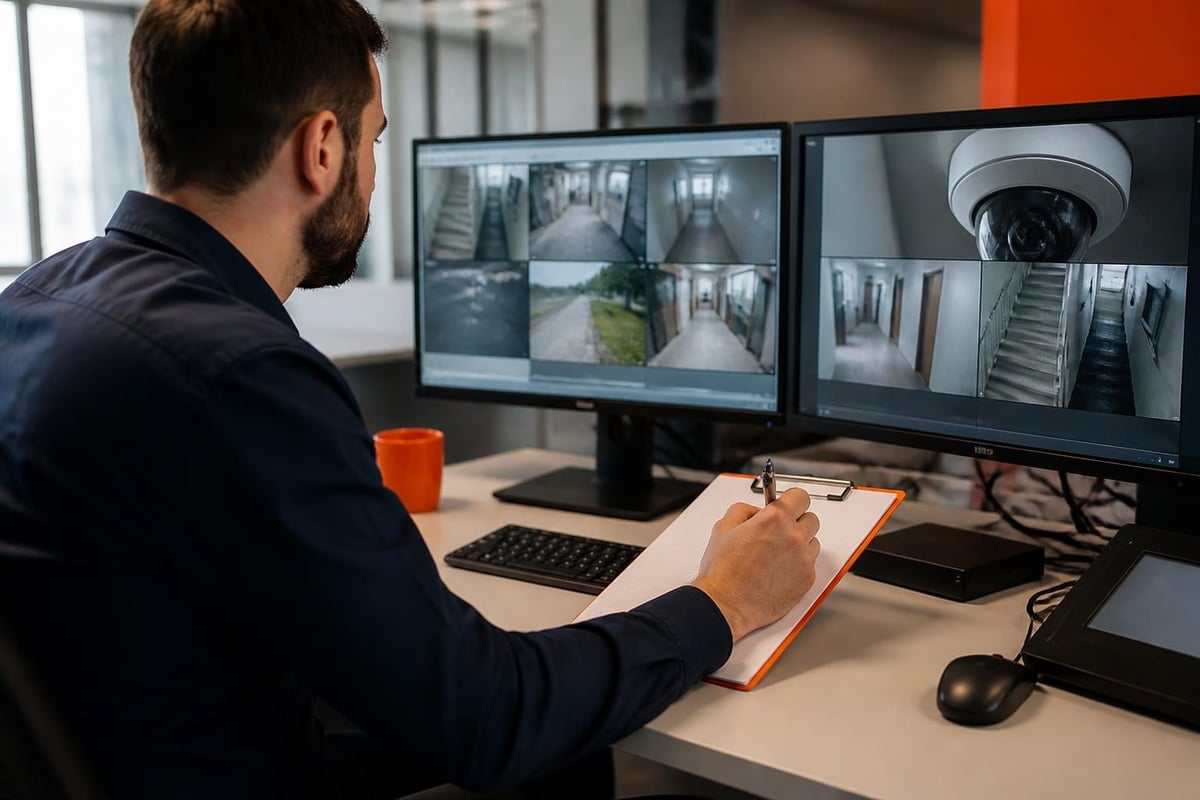
Qualified technicians examine each camera unit for physical damage, environmental wear, and positioning accuracy. External cameras face particular challenges from weather exposure, whilst internal units may require adjustment as building usage changes.
The inspection covers:
- Lens clarity and focus accuracy
- Housing integrity including weatherproof seals
- Mounting security and vibration resistance
- Cable condition at connection points
- Field of view verification against original specifications
Camera repositioning may be necessary as organisations reconfigure spaces. What provided comprehensive coverage initially may develop blind spots as layouts evolve. A professional cctv maintenance company identifies these gaps before they compromise security.
System Performance Testing
Beyond visual checks, comprehensive testing verifies technical performance across the entire surveillance infrastructure. Engineers test recording quality under various lighting conditions, checking whether day/night transitions trigger appropriately and infrared illumination functions correctly.
Network performance assessment identifies bandwidth constraints that could cause dropped frames or recording failures. As organisations add devices to their networks, CCTV systems may experience degradation unless properly monitored and adjusted.
| Test Category | Frequency | Key Checks |
|---|---|---|
| Image Quality | Monthly | Resolution, colour accuracy, contrast levels |
| Motion Detection | Monthly | Sensitivity settings, zone configuration, false alarm rates |
| Storage Systems | Weekly | Available capacity, recording integrity, backup functionality |
| Network Performance | Monthly | Bandwidth utilisation, latency, packet loss |
| Power Supplies | Quarterly | Voltage stability, backup battery condition, surge protection |
Software Updates and Security Patches
Cybersecurity threats targeting surveillance systems have increased dramatically. Manufacturers release firmware updates addressing vulnerabilities, but these require careful implementation to avoid system disruption.
A professional cctv maintenance company manages this process, testing updates before deployment and scheduling installations during low-risk periods. They maintain compatibility between cameras, recording equipment, and management software whilst ensuring security patches close potential access points for unauthorised users.
Following proper CCTV maintenance and testing procedures helps prevent the security breaches that increasingly affect poorly maintained systems. Outdated firmware represents one of the most common vulnerabilities exploited by malicious actors.
Maintenance Scheduling and Service Intervals
Monthly Service Requirements
Monthly attention prevents minor issues escalating into system failures. Regular monthly maintenance routines should address immediate concerns whilst tracking longer-term trends.
Essential monthly tasks include:
- Cleaning camera lenses and housings to maintain image quality
- Checking recording storage levels and archiving older footage
- Verifying motion detection sensitivity remains appropriately configured
- Testing remote access functionality for authorised users
- Reviewing system logs for errors or unusual activity
- Confirming time synchronisation across all devices
These checks typically require one to three hours depending on system size. Organisations with extensive installations may require more frequent attention to specific high-priority areas.
Quarterly and Annual Inspections
More intensive servicing occurs at longer intervals. Quarterly inspections examine components subject to gradual wear, including cable connections, power supplies, and environmental seals.
Annual comprehensive assessments provide opportunities for:
- Complete system testing under various scenarios
- Firmware and software upgrades across all components
- Security audit of access controls and network segmentation
- Capacity planning for storage and bandwidth requirements
- Documentation updates reflecting system changes
Working with commercial CCTV specialists ensures these deeper inspections follow industry best practices whilst integrating with broader security system maintenance schedules.
Selecting the Right CCTV Maintenance Company
Technical Qualifications and Industry Accreditations
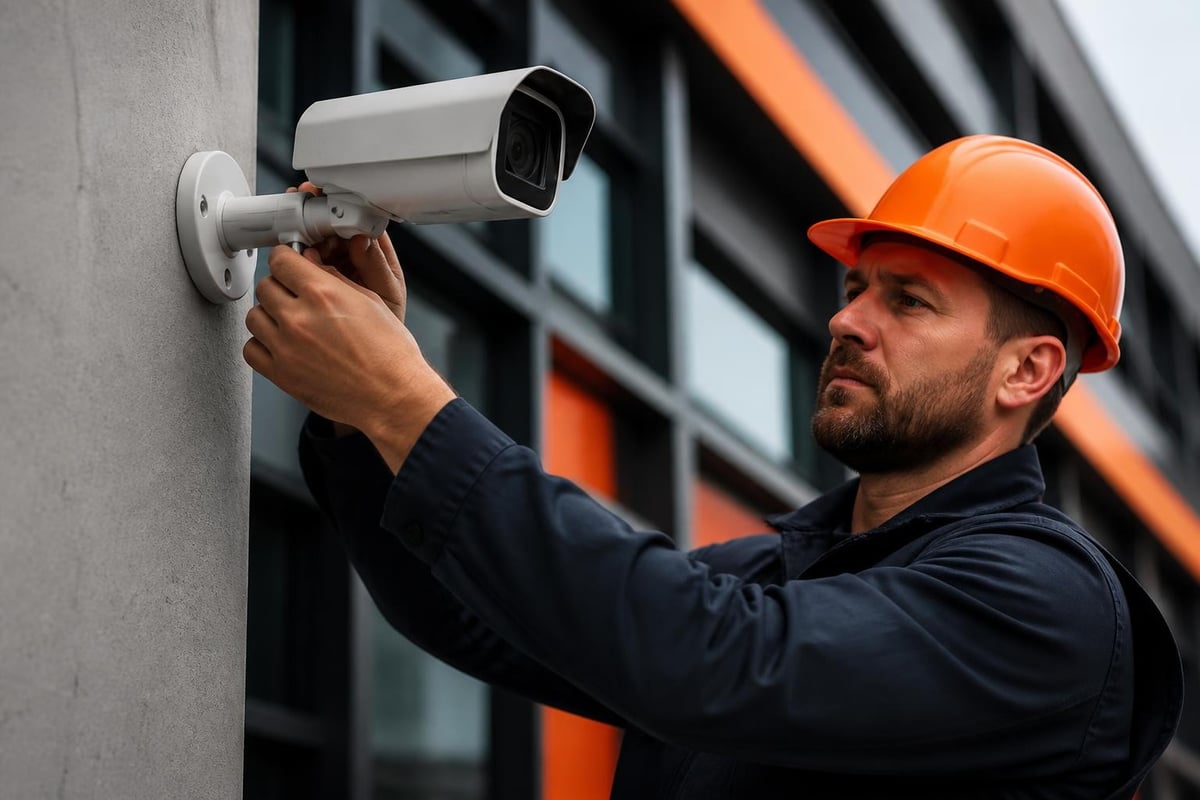
Not all service providers offer equivalent expertise. Organisations should verify that prospective maintenance companies hold appropriate industry certifications and employ qualified engineers.
Look for technicians certified in specific manufacturer systems, particularly if your installation uses specialised equipment. Generic IT support rarely possesses the detailed knowledge required for advanced surveillance systems.
Industry memberships demonstrate commitment to professional standards. Companies affiliated with recognised security sector bodies typically maintain higher service standards and stay current with regulatory changes.
Service Level Agreements and Response Times
Clear contractual terms protect both parties whilst ensuring expectations align. Comprehensive service level agreements (SLAs) specify response times for various issue categories, from routine maintenance to emergency failures.
Critical infrastructure may require guaranteed four-hour response for system-down situations, whilst less urgent matters might accept next-business-day service. Understanding your operational requirements helps determine appropriate SLA terms.
Consider these SLA components:
- Scheduled maintenance windows that minimise operational disruption
- Emergency response commitments with defined timeframes
- Parts availability guarantees for common replacement components
- Escalation procedures when initial responses prove insufficient
- Performance reporting demonstrating service delivery against commitments
Integration with Broader Security Infrastructure
Modern security operates as an integrated ecosystem rather than isolated systems. Your cctv maintenance company should understand how surveillance integrates with access control systems, intruder alarms, and fire safety equipment.
Coordinated maintenance scheduling prevents conflicts between different system servicing activities. Technicians who understand the complete security infrastructure can identify opportunities for improved integration and operational efficiency.
Organisations investing in comprehensive monitoring services benefit from maintenance providers who work seamlessly with monitoring centres, ensuring system updates don’t disrupt surveillance continuity.
Common CCTV Maintenance Challenges
Environmental Factors and Weather Damage
British weather presents particular challenges for outdoor surveillance equipment. Moisture ingress remains the leading cause of camera failures, despite weatherproof ratings. Regular inspection of housing seals and cable entry points prevents expensive replacements.
Coastal installations face additional challenges from salt corrosion, requiring more frequent cleaning and protective treatments. Industrial environments may expose equipment to chemical contaminants or extreme temperatures requiring specialised maintenance approaches.
Technology Obsolescence and Parts Availability
Security equipment manufacturers occasionally discontinue product lines, making replacement parts difficult to source. A competent cctv maintenance company maintains relationships with suppliers and stocks critical components for systems they support.
Planned obsolescence strategies should form part of long-term maintenance contracts. Rather than facing sudden replacement costs when parts become unavailable, organisations can budget for gradual system upgrades aligned with operational requirements.
Bandwidth and Storage Limitations
As camera resolutions increase, historical infrastructure may struggle to support higher data requirements. Storage systems designed for standard definition footage cannot accommodate the exponentially larger files produced by 4K cameras.
Maintenance companies should monitor these trends and advise when infrastructure upgrades become necessary. Attempting to maximise resolution on inadequate infrastructure typically results in recording failures that defeat the purpose of system improvements.
Preventive Maintenance Best Practices
Documentation and Record Keeping
Comprehensive maintenance records serve multiple purposes beyond regulatory compliance. Historical data helps identify recurring issues, predict component failures, and justify budget requests for system improvements.
Detailed CCTV maintenance checklists ensure consistency across service visits whilst providing accountability for work performed. Digital record systems allow trending analysis that paper logs cannot match.
Essential documentation includes:
- Service visit reports with findings and actions taken
- Configuration change logs tracking system modifications
- Component replacement records with serial numbers and dates
- Performance test results showing trends over time
- Incident reports documenting failures and resolutions
Predictive Maintenance Approaches
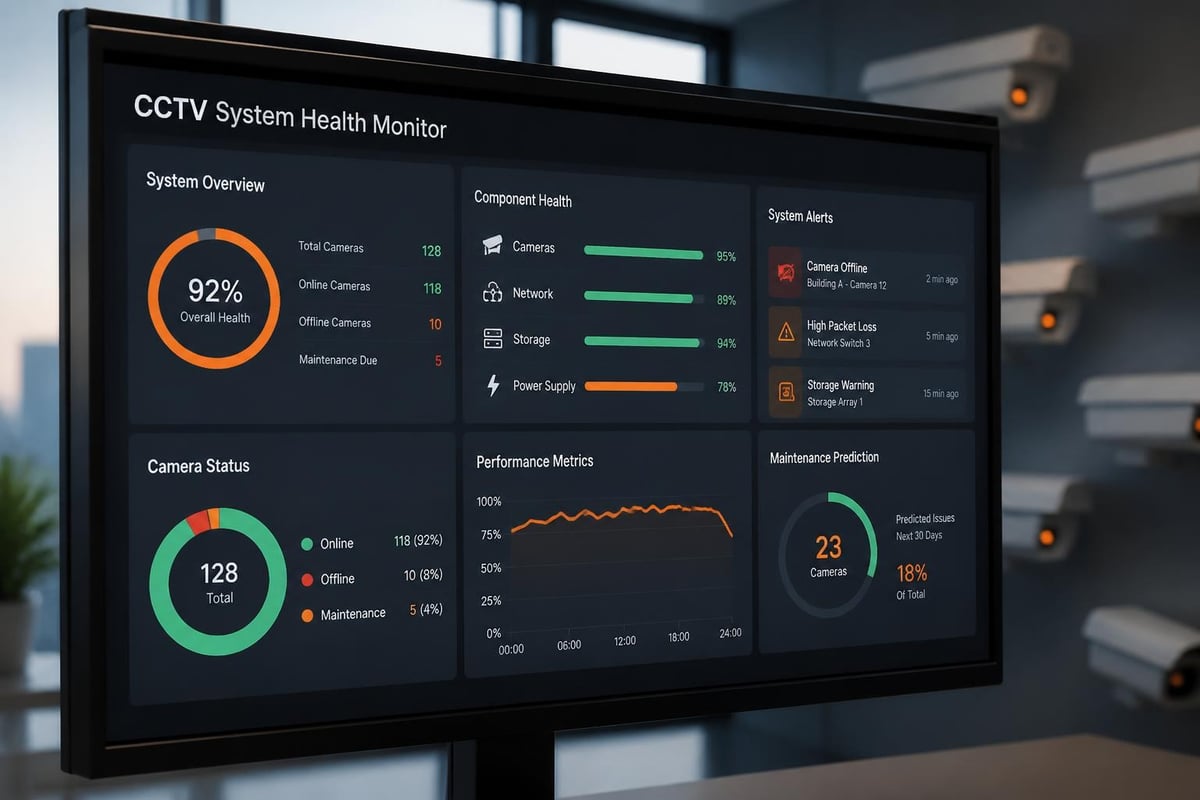
Advanced maintenance strategies use data analytics to predict failures before they occur. Modern surveillance systems generate diagnostic data revealing early warning signs of impending problems.
Predictive maintenance reduces unexpected downtime whilst optimising service resource allocation. Rather than replacing components on fixed schedules regardless of condition, technicians intervene based on actual performance metrics.
Temperature monitoring of recording equipment, for instance, may reveal cooling system degradation before hard drives fail. Network traffic analysis might identify cameras struggling with bandwidth constraints before recording quality suffers.
Staff Training and User Support
Technical maintenance represents only part of system reliability. Users who understand proper operation contribute significantly to overall performance and longevity.
Professional maintenance companies often provide user training covering:
- Basic troubleshooting for common issues
- Proper footage retrieval procedures maintaining evidence integrity
- Reporting mechanisms for suspected problems
- Security protocols preventing unauthorised access
- Privacy compliance when handling recorded material
Organisations investing in business security camera systems benefit from maintenance partners who support both technical infrastructure and operational competence.
Cost Considerations and Budgeting
Planned Maintenance Versus Reactive Repairs
Financial analysis consistently demonstrates that preventive maintenance costs substantially less than emergency repairs. A failed camera at a critical moment may cost far more than years of routine servicing through lost evidence or security breaches.
Maintenance contracts spread costs predictably across budget cycles whilst including benefits that ad-hoc servicing cannot match. Negotiated rates, priority response, and included parts often make contracts more economical than they initially appear.
| Maintenance Approach | Typical Annual Cost | Unplanned Failure Risk | Evidence Reliability |
|---|---|---|---|
| Comprehensive Contract | £500-2,000 per camera | Very Low | High |
| Basic Inspection Only | £200-800 per camera | Moderate | Moderate |
| Reactive/As-Needed | £100-500 per camera | High | Low |
| No Maintenance | £0 initially | Very High | Very Low |
These figures represent typical ranges for commercial installations. Actual costs vary based on system complexity, location, and specific requirements.
Return on Investment Analysis
Calculating maintenance ROI extends beyond direct cost comparisons. Consider the value of prevented losses, regulatory compliance, insurance premium reductions, and operational confidence.
Systems that fail to record critical incidents may expose organisations to liability claims, theft losses, or regulatory penalties far exceeding any maintenance savings. Professional maintenance from a qualified cctv maintenance company protects this broader value proposition.
Regulatory Compliance and Legal Requirements
Data Protection and Privacy Obligations
Surveillance systems must comply with data protection legislation governing recorded material handling. Maintenance activities that involve accessing stored footage require appropriate safeguards and documented procedures.
Service providers should demonstrate understanding of privacy requirements, including retention limits, access controls, and subject access request procedures. Technicians working on systems containing personal data need appropriate training and background checks.
Industry-Specific Standards
Certain sectors face additional surveillance system requirements beyond general obligations. Healthcare facilities, educational institutions, and licensed premises may need to demonstrate specific maintenance standards to regulatory bodies.
Understanding these sector-specific requirements helps organisations select maintenance providers with relevant experience. Generic service companies may lack the specialised knowledge required for compliance in regulated industries.
Professional CCTV monitoring services often integrate maintenance with compliance support, ensuring systems meet both technical and regulatory standards.
Future Trends in CCTV Maintenance
Artificial Intelligence and Automated Diagnostics
Emerging surveillance systems incorporate self-diagnostic capabilities using AI to identify maintenance requirements. Cameras detect lens obstructions, focus degradation, and environmental interference without human intervention.
Maintenance companies increasingly leverage these capabilities, receiving automated alerts about developing issues. This allows proactive servicing before problems affect security coverage or recording quality.
Cloud-Based Management Systems
Remote system management reduces on-site visit requirements for certain maintenance tasks. Configuration changes, software updates, and performance monitoring occur remotely, with physical inspections reserved for tasks requiring hands-on attention.
This hybrid approach reduces costs whilst maintaining service quality. However, it requires robust cybersecurity measures to prevent unauthorised access to surveillance infrastructure.
Sustainable Maintenance Practices
Environmental considerations increasingly influence maintenance strategies. Energy-efficient components, responsible disposal of electronic waste, and optimised service routes all contribute to reduced environmental impact.
Organisations with sustainability commitments should discuss these considerations with prospective maintenance providers. Companies demonstrating environmental responsibility align better with modern corporate values.
Integration with Complete Security Solutions
Coordinated Multi-System Maintenance
Comprehensive security requires coordinated attention across surveillance, access control, intrusion detection, and fire safety systems. Maintenance providers offering integrated services deliver superior efficiency and reliability.
Single-vendor maintenance simplifies scheduling, reduces administrative overhead, and ensures compatibility between different security components. Rather than coordinating multiple specialists, organisations work with one partner understanding their complete security infrastructure.
24/7 Monitoring and Support
Advanced maintenance programmes integrate with continuous monitoring services, creating seamless security coverage. Monitoring centres detect system issues in real-time, dispatching technicians before clients even realise problems exist.
This proactive approach minimises security gaps whilst providing peace of mind that surveillance systems receive constant attention. Organisations requiring 24/7 protection particularly benefit from this comprehensive support model.
Regular professional maintenance transforms surveillance systems from potential liabilities into reliable security assets that protect organisations year after year. Selecting the right cctv maintenance company ensures your investment continues delivering value through consistent performance, regulatory compliance, and evidential integrity. Logic Fire and Security provides comprehensive maintenance solutions for commercial surveillance systems across the UK, combining technical expertise with responsive service delivery. Their qualified engineers understand the complete security ecosystem, ensuring your CCTV infrastructure integrates seamlessly with broader fire and security systems whilst maintaining the highest operational standards.