

Protecting commercial premises from unauthorised access and theft remains a paramount concern for UK businesses in 2026. A properly specified burglar alarm for business serves as the cornerstone of any comprehensive security strategy, providing round-the-clock protection that safeguards assets, employees, and valuable intellectual property. Modern commercial intrusion detection systems have evolved considerably beyond simple door contacts, now offering sophisticated integration with video surveillance, access control, and remote monitoring capabilities that transform security from reactive to proactive.
Understanding Modern Commercial Burglar Alarm Technology
Contemporary burglar alarm systems for business environments utilise multiple detection technologies working in concert to create robust perimeter and internal protection. Unlike residential systems, commercial installations must account for complex layouts, multiple access points, and varied operational patterns across different business hours.
Core Detection Components
The foundation of any effective burglar alarm for business comprises several essential detection devices, each serving specific protective functions:
- Door and window contacts monitor entry points, triggering instantly when breaches occur
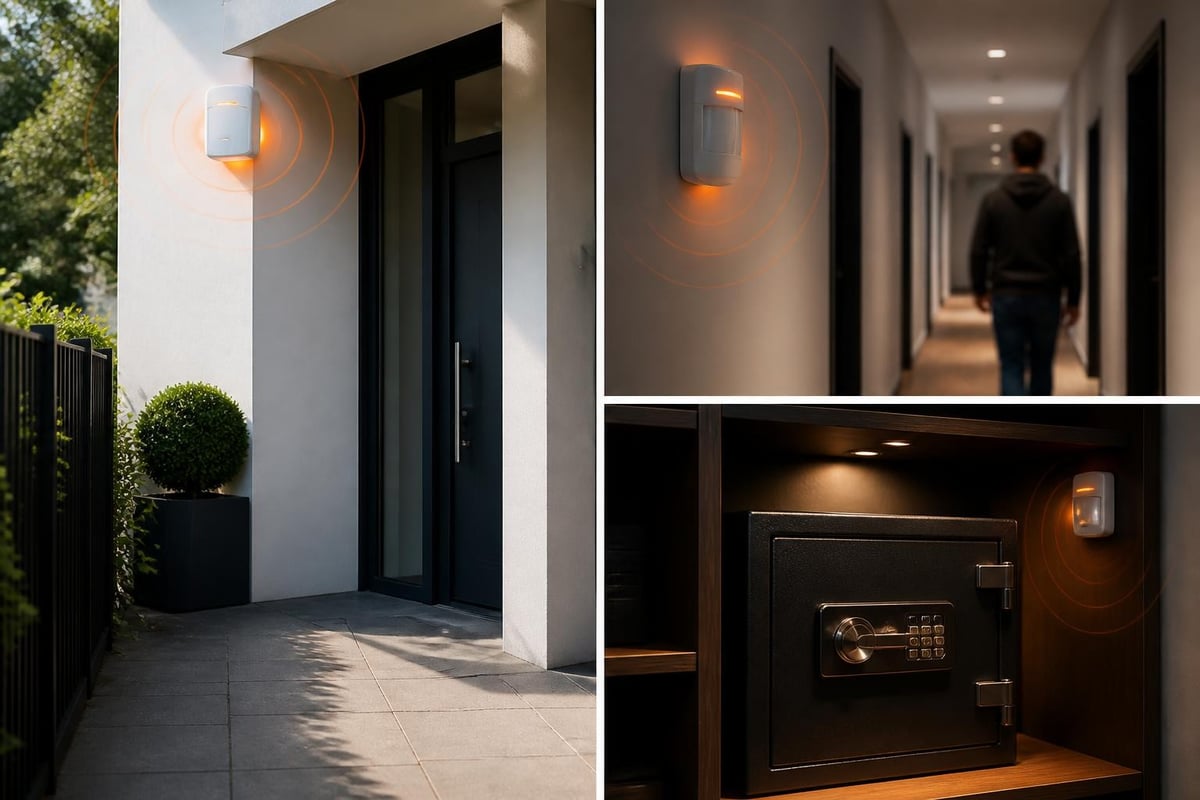
- Passive infrared (PIR) motion sensors detect movement through heat signature changes
- Glass break detectors identify the acoustic signature of breaking glass
-
- Dual-technology sensors combine PIR and microwave detection to reduce false alarms
- Vibration sensors protect safes, filing cabinets, and sensitive equipment
Modern systems incorporate intelligent detection capabilities that distinguish between genuine security threats and environmental factors such as heating systems or moving curtains. This intelligence significantly reduces false activations that can lead to complacency and wasted response resources.
Control Panels and User Interfaces
The control panel functions as the brain of your burglar alarm for business, processing signals from all connected devices and managing system responses. Contemporary panels offer:
| Feature | Benefit | Business Application |
|---|---|---|
| Zone management | Isolate specific areas | Partial arming for 24-hour operations |
| User code hierarchy | Control access levels | Different permissions for staff and cleaners |
| Event logging | Track all system activity | Audit trails for compliance |
| Remote programming | Update settings remotely | No engineer visits for minor changes |
Advanced keypads now feature touchscreen interfaces with intuitive menus, making system operation straightforward for employees at all technical skill levels. Many businesses also implement proximity card readers or biometric authentication, eliminating the security vulnerabilities associated with shared numeric codes.
Integration with Broader Security Infrastructure
A burglar alarm for business delivers maximum value when integrated with complementary security technologies, creating a unified platform that enhances situational awareness and response capabilities. This convergence represents the future of commercial security management.
CCTV and Video Verification
Linking intrusion detection with commercial CCTV systems enables video verification of alarm events. When a sensor triggers, cameras automatically focus on the affected zone and begin recording, providing visual confirmation that helps monitoring centres and emergency services distinguish genuine threats from false alarms.
This integration offers several operational advantages:
- Reduced false alarm costs through visual verification before dispatch
- Enhanced evidence capture with time-stamped footage linked to alarm events
- Forensic investigation support showing entry methods and suspect descriptions
- Insurance premium reductions through demonstrable security measures
Video verification has become increasingly important as police forces across the UK implement stricter response policies, often declining to attend unverified alarm activations. Professional CCTV monitoring services provide this verification layer whilst maintaining 24/7 vigilance.
Access Control Coordination
Integrating your burglar alarm for business with access control systems creates intelligent security that adapts to operational patterns. The alarm system can automatically disarm when authorised personnel present valid credentials, then re-arm when the last person exits.
This coordination provides:
- Elimination of human error in arming/disarming procedures
- Automatic after-hours protection without relying on staff procedures
- Intrusion detection for forced entry even when access control is compromised
- Comprehensive audit trails linking personnel movements to security events
Businesses operating multiple shifts or with complex access requirements particularly benefit from this automation, ensuring consistent security application regardless of staffing changes or operational pressures.
Professional Monitoring and Response Services
The effectiveness of a burglar alarm for business depends not merely on detection capability but on the quality of monitoring and response protocols. Professional intruder alarm monitoring transforms your system from a simple alerting device into a comprehensive security service.
24/7 Alarm Receiving Centres
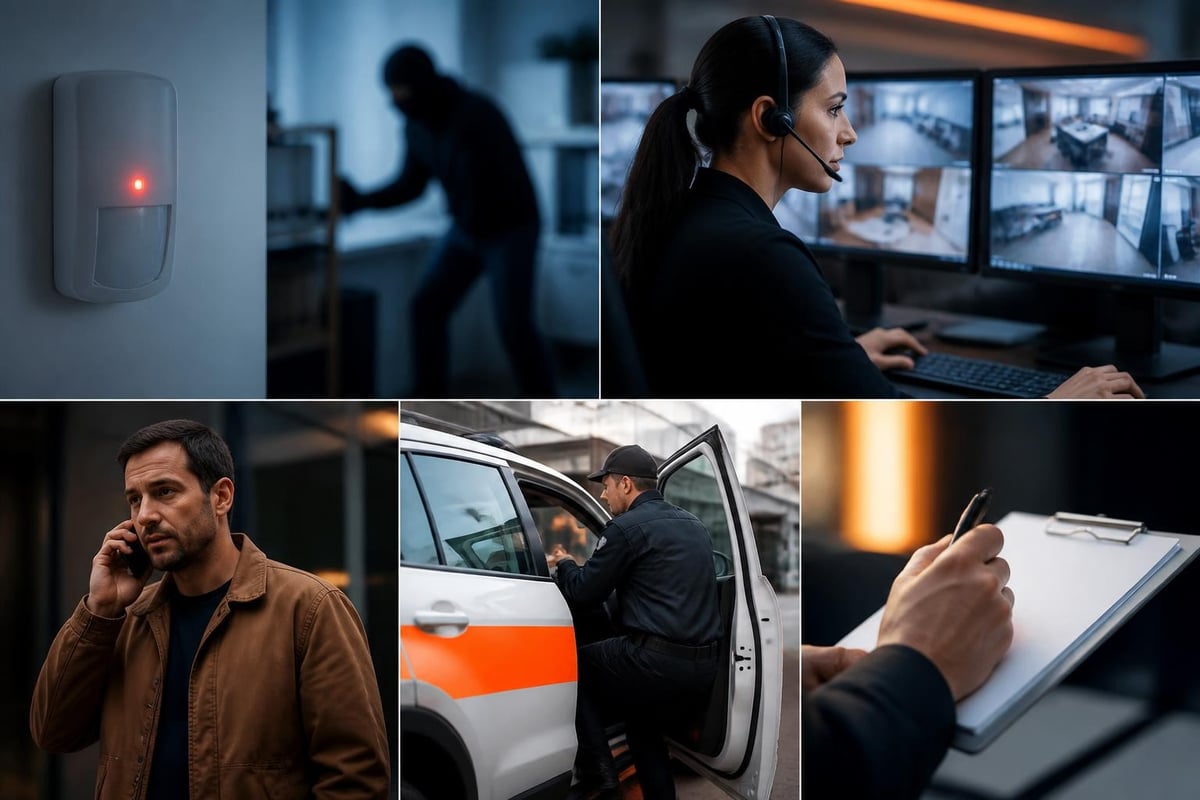
British Standard-approved Alarm Receiving Centres (ARCs) provide constant vigilance, with trained operators ready to respond to activations at any hour. When your burglar alarm for business triggers, operators follow predetermined protocols:
- Verify the activation through video, audio, or sequential zone triggering patterns
- Attempt contact with designated keyholders according to your escalation list
- Dispatch security response personnel if verification confirms intrusion
- Alert emergency services when appropriate, providing full incident details
- Document all actions and communications for your records
Modern ARCs utilise advanced monitoring protocols that incorporate artificial intelligence to identify patterns suggesting genuine security events versus environmental factors. This technology continuously improves response accuracy whilst reducing unnecessary callouts.
Remote Management Capabilities
Contemporary burglar alarm systems for business offer sophisticated remote management through smartphone applications and web portals. These platforms enable security managers to:
- Arm and disarm systems from any location with internet connectivity
- Manage user codes including temporary access for contractors
- Receive instant notifications of system events via push alerts and email
- Review event histories to identify patterns or compliance issues
- Control integration with other security systems from unified interfaces
Remote management proves particularly valuable for multi-site operations, where security managers can oversee numerous locations from a centralised dashboard, ensuring consistent policy application and rapid response to emerging situations.
System Design Considerations for Different Business Types
Specifying an appropriate burglar alarm for business requires careful consideration of operational requirements, building characteristics, and industry-specific vulnerabilities. A one-size-fits-all approach inevitably creates security gaps or unnecessary complexity.
Retail and Public-Facing Premises
Shops, showrooms, and customer-facing businesses face unique challenges including high footfall during operating hours and valuable stock accessible from sales floors. Effective designs incorporate:
| Protection Layer | Implementation | Key Benefit |
|---|---|---|
| Perimeter protection | Contacts on all access doors and windows | First line of defence |
| After-hours detection | Motion sensors throughout sales areas | Detect intrusion when closed |
| Point protection | Vibration sensors on safes and high-value displays | Protect specific assets |
| Panic activation | Wireless panic buttons for staff | Silent duress signalling |
Sequential arming allows different zones to activate at different times, protecting stock rooms and offices whilst sales areas remain operational. This flexibility accommodates complex operational patterns without compromising security.
Office and Corporate Environments
Professional services firms, corporate headquarters, and business parks prioritise intellectual property protection and compliance with data protection regulations. A burglar alarm for business in these settings emphasises:
- Zoned protection allowing departments to operate independently
- Integration with IT security protecting server rooms and data centres
- Visitor management coordination ensuring authorised access only
- After-hours monitoring of sensitive areas even when some staff remain on-site
Many corporate environments now implement perimeter protection strategies that detect intrusion attempts at building boundaries before intruders reach valuable assets, providing additional response time.
Industrial and Manufacturing Facilities
Warehouses, factories, and industrial sites present challenges including large footprints, environmental conditions, and valuable equipment and materials. Purpose-designed systems incorporate:
- Outdoor-rated detection for loading bays and yard areas
- Vibration and acoustic sensors protecting machinery and tools
- Integration with fire detection creating unified life safety platforms
- Robust communication paths ensuring signal transmission across large areas
- Environmental compensation accounting for temperature variations and dust
Industrial facilities often benefit from integrated monitoring solutions that combine intrusion detection with equipment status monitoring, creating comprehensive operational awareness.
Installation, Maintenance and Compliance Requirements
Proper installation and ongoing maintenance remain critical for reliable burglar alarm performance. Poorly installed systems generate false alarms, miss genuine intrusions, and fail to meet insurance requirements or regulatory standards.
Professional Installation Standards
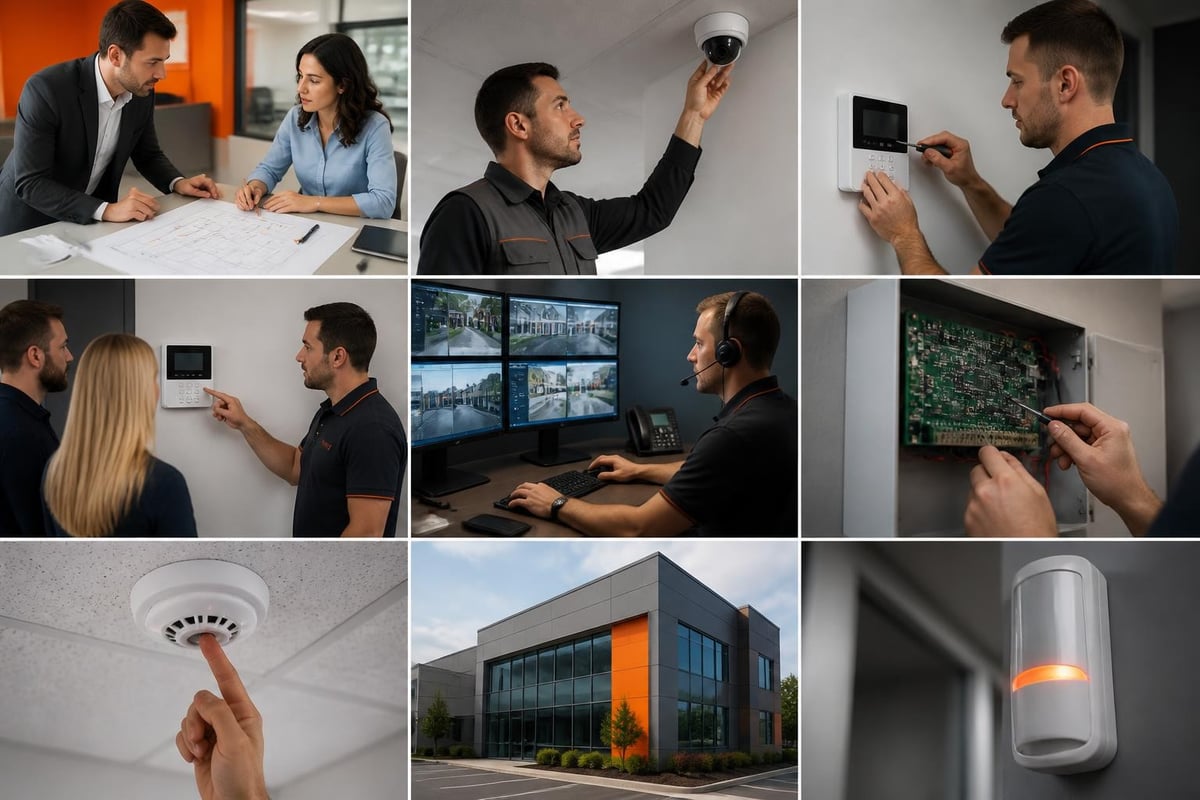
Qualified UK security contractors follow rigorous installation procedures that ensure system reliability and compliance. The installation process for a burglar alarm for business typically includes:
- Site survey and risk assessment identifying vulnerabilities and protection requirements
- System design documentation specifying equipment locations and operational parameters
- Cable installation using appropriate routes and fixings for commercial environments
- Device commissioning ensuring each sensor operates correctly and covers intended areas
- User training teaching staff proper operation and emergency procedures
- Handover documentation providing manuals, certificates, and maintenance schedules
British Standards BS 8243 and PD 6662 establish installation requirements for commercial intruder alarm systems, with different grades reflecting the level of security required. Insurance companies and risk assessors often mandate specific grades based on business type and asset values.
Ongoing Maintenance and Testing
Regular maintenance ensures your burglar alarm for business remains effective throughout its operational life. Recommended maintenance schedules include:
| Activity | Frequency | Purpose |
|---|---|---|
| Engineer inspection | Annually minimum | Verify all components function correctly |
| Battery replacement | 3-5 years | Ensure backup power availability |
| Detector testing | Quarterly | Confirm detection capability maintained |
| System software updates | As released | Access new features and security patches |
| User procedure review | Annually | Ensure staff follow correct protocols |
Businesses with monitored systems typically receive preferential insurance terms when they can demonstrate consistent maintenance records. Many insurers now require annual engineer certifications as a policy condition.
Advanced Features and Future Technologies
The burglar alarm for business continues evolving with technological advancement, incorporating artificial intelligence, machine learning, and Internet of Things connectivity that enhance both detection accuracy and operational convenience.
Intelligent Detection Algorithms
Modern systems employ sophisticated algorithms that analyse detection patterns to differentiate genuine security events from benign triggers. These systems learn normal building behaviour, including:
- Typical arming and disarming patterns by day of week and time
- Environmental conditions that might affect sensor performance
- User behaviour patterns identifying anomalies suggesting duress or compromise
- Sequential detection patterns indicating progressive intrusion versus isolated events
Machine learning continuously refines these models, improving accuracy over time whilst reducing the operational burden of false activations. Some advanced systems now integrate with commercial burglar alarm monitoring services that use artificial intelligence at the ARC level, providing additional verification layers.
Cloud-Based Management Platforms
Cloud connectivity has transformed burglar alarm management, moving from proprietary systems requiring dedicated hardware to platform-based solutions accessible from any device. Benefits include:
- Automatic software updates ensuring latest security patches and features
- Scalability across multiple sites without infrastructure investment
- Integration with other cloud-based business systems
- Enhanced reporting and analytics for security performance assessment
- Reduced maintenance costs through remote diagnostics and support
These platforms often provide API access, allowing businesses to incorporate security data into broader business intelligence systems for comprehensive operational insights.
Environmental and Energy Efficiency
Contemporary burglar alarm systems for business incorporate sustainability considerations including low-power consumption, recyclable materials, and integration with building management systems. Wireless technologies have advanced significantly, with battery lives now extending to several years whilst maintaining reliable communication.
Solar-powered outdoor detection and hybrid wired-wireless architectures reduce installation costs whilst minimising environmental impact. Businesses pursuing environmental accreditations increasingly evaluate security systems against sustainability criteria.
Cost Considerations and Return on Investment
Understanding the financial aspects of implementing a burglar alarm for business helps justify investment and guide specification decisions. Costs vary considerably based on system sophistication, building characteristics, and ongoing service requirements.
Capital and Operational Costs
Initial investment for commercial burglar alarm systems typically includes equipment purchase, professional installation, and commissioning. For a medium-sized business premises, approximate costs might be:
- Basic wired system: £2,000-£5,000 including installation
- Hybrid wired-wireless system: £4,000-£8,000 with expanded coverage
- Fully integrated security platform: £8,000-£20,000+ incorporating CCTV and access control
Ongoing operational costs encompass monitoring fees (typically £15-£50 monthly depending on service level), annual maintenance (£150-£400), and periodic component replacement. When evaluating total cost of ownership, consider a five-to-ten-year operational horizon.
Businesses should also factor professional monitoring services that provide 24/7 coverage, as self-monitored systems place operational burden on internal staff and may not satisfy insurance requirements.
Insurance Benefits and Loss Prevention
A properly certified burglar alarm for business frequently generates insurance premium reductions between 10-25%, depending on system specification and monitoring arrangements. More significant financial benefits arise from loss prevention:
- Theft deterrence protecting inventory, equipment, and cash holdings
- Reduced inventory shrinkage through detection of after-hours access
- Lower excess payments when security systems meet insurer requirements
- Business continuity protection preventing operational disruption from security incidents
Many businesses find their burglar alarm investment recovers costs within two to three years through combined insurance savings and loss prevention, whilst providing intangible benefits including enhanced employee safety and client confidence.
Selecting the Right Security Partner
Choosing an experienced provider for your burglar alarm for business significantly influences system performance, reliability, and long-term satisfaction. Evaluation criteria should encompass technical capability, service quality, and strategic partnership potential.
Accreditation and Industry Recognition
Reputable security companies hold relevant industry accreditations demonstrating competence and commitment to professional standards:
- NSI Gold or SSAIB certification for installation and monitoring services
- ISO 9001 quality management ensuring consistent service delivery
- Manufacturer training certifications confirming technical expertise
- Professional indemnity insurance protecting clients against installation errors
Companies working with Blue Chip organisations and public sector agencies typically maintain comprehensive accreditation portfolios. Verification of quality and accreditations provides confidence in supplier capability.
Service Capabilities and Support
Beyond initial installation, consider the provider’s capacity to deliver ongoing support including emergency response, system modifications, and technology upgrades. Key service attributes include:
| Service Element | Importance | Evaluation Questions |
|---|---|---|
| Emergency callout | Critical | What are guaranteed response times? |
| Technical support | High | Is telephone support available 24/7? |
| System upgrades | Medium | Can existing investment be protected through modular expansion? |
| Multi-site capability | Variable | Do they manage security across distributed locations? |
| Integration expertise | High | What experience with other building systems? |
Established providers often offer comprehensive solutions covering both fire safety and security requirements, creating operational efficiencies through unified service relationships and integrated system management.
Implementing an effective burglar alarm for business demands careful consideration of detection technologies, monitoring services, integration capabilities, and ongoing maintenance requirements. Modern systems offer sophisticated protection that adapts to operational patterns whilst providing actionable intelligence to security managers. Whether protecting retail premises, corporate offices, or industrial facilities, investing in professional-grade intrusion detection safeguards assets, ensures business continuity, and demonstrates duty of care to employees and stakeholders. Logic Fire and Security brings decades of expertise in designing, installing, and maintaining comprehensive security solutions tailored to your specific business requirements, providing the peace of mind that comes from partnering with industry-leading specialists trusted by major organisations across the UK.