

Modern fire protection demands sophisticated solutions that can extinguish flames without causing collateral damage to valuable equipment, sensitive electronics, or irreplaceable assets. A gas fire suppression system represents one of the most advanced approaches to fire safety, utilising specialised gaseous agents to suppress fires quickly whilst leaving no residue and causing minimal disruption to protected spaces. These systems have become essential for organisations across the UK that require rapid fire response without the destructive effects of traditional water-based sprinklers. Understanding the technology, applications, and regulatory requirements surrounding gas-based suppression is crucial for facility managers, safety officers, and business owners responsible for protecting critical infrastructure.
Understanding Gas Fire Suppression Technology
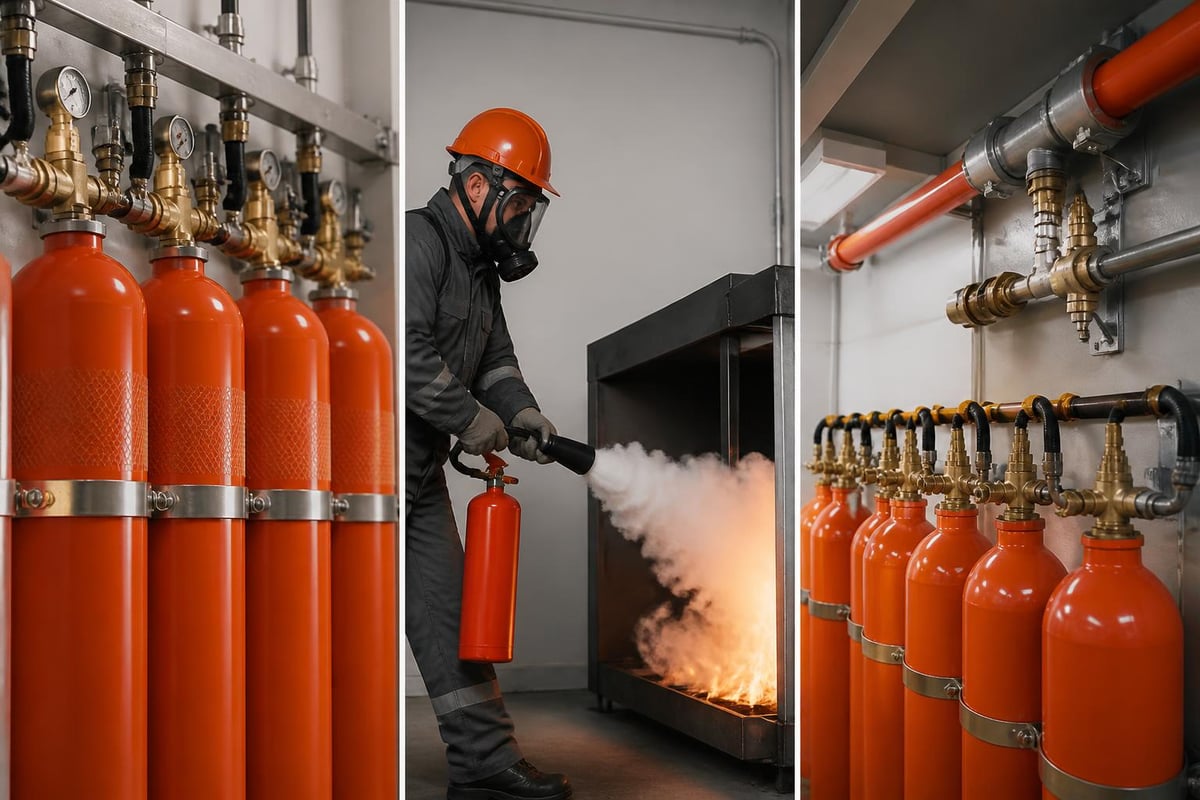
A gas fire suppression system works by deploying clean extinguishing agents that suppress fires through various mechanisms, including oxygen displacement, heat absorption, and chemical flame interruption. Unlike traditional sprinkler systems that rely on water to cool and extinguish flames, these sophisticated systems use gaseous fire suppression agents specifically engineered to target the fire triangle without causing secondary damage.
The fundamental principle behind these systems involves rapidly flooding a protected enclosure with a gaseous agent at a predetermined concentration. This concentration is carefully calculated to suppress the fire whilst maintaining breathable conditions for safe evacuation where appropriate. The speed of deployment is critical, with most systems achieving full discharge within 10 to 60 seconds depending on the agent and application.
Primary Agent Categories
Different applications require different approaches to fire suppression. The selection of an appropriate gas agent depends on multiple factors including environmental impact, safety considerations, equipment sensitivity, and regulatory compliance.
Inert gas systems utilise naturally occurring gases such as nitrogen, argon, or combinations thereof. These agents suppress fires primarily through oxygen displacement, reducing the oxygen concentration in the protected space below the level required to sustain combustion. Inert gases offer excellent environmental credentials with zero ozone depletion potential and no global warming impact.
Chemical agents work through a combination of chemical and physical mechanisms. Historically, halon was the dominant chemical agent, but environmental concerns led to its phase-out under the Montreal Protocol. Modern replacements include hydrofluorocarbons (HFCs) and fluorinated ketones, which offer effective suppression with reduced environmental impact compared to their predecessors.
| Agent Type | Primary Mechanism | Environmental Impact | Typical Applications | Storage Pressure |
|---|---|---|---|---|
| IG-541 (Inergen) | Oxygen displacement | Zero GWP, Zero ODP | Occupied spaces, archives | 200-300 bar |
| IG-55 (Argonite) | Oxygen displacement | Zero GWP, Zero ODP | Data centres, museums | 200-300 bar |
| FM-200 (HFC-227ea) | Chemical interruption | Low GWP, Zero ODP | Telecommunications, electronics | 25-42 bar |
| Novec 1230 | Heat absorption | Zero GWP, Zero ODP | Server rooms, control rooms | 25-42 bar |
Critical Applications and Protected Environments
The deployment of a gas fire suppression system proves most valuable in environments where water damage would be catastrophic or where rapid suppression is essential to prevent cascading failures. These systems have become standard protection for numerous critical facility types across commercial, industrial, and institutional sectors.
Data centres and server rooms represent perhaps the most common application. The comprehensive fire and security solutions required for these facilities must account for both fire suppression and business continuity. A single water sprinkler discharge could destroy millions of pounds worth of equipment and cause weeks of downtime, making gas-based systems the logical choice.
Telecommunications facilities share similar requirements, housing sensitive switching equipment and communication infrastructure that cannot tolerate water exposure. Power generation and distribution facilities also rely on gas suppression to protect control rooms, transformer installations, and electrical switchgear.
Heritage and High-Value Asset Protection
Museums, galleries, and archives present unique challenges where the protected items themselves are irreplaceable. Gas systems provide fire suppression without the moisture, residue, or contamination associated with other suppression methods.
- Libraries and document storage facilities
- Art storage and conservation laboratories
- Historical building protection
- Rare collections and exhibits
- Banking vaults and high-security storage
Financial institutions utilise gas suppression systems to protect vault areas, trading floors, and records management facilities. The regulatory framework governing fire suppression systems emphasises the importance of appropriate system selection based on risk assessment and protected asset value.
Manufacturing environments with clean rooms, pharmaceutical production areas, or precision engineering facilities require contamination-free suppression. Paint spray booths, chemical processing areas, and flammable liquid storage rooms benefit from the rapid deployment characteristics of gaseous agents.
Design Considerations and System Components
Proper system design requires comprehensive understanding of the protected space, fire risks, and operational requirements. A gas fire suppression system consists of multiple integrated components working in concert to detect, activate, and suppress fire events.
Detection and Activation Systems
Early detection remains critical for effective suppression. Modern systems typically employ multiple detection technologies including smoke detectors, heat detectors, and flame detectors configured in cross-zoned arrangements. This redundancy ensures reliable activation whilst minimising false discharge risks.
The detection system connects to a dedicated fire control panel that monitors all devices, manages pre-discharge warnings, and controls the release sequence. Upon confirmed fire detection, the panel activates audible and visual alarms, initiates any required shutdown procedures, and triggers the agent release after a pre-determined time delay allowing for evacuation.
Storage and distribution networks must be precisely engineered. Agent storage cylinders are located in designated equipment rooms or cabinets, connected via pipe networks to discharge nozzles strategically positioned throughout the protected space. The design requirements for gas agent fire suppression systems specify calculations for agent quantity, pipe sizing, and nozzle placement based on enclosure volume and characteristics.
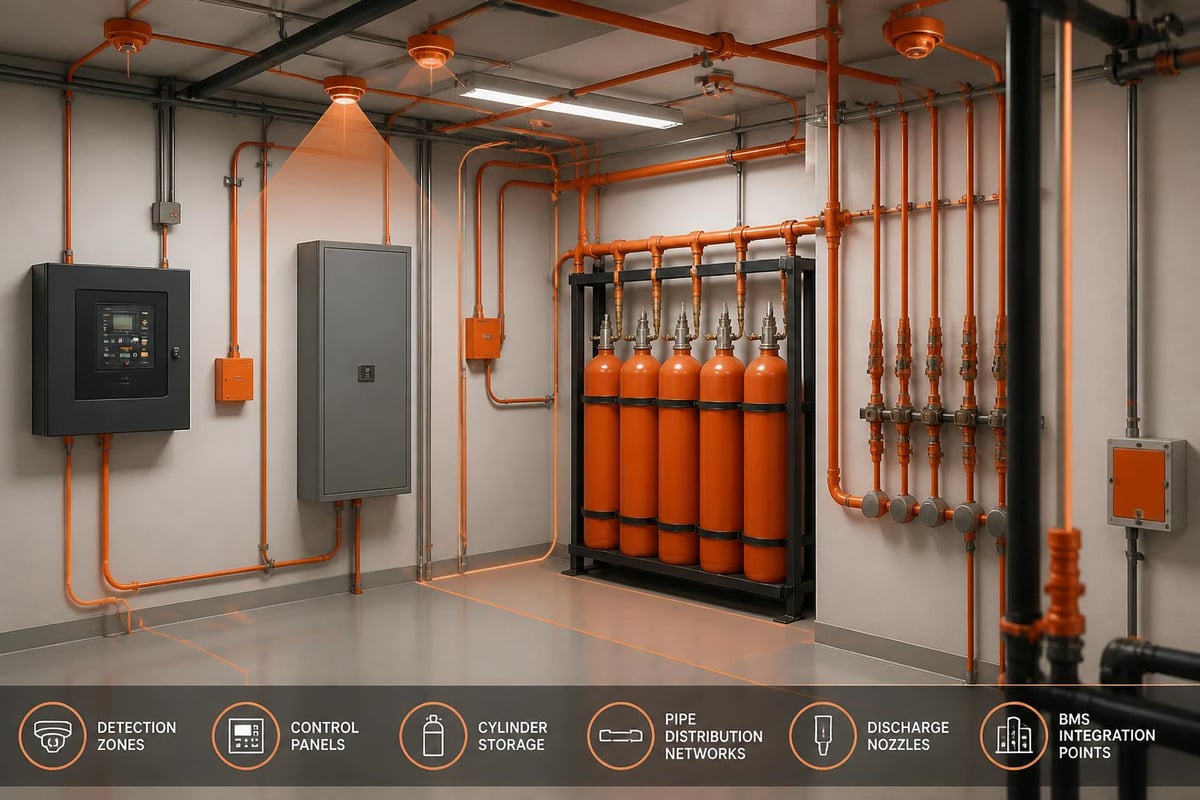
| Component | Function | Key Specifications | Maintenance Frequency |
|---|---|---|---|
| Detection Devices | Early fire identification | Response time, sensitivity | Quarterly testing |
| Control Panel | System monitoring and activation | Zone capacity, integration | Monthly inspection |
| Agent Cylinders | Suppressant storage | Capacity, pressure rating | Annual weighing/pressure check |
| Pipe Network | Agent distribution | Material, diameter, pressure rating | Annual inspection |
| Discharge Nozzles | Agent deployment | Flow rate, coverage pattern | Annual inspection |
Regulatory Compliance and Standards Framework
Operating a gas fire suppression system in the UK requires adherence to multiple regulatory frameworks and industry standards. Compliance ensures system effectiveness whilst protecting building occupants and meeting insurance requirements.
British and European standards govern system design, installation, and maintenance. The EN 15004 standard provides comprehensive requirements for fixed gaseous fire-fighting systems, covering everything from design calculations to commissioning procedures.
Installation and Commissioning Requirements
Professional installation by competent specialists is mandatory. Installers must demonstrate appropriate certification and competency for the specific system type and agent being deployed. The installation process includes pressure testing of pipe networks, verification of detection device placement, and confirmation of proper nozzle orientation.
Commissioning involves comprehensive testing of all system components including:
- Detection circuit functionality and cross-zoning logic
- Control panel programming and alarm sequences
- Manual release station operation
- Abort switch functionality
- Pre-discharge warning systems
- System pressure and agent quantity verification
- Enclosure integrity testing for agent retention
Documentation requirements are extensive. Operators must maintain detailed records of system design calculations, installation certificates, commissioning reports, and all maintenance activities. These records prove essential for regulatory inspections, insurance compliance, and operational safety.
The fire safety and protection requirements for commercial premises extend beyond basic detection to include appropriate suppression capabilities matched to identified risks. Regular risk assessments should evaluate whether existing protection remains adequate as operations evolve.
Maintenance and Operational Management
Ongoing maintenance ensures system reliability when activation becomes necessary. A comprehensive maintenance programme for a gas fire suppression system includes regular inspections, functional testing, and periodic servicing of all components.
Visual inspections should occur monthly, checking for obvious damage, obstructions, or unauthorised modifications. Cylinder pressure gauges require monitoring to ensure agents remain properly charged. Any pressure loss indicates potential leakage requiring immediate investigation.
Quarterly maintenance typically includes detection device testing, alarm verification, and control panel diagnostics. Annual servicing involves more comprehensive activities including cylinder weighing or pressure measurement to confirm agent quantity, detailed pipe network inspection, and nozzle cleanliness verification.
System Testing and Validation
Full discharge testing remains impractical for most installations due to agent cost and operational disruption. Instead, validation relies on component testing, simulated releases, and periodic agent sampling where applicable. Some jurisdictions or insurance providers may require actual discharge testing at extended intervals, typically 5-10 years.
Documentation of all maintenance activities is crucial. Service records should include:
- Date and personnel conducting maintenance
- Tests performed and results obtained
- Any deficiencies identified and remedial actions taken
- Component replacements or adjustments
- Agent quantity verification results
- System availability status during maintenance
Integration with building management systems enables remote monitoring of system status. Modern gas suppression systems can report troubles, alarms, and activation events to centralised monitoring stations, ensuring rapid response to any issues affecting system readiness.
The commercial fire detection systems supporting gas suppression require equal attention to ensure reliable fire identification and appropriate system activation.
Training and Safety Protocols
Human factors significantly influence system effectiveness and safety. Comprehensive training ensures building occupants understand how to respond during system activation whilst maintenance personnel possess the competency to service systems safely.
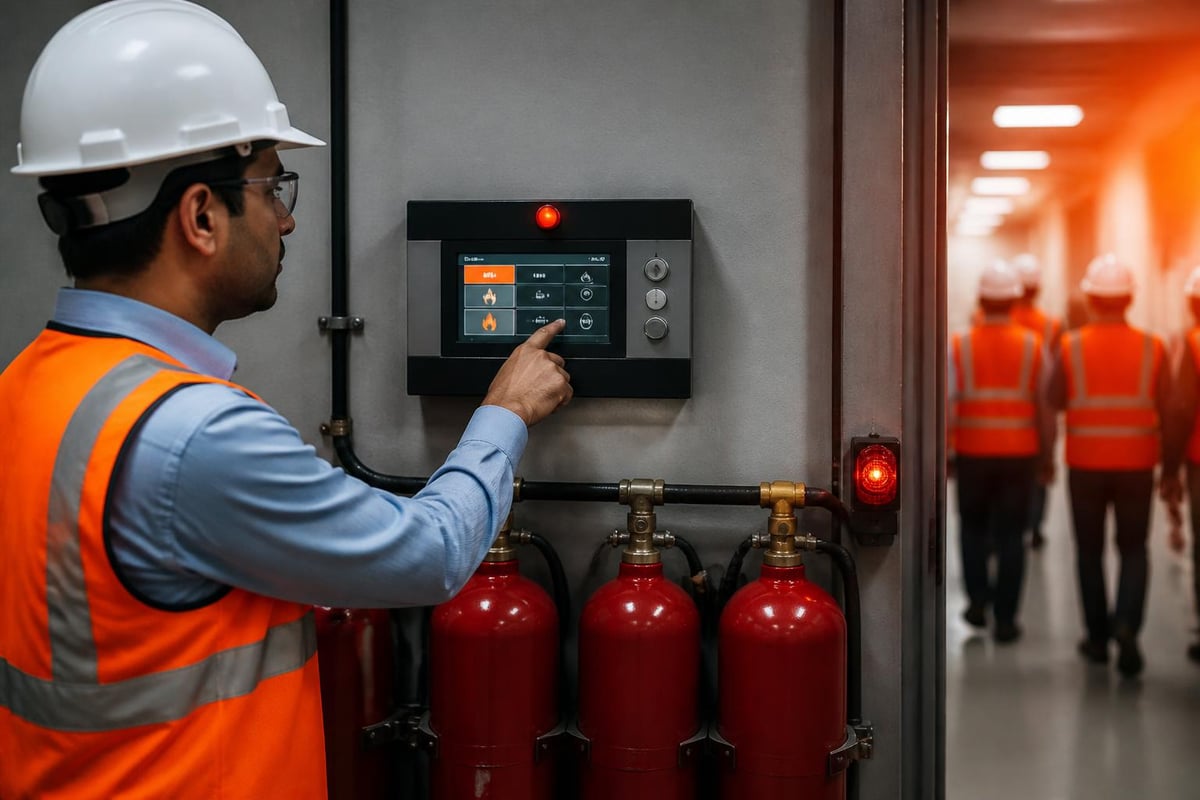
Occupant training should cover pre-discharge warning recognition, evacuation procedures, and post-discharge re-entry protocols. Personnel must understand that agent discharge creates time-limited conditions requiring immediate evacuation from affected areas. Clear signage indicating protected spaces and warning of gas discharge proves essential.
Maintenance personnel require specialised training covering the specific agents deployed, pressure vessel safety, electrical systems, and regulatory requirements. Working with pressurised cylinders and high-voltage detection circuits demands appropriate certification and adherence to safety protocols.
Emergency Response Planning
Effective emergency response planning integrates gas suppression systems with broader fire safety strategies. Emergency action plans should address:
- Immediate occupant notification procedures
- Evacuation routes and assembly points
- System abort procedures if fire proves controllable by other means
- Coordination with fire brigade response
- Post-discharge ventilation and re-entry protocols
- Agent cleanup and system recharge procedures
The system fire protection approach for modern facilities increasingly combines multiple technologies, with gas suppression forming one layer of a comprehensive defence strategy.
Environmental and Sustainability Considerations
Environmental impact has driven significant evolution in gas fire suppression technology. The phase-out of halon agents under international environmental agreements prompted development of more sustainable alternatives with reduced global warming potential and zero ozone depletion characteristics.
Modern agent selection balances suppression effectiveness with environmental responsibility. Inert gas systems offer the most environmentally benign option, using atmospheric gases that return harmlessly to the environment after discharge. However, they require larger storage volumes and higher discharge pressures compared to chemical agents.
Chemical agents provide more compact system designs and faster suppression but carry varying degrees of environmental impact. Newer fluorinated ketones and hydrofluoroolefins demonstrate significantly lower global warming potential than earlier HFC agents whilst maintaining effective suppression characteristics.
Sustainability extends beyond agent selection to encompass system lifecycle considerations. Proper maintenance prevents unnecessary agent discharge, whilst end-of-life system decommissioning should include responsible agent recovery and recycling where possible. Research programmes such as the NIST Next Generation Fire Suppression Technology Program continue developing more sustainable suppression technologies.
Integration with Fire Safety Infrastructure
A gas fire suppression system rarely operates in isolation. Effective fire protection requires integration with detection systems, alarm networks, building controls, and emergency response procedures. Sophisticated coordination ensures all systems work harmoniously during fire events.
Building management system integration enables coordinated responses including HVAC shutdown to prevent agent loss, door release for evacuation, elevator recall, and emergency lighting activation. The control sequences must be carefully programmed to support both fire suppression and life safety objectives.
Fire alarm system integration ensures appropriate notification throughout the facility. Whilst localised pre-discharge warnings alert occupants in protected spaces, building-wide alarm systems notify all personnel of fire conditions. The alarm systems fire considerations for complex facilities require professional design to ensure clear, understandable warnings.
Security system interactions require attention during design. Access control systems may need to release doors during evacuation whilst maintaining security boundaries. CCTV systems should continue operating to monitor evacuation progress and fire development.
Selecting and maintaining an appropriate gas fire suppression system requires balancing technical performance, regulatory compliance, environmental responsibility, and operational practicality. These sophisticated systems provide essential protection for high-value assets and critical infrastructure when properly designed, installed, and maintained. Whether protecting data centres, heritage collections, or industrial processes, professional expertise ensures your suppression system delivers reliable performance when needed most. Logic Fire and Security brings decades of experience designing, installing, and maintaining advanced fire suppression systems for businesses and public agencies across the UK, ensuring your facilities benefit from cutting-edge protection matched to your specific operational requirements.