

Commercial fire safety systems represent one of the most critical investments any business can make, yet their effectiveness depends entirely on regular, professional maintenance. Fire system service encompasses a comprehensive range of activities designed to ensure that detection, suppression, and alarm systems function flawlessly when lives and property are at stake. For organisations across the UK, understanding the scope, frequency, and importance of fire system service is essential for maintaining compliance, protecting assets, and safeguarding employees.
Understanding the Scope of Fire System Service
Fire system service involves far more than a quick visual inspection. Professional servicing encompasses systematic testing, component replacement, documentation, and ongoing monitoring to ensure every element of a fire protection system operates as designed.
Core Components Requiring Regular Service
Modern commercial fire protection systems comprise multiple interconnected components, each requiring specialist attention:
- Fire alarm panels and control systems that serve as the central hub for detection and response
- Detection devices including smoke detectors, heat sensors, and beam detectors positioned throughout premises
- Manual call points strategically located to enable immediate alarm activation
- Sounders and visual alarm devices ensuring effective notification across all areas
- Emergency lighting systems providing safe egress during power failures
- Suppression systems such as sprinklers, gas suppression, or foam systems
- Fire extinguishers requiring annual inspection and periodic maintenance
Each component demands specific testing protocols and maintenance intervals. Professional fire system service providers follow rigorous schedules aligned with British Standards and manufacturer specifications.
Legislative and Standards Framework
UK businesses must comply with the Regulatory Reform (Fire Safety) Order 2005, which places responsibility on the ‘responsible person’ to ensure fire safety measures are properly maintained. This includes regular servicing by competent professionals.
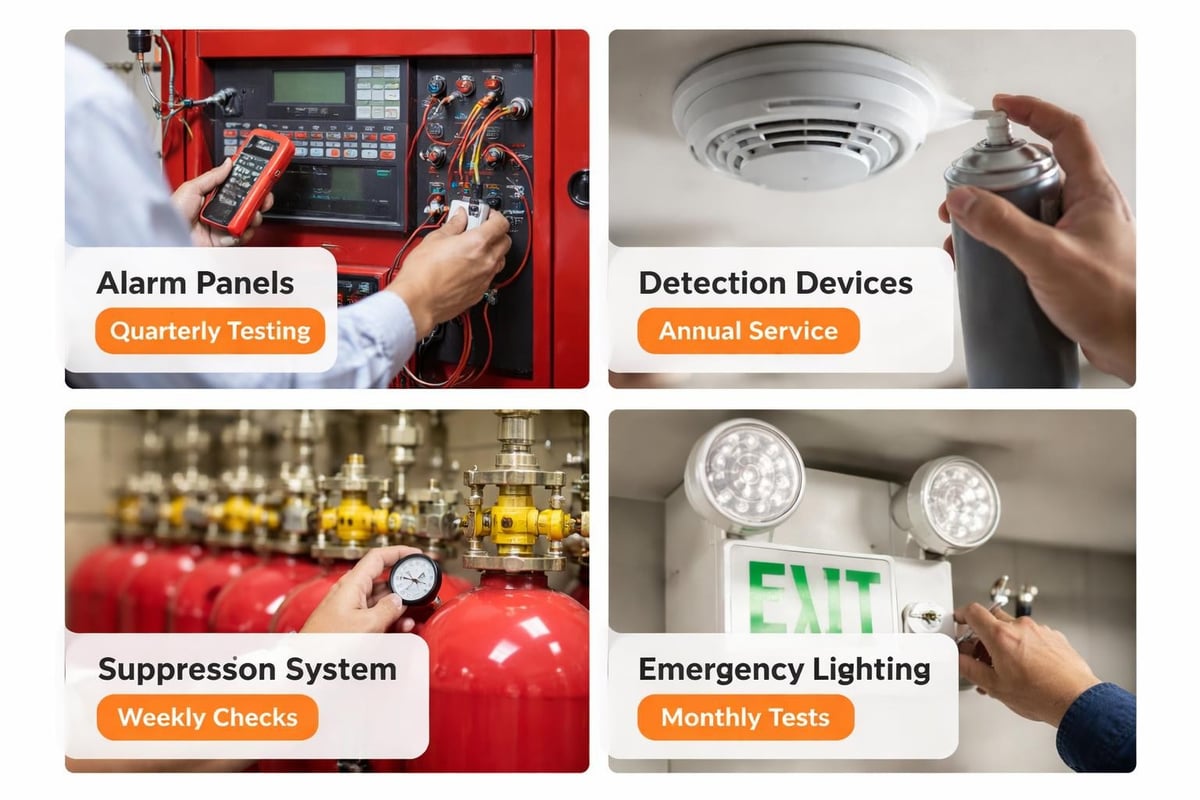
British Standards BS 5839 for fire detection and alarm systems provides detailed guidance on maintenance intervals and testing procedures. The standard specifies weekly, monthly, quarterly, and annual checks, with comprehensive documentation required at each stage.
Healthcare facilities face additional requirements, as outlined in fire safety requirements for healthcare facilities, which emphasise enhanced protection measures for vulnerable populations. Similar elevated standards apply to educational institutions, hospitality venues, and high-occupancy buildings.
Frequency and Scheduling of Fire System Service
Establishing an appropriate service schedule forms the foundation of effective fire safety management. Different system components require varying attention levels, from daily automated checks to comprehensive annual inspections.
| Service Interval | Components Covered | Typical Activities |
|---|---|---|
| Weekly | Control panels, fault indicators | Visual checks, log review, battery status |
| Monthly | Emergency lighting, alarm sounders | Function tests, manual activation checks |
| Quarterly | Full system operation, zone testing | Detector testing, panel functionality, documentation |
| Annual | Complete system audit | Full servicing, component replacement, certification |
| Biannual/Five-yearly | Suppression systems, extinguishers | Pressure testing, recharging, replacement |
Weekly Monitoring and Checks
Although not always classified as formal fire system service, weekly monitoring provides early warning of potential issues. Many organisations implement automated monitoring systems that continuously track panel status, detector functionality, and power supply integrity.
Staff should conduct brief visual inspections of control panels, checking for fault indicators or warning messages. This simple practice often identifies problems before they compromise system effectiveness. Fire alarm monitoring services provide continuous oversight, alerting responsible personnel immediately when anomalies occur.
Quarterly Professional Servicing
Quarterly fire system service represents the minimum acceptable frequency for most commercial installations. During these visits, qualified engineers conduct comprehensive testing that extends beyond basic functionality checks.
Engineers test representative samples of detectors across all zones, verify alarm transmission to monitoring stations, and assess the performance of auxiliary systems. Detailed records document all findings, with any deficiencies highlighted for immediate rectification. Following fire equipment servicing guidelines ensures consistency and compliance with regulatory expectations.
Essential Components of Comprehensive Fire System Service
Professional fire system service follows systematic procedures designed to evaluate every critical function. Understanding what technicians examine during service visits helps organisations appreciate the value of regular maintenance.
Detection System Testing and Calibration
Detection devices form the frontline of fire protection, yet environmental factors gradually degrade their sensitivity. Dust accumulation, airborne contaminants, and component ageing all compromise detector performance.
During fire system service, engineers use specialist equipment to verify each detector’s response characteristics:
- Smoke detectors are tested using approved aerosol products that simulate smoke particles
- Heat detectors undergo thermal response testing to confirm activation temperatures
- Beam detectors receive alignment checks and obscuration testing
- Multi-sensor devices are evaluated for both smoke and heat response parameters
Detectors showing degraded performance are cleaned, recalibrated, or replaced as necessary. This preventative approach maintains optimal sensitivity whilst reducing false alarm incidents.
Control Panel and Communication Testing
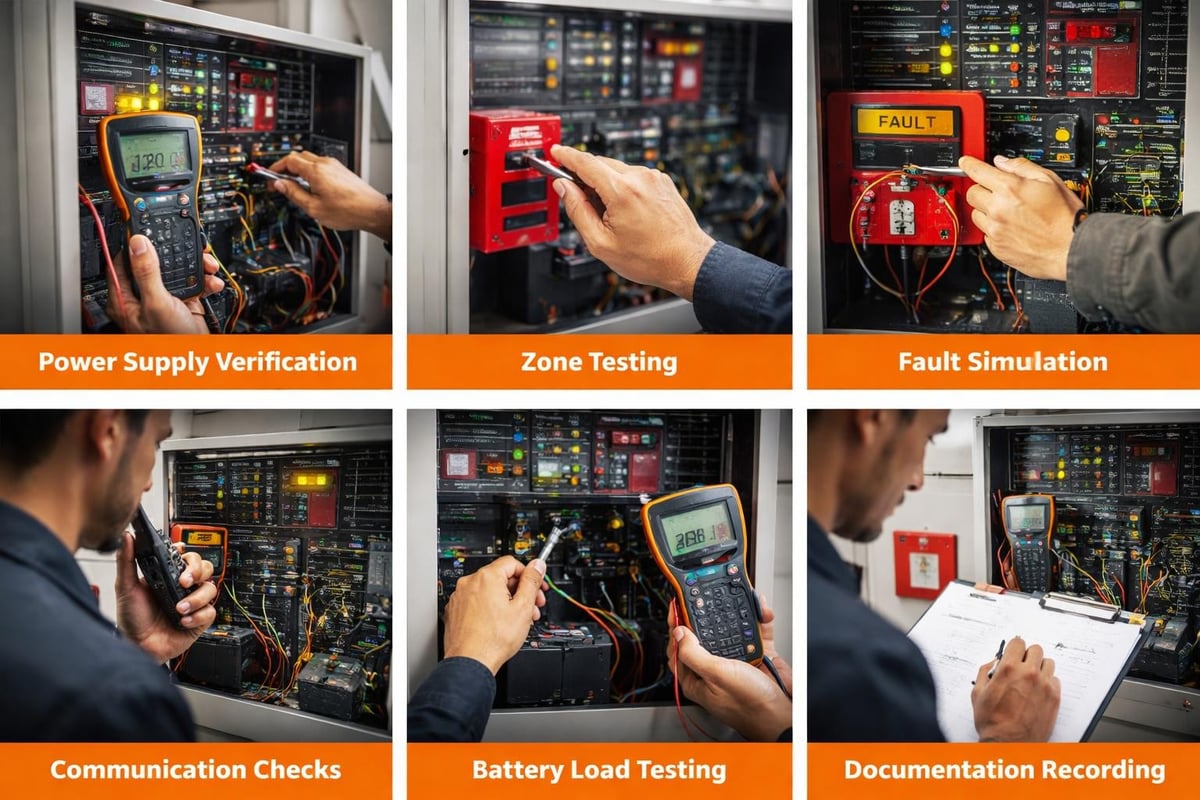
The fire alarm control panel orchestrates all system functions, making its reliable operation absolutely critical. Service engineers systematically verify:
- Power supply integrity including mains input and battery backup capacity
- Zone circuit continuity ensuring all detection loops remain intact
- Fault reporting accuracy confirming the panel correctly identifies and displays issues
- Output device operation verifying sounders, beacons, and ancillary equipment activation
- Communication pathways to remote monitoring stations and building management systems
Battery backup systems receive particular attention, as degraded batteries represent a common failure point. Load testing confirms batteries can sustain the system during extended mains power outages.
Suppression System Maintenance
Buildings equipped with automatic suppression systems require specialist fire system service addressing hydraulic, pneumatic, and mechanical components. Fire sprinkler system maintenance best practices emphasise regular inspection intervals and proactive component replacement.
Sprinkler systems demand careful attention to water supply reliability, valve positions, and pipework integrity. Service engineers conduct flow tests, inspect sprinkler heads for corrosion or obstruction, and verify control valve operation. Detailed hydraulic calculations confirm the system can deliver adequate water volume and pressure across all coverage zones.
Gas suppression systems serving IT facilities, archives, or specialist equipment areas require equally rigorous servicing. Engineers verify gas cylinder pressure, check nozzle positioning, and test control sequences without discharge. These systems protect irreplaceable assets, making their reliable operation essential.
Documentation and Compliance Records
Thorough documentation forms an integral part of professional fire system service. Regulatory authorities, insurance providers, and safety auditors all require comprehensive service records demonstrating ongoing maintenance compliance.
Service Certificates and Log Books
Following each fire system service visit, engineers issue certificates detailing all work performed, components tested, and any deficiencies identified. These documents must be retained as part of the building’s fire safety documentation.
Well-maintained log books provide invaluable historical records, revealing patterns of component failure, recurring faults, or environmental factors affecting system performance. This information guides preventative maintenance strategies and informs decisions about system upgrades or replacements.
Many organisations now utilise digital documentation systems that centrally store service records, generate automatic reminders for upcoming maintenance, and provide instant access during audits. This approach streamlines compliance management whilst reducing administrative overhead.
Defect Management and Remediation
When fire system service identifies deficiencies, prompt remediation becomes essential. Service contracts typically categorise defects by severity:
| Defect Category | Description | Remediation Timeframe |
|---|---|---|
| Critical | Complete system failure or significant coverage gaps | Immediate (within 24 hours) |
| Major | Partial system impairment affecting specific zones | Within 7 days |
| Minor | Component degradation not immediately affecting operation | Within 30 days |
| Advisory | Recommendations for improvement or future attention | Scheduled appropriately |
Professional service providers maintain systems ensuring critical defects receive immediate attention, often providing temporary measures whilst permanent repairs are arranged. This responsive approach minimises risk exposure and maintains continuous protection.
Specialist Fire System Service Requirements
Different building types and protection technologies demand specialist knowledge and equipment. Understanding these variations helps organisations select appropriately qualified service providers.
High-Sensitivity Detection Systems
Data centres, telecommunications facilities, and clean rooms often employ very early warning aspirating smoke detection (VESDA) systems. These sophisticated installations require specialist fire system service from engineers trained in their unique characteristics.
Aspirating systems continuously sample air through networks of small-bore pipes, detecting smoke particles at extremely low concentrations. Service procedures include pipe network integrity testing, detector calibration using certified smoke sources, and filter replacement. The sensitivity that makes these systems invaluable also makes them susceptible to contamination, requiring careful maintenance protocols.
Integrated Building Management Systems
Modern commercial properties frequently integrate fire systems with broader building management platforms. This integration enhances operational efficiency but adds complexity to fire system service requirements.
Service engineers must understand how fire systems interact with HVAC controls, access systems, and commercial CCTV infrastructure. Testing procedures verify that fire alarm activation triggers appropriate responses across all integrated systems, such as HVAC shutdown, access door release, and elevator recall.
Selecting a Fire System Service Provider
The competence and reliability of your fire system service provider directly impacts safety outcomes. Organisations should evaluate potential providers against multiple criteria before making selection decisions.
Qualifications and Accreditations
Reputable fire system service providers maintain third-party certifications demonstrating technical competence and quality management:
- NSI Gold or BAFE SP203-1 accreditation for fire alarm systems
- FIA membership indicating adherence to Fire Industry Association standards
- Manufacturer approvals for servicing specific equipment brands
- ISO 9001 quality management certification
These accreditations require providers to maintain qualified engineering staff, follow documented procedures, and participate in regular audits. Checking a provider’s quality and accreditations helps ensure service delivery meets professional standards.
Response Times and Support Availability
Fire system failures demand rapid response to restore protection quickly. Service level agreements should specify maximum response times for different fault categories, with critical issues typically requiring attendance within hours rather than days.
24/7 support availability ensures assistance is accessible whenever problems arise. Many providers offer remote diagnostic capabilities, allowing engineers to assess faults and prepare appropriate parts before site attendance, reducing downtime.
Technical Expertise Across System Types
Commercial premises often incorporate multiple fire protection technologies, from conventional alarm panels to advanced gas suppression systems. Selecting a provider with broad technical capabilities simplifies service management and ensures consistent quality across all systems.
Providers should demonstrate experience with your specific system types and building use classification. Healthcare facilities, manufacturing plants, and retail environments each present unique challenges requiring relevant expertise.
Cost Considerations and Service Contracts
Fire system service represents an ongoing operational expense that organisations must budget appropriately. Understanding cost structures and contract options helps optimise value whilst maintaining compliance.
Fixed-Price Service Agreements
Many organisations prefer fixed-price annual contracts covering all scheduled maintenance visits. This approach provides budget certainty and typically includes:
- Quarterly or biannual inspection and testing visits
- Emergency callout coverage with defined response times
- Minor component replacement (batteries, detectors, etc.)
- Comprehensive documentation and certification
- Remote monitoring services
Fixed-price agreements often prove more economical than ad-hoc service arrangements, particularly for larger installations requiring frequent attention. Providers can schedule visits efficiently, reducing travel costs and passing savings to clients.
Reactive Maintenance and Parts
Most service contracts exclude major component replacement and repair work arising from equipment failure or damage. These costs are typically charged separately, either at agreed hourly rates plus parts, or through quotation for specific work.
Understanding what’s included in baseline service contracts versus additional charges prevents unexpected costs. Transparent providers clearly specify inclusions and exclusions, with pricing schedules for common replacement components.
Long-Term Partnership Benefits
Establishing long-term relationships with fire system service providers yields multiple advantages beyond cost considerations. Engineers develop intimate knowledge of your systems, identifying emerging issues before they escalate into failures.
Providers can advise on system upgrades, technology improvements, and regulatory changes affecting your obligations. This consultative approach adds value beyond basic servicing, helping organisations optimise fire safety strategies whilst controlling costs. Following fire protection engineering standards ensures consistency with broader industry practices.
Emerging Technologies in Fire System Service
The fire protection industry continues evolving, with technological advances transforming both systems themselves and how fire system service is delivered. Understanding these developments helps organisations plan future-proof strategies.
Cloud-Based Monitoring and Diagnostics
Modern fire systems increasingly incorporate internet connectivity, enabling continuous remote monitoring and diagnostic capabilities. Service providers can access system status in real-time, identifying faults immediately and often resolving issues remotely without site visits.
Cloud platforms aggregate data across multiple sites, revealing performance trends and predicting component failures before they occur. This predictive maintenance approach reduces emergency callouts whilst improving system reliability.
Advanced Analytics and Reporting
Sophisticated analytics platforms process fire system data to generate actionable insights. Organisations can review alarm history, identify false alarm patterns, and assess system utilisation across their estate.
These capabilities support informed decision-making about system modifications, staff training needs, and resource allocation. Regular performance reporting demonstrates compliance to stakeholders whilst highlighting opportunities for improvement.

Training and Competency Requirements
Effective fire system service depends on qualified engineers with appropriate training and experience. Understanding competency requirements helps organisations verify their service provider maintains adequate standards.
Certification and Continuing Development
Fire alarm engineers should hold recognised qualifications such as:
- FIA qualifications covering fire detection and alarm system installation and maintenance
- Manufacturer-specific training for the systems they service
- Electrical competency appropriate to the complexity of work undertaken
- Health and safety certification including working at height where relevant
Reputable providers invest in continuing professional development, ensuring engineers remain current with evolving technologies, standards, and regulations. Regular training updates maintain technical competence across the engineering team.
Site-Specific Training and Familiarisation
Complex installations benefit from site-specific training ensuring engineers understand unique characteristics, bespoke configurations, and operational nuances. This familiarity enables more efficient servicing and reduces the risk of errors during testing or maintenance.
Organisations should expect service providers to maintain detailed system documentation including as-fitted drawings, configuration records, and operational procedures. This information supports consistent service delivery even when different engineers attend site.
Integration with Broader Fire Safety Management
Fire system service represents just one element of comprehensive fire safety management. Organisations must integrate technical servicing with wider safety strategies including risk assessments, staff training, and emergency planning.
Coordination with Fire Risk Assessments
Regular fire risk assessments identify hazards, evaluate existing controls, and recommend improvements. Fire system service findings should inform risk assessment reviews, whilst assessment recommendations may drive system modifications or enhanced servicing requirements.
This integrated approach ensures fire protection measures remain appropriate to evolving risks as organisations change operational practices, building layouts, or business activities. Working with fire risk assessment companies experienced in your sector provides valuable insights beyond basic compliance.
Emergency Lighting and Ancillary Systems
Fire system service often coincides with maintenance of related safety systems including emergency lighting, fire door inspections, and fire extinguisher servicing. Coordinating these activities through a single provider streamlines service management and ensures comprehensive protection coverage.
Understanding fire prevention standards and guidelines helps organisations implement holistic fire safety strategies addressing prevention, detection, and suppression in balanced measures. Following fire safety maintenance regulations ensures all required elements receive appropriate attention.
Special Considerations for Critical Infrastructure
Facilities where fire system failures could have catastrophic consequences require enhanced fire system service protocols. These environments demand heightened reliability, redundancy, and specialist expertise.
Data Centres and IT Facilities
Data centres house irreplaceable information and provide services supporting entire organisations or customer bases. Fire protection for these environments typically employs gas suppression systems that extinguish fires without water damage to sensitive equipment.
Service protocols must accommodate continuous operation requirements, with testing and maintenance scheduled to minimise disruption. Many facilities maintain dual suppression systems, allowing one to undergo maintenance whilst the other remains operational. Understanding best practices for fire pump system installation ensures water supply systems supporting sprinklers or cooling meet exacting standards.
Healthcare Environments
Hospitals and care facilities present unique fire safety challenges due to patient vulnerability and evacuation difficulties. Fire system service must account for infection control requirements, 24/7 operational demands, and regulatory standards specific to healthcare settings.
Service engineers require enhanced background checks and may need specific training covering healthcare environment protocols. Testing procedures must minimise disruption to patient care whilst ensuring thorough verification of all protection measures.
Future-Proofing Fire Protection Investments
Technology evolution, changing regulations, and shifting business requirements mean fire systems installed today must adapt to tomorrow’s needs. Strategic fire system service planning considers long-term sustainability alongside immediate compliance.
System Lifecycle Planning
Fire detection and alarm systems typically operate effectively for 10-15 years before requiring replacement. However, component obsolescence, changing standards, and emerging technologies may prompt earlier upgrades.
Regular fire system service provides opportunities to assess system condition, identify ageing components, and plan replacement strategies. Proactive lifecycle planning prevents unexpected failures whilst allowing budget allocation for major renewals.
Scalability and Expansion Capability
Growing organisations need fire systems that accommodate expansion without complete replacement. Modern addressable systems offer considerable scalability, allowing additional detection zones and devices to integrate seamlessly with existing infrastructure.
Service providers should advise on expansion capabilities during routine maintenance, identifying when approaching system capacity limits or when additional coverage becomes necessary due to building modifications.
Professional fire system service represents an essential ongoing commitment for any commercial organisation serious about protecting life, property, and business continuity. Regular maintenance by qualified engineers ensures detection, alarm, and suppression systems function reliably whilst meeting regulatory obligations and insurance requirements. Effective servicing combines scheduled inspections, preventative maintenance, comprehensive documentation, and rapid response to emerging issues. Whether managing a single site or a diverse property portfolio, partnering with experienced specialists ensures fire protection systems deliver the performance and reliability your organisation depends upon. Logic Fire and Security provides comprehensive fire system service across the UK, supporting businesses with tailored maintenance programmes, 24/7 support, and expert guidance that keeps commercial fire protection systems operating at peak effectiveness year after year.