

Protecting commercial premises has become increasingly sophisticated as threats evolve and technology advances. An office alarm system represents the foundation of comprehensive security infrastructure, safeguarding assets, personnel, and sensitive information around the clock. Modern systems integrate multiple detection methods, communicate with monitoring centres, and provide real-time alerts that enable swift responses to emergencies. For businesses across the UK, selecting and maintaining the right alarm solution is not merely a precaution but a fundamental responsibility that impacts insurance premiums, regulatory compliance, and business continuity.
Understanding Modern Office Alarm Systems
An office alarm system comprises interconnected devices designed to detect unauthorised access, environmental hazards, and emergency situations. These systems have evolved far beyond simple door contacts and sirens. Today’s solutions incorporate intelligent sensors, wireless communication, cloud-based management platforms, and integration capabilities with other security infrastructure.
Core components of comprehensive alarm systems include:
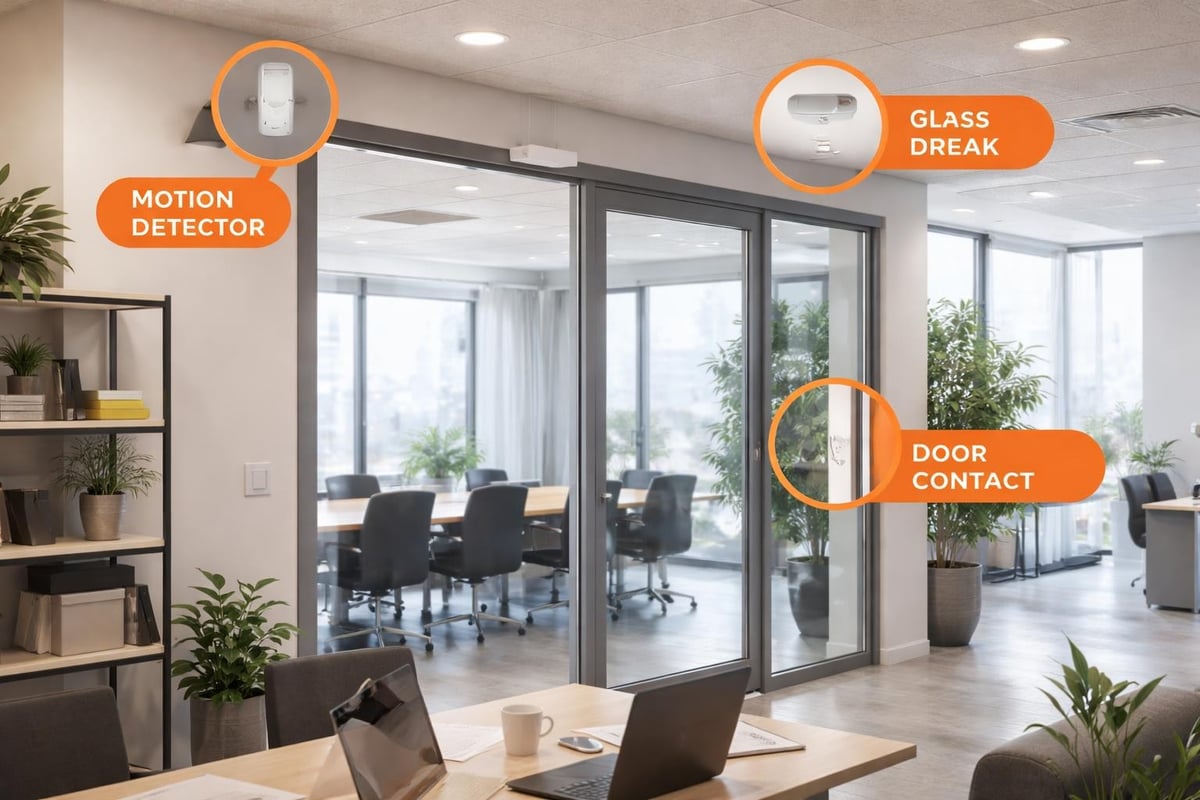
- Detection devices (motion sensors, door/window contacts, glass break detectors)
- Control panels serving as the system’s central processing unit
- Notification devices (sirens, strobe lights, voice evacuation systems)
- User interfaces (keypads, card readers, mobile applications)
- Communication pathways (telephone lines, cellular networks, internet protocols)
- Power supplies with battery backup for continuity during outages
The effectiveness of an office alarm system depends on proper component selection tailored to your specific operational requirements. Different business environments demand distinct approaches – what works for a single-storey retail unit will differ substantially from requirements for multi-floor corporate headquarters.
Modern systems frequently integrate fire alarm monitoring and intruder alarm monitoring within unified platforms, enabling coordinated responses to diverse threats.
Types of Office Alarm Systems Available
Selecting the appropriate alarm technology requires understanding the distinct categories available in the commercial security marketplace. Each type offers particular advantages suited to different operational contexts.
Wired Systems
Traditional hardwired installations provide exceptional reliability through physical connections between components. These systems excel in new construction projects where cabling can be integrated during the building phase. Wired solutions eliminate battery replacement requirements for sensors and offer superior resistance to wireless interference.
Advantages of wired office alarm systems:
- Consistent, interference-free communication
- No battery maintenance for detection devices
- Lower long-term operational costs
- Enhanced security against wireless signal jamming
However, retrofitting wired systems into existing buildings often involves significant installation costs and potential disruption to daily operations.
Wireless Systems
Wireless technology has revolutionised alarm installation, particularly for established premises. Modern wireless office alarm systems employ encrypted radio frequency communication between components, combining flexibility with robust security.
These systems facilitate rapid deployment, minimal structural modifications, and straightforward expansion as business needs evolve. The different types of office alarm systems available today offer varying wireless protocols and capabilities.
| Feature | Wired Systems | Wireless Systems | Hybrid Systems |
|---|---|---|---|
| Installation Speed | Slower | Faster | Moderate |
| Retrofit Suitability | Poor | Excellent | Good |
| Ongoing Maintenance | Minimal | Battery changes | Mixed |
| Expansion Flexibility | Limited | Excellent | Good |
| Signal Reliability | Superior | Very Good | Superior |
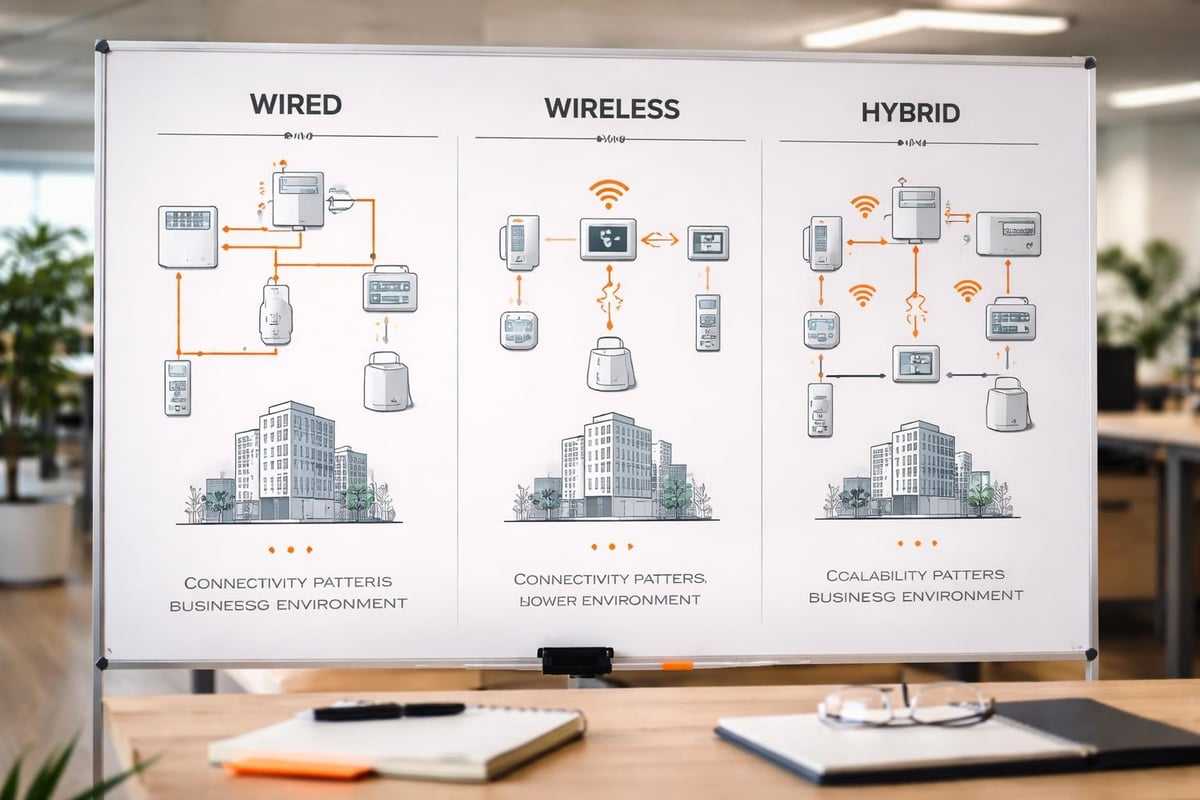
Hybrid Configurations
Many organisations benefit from hybrid approaches combining wired infrastructure for critical components with wireless devices for flexible coverage. This strategy optimises both reliability and adaptability whilst controlling installation expenditure.
Essential Features for Business Protection
An effective office alarm system must deliver specific capabilities aligned with contemporary security challenges and compliance obligations. Merely detecting intrusions represents only one dimension of comprehensive protection.
Critical features include:
- Multi-zone capability – Segregating premises into distinct areas enables selective arming, allowing cleaning crews or maintenance personnel access to specific zones whilst others remain secured
- Intelligent verification – Advanced sensors reduce false alarms through dual-technology detection, combining passive infrared with microwave sensing or video analytics
- Environmental monitoring – Temperature sensors, water leak detection, and humidity monitors protect against non-security threats that can damage inventory and equipment
- Remote management – Cloud-based platforms provide real-time system status, arm/disarm capabilities, and event history accessible from any location
- Integration readiness – Compatibility with access control entry systems and commercial CCTV creates unified security ecosystems
The six key things needed in office security alarm systems emphasise reliability, integration, and user-friendliness as non-negotiable requirements for effective business protection.
Monitoring and Response Capabilities
Professional monitoring transforms an office alarm system from a reactive noisemaker into a proactive security partner. When alarms activate, signals transmit instantly to monitoring centres staffed by trained personnel who verify incidents and coordinate appropriate responses.
24/7 monitoring services provide graduated response protocols, escalating from initial verification through emergency services dispatch when circumstances warrant. This layered approach dramatically reduces false alarm rates whilst ensuring genuine incidents receive immediate attention.
Businesses requiring continuous operational oversight benefit from comprehensive 24/7 protection services that integrate alarm response with broader security management.
Installation Considerations and Best Practices
Proper installation fundamentally determines system effectiveness. Even sophisticated technology fails when incorrectly deployed. Strategic planning before installation begins pays substantial dividends in system performance and longevity.
Comprehensive Security Assessment
Professional installations commence with thorough site surveys identifying vulnerabilities, traffic patterns, high-value assets, and environmental factors. This assessment informs sensor placement, coverage zones, and notification device positioning.
Understanding office security best practices and procedures helps organisations prepare for installation projects and establish complementary policies.
Assessment factors include:
- Building layout and architectural features
- Entry/exit points requiring monitoring
- Areas containing valuable equipment or sensitive information
- Employee movement patterns during operational hours
- Perimeter security requirements
- Environmental conditions affecting sensor performance
Sensor Placement Strategy
Motion detector effectiveness depends entirely on positioning. Installers must account for detection patterns, avoid false trigger sources, and ensure comprehensive coverage without redundant overlap.
Door and window contacts require precise alignment maintaining electrical continuity when closed. Glass break detectors need positioning within manufacturer-specified distances from protected surfaces whilst avoiding placement near noise sources that might trigger false alarms.
The best practices for alarm system installation emphasise understanding specific security needs before component selection and deployment.
Control Panel and Communication Configuration
The control panel serves as the system’s intelligence hub, processing sensor inputs and managing communication pathways. Location selection should balance accessibility for authorised users with security against tampering.
Modern panels support multiple communication methods ensuring alarm transmission even when primary pathways fail. Cellular backup, internet protocol reporting, and traditional telephone connectivity create redundant channels preventing communication failures from compromising security.
Compliance and Regulatory Requirements
UK businesses operate within regulatory frameworks governing workplace safety and emergency preparedness. An office alarm system must satisfy these obligations alongside operational security needs.
OSHA Standards and Employee Safety
Whilst OSHA regulations originate in the United States, their principles inform British workplace safety standards. OSHA’s employee alarm system requirements establish installation, maintenance, and testing standards ensuring alarm systems function reliably during emergencies.
British equivalents mandate audible and visual notification devices accommodating employees with hearing impairments. Regular testing protocols verify system functionality, with documentation requirements demonstrating ongoing compliance.
Fire Safety Integration
Office alarm systems frequently integrate with fire detection infrastructure, particularly in unified building management platforms. Fire alarm systems must meet distinct regulatory requirements beyond security alarms.
Businesses must ensure security and fire systems coordinate appropriately – security locks must release during fire emergencies, whilst fire doors remain functional without compromising intrusion detection.
| Compliance Area | Key Requirements | Testing Frequency |
|---|---|---|
| Employee Alarms | Audible/visual devices, backup power | Monthly function tests |
| Fire Integration | Door release coordination, evacuation signalling | Quarterly verification |
| Access Control | Emergency egress, panic hardware compatibility | Monthly door function |
| Communication | Redundant pathways, monitoring centre connection | Weekly transmission test |
Maintenance and System Management
An office alarm system requires ongoing maintenance ensuring continued reliability. Neglected systems deteriorate, generating false alarms whilst potentially failing during actual emergencies.
Scheduled Maintenance Protocols
Professional maintenance agreements establish regular inspection schedules addressing battery replacement, sensor cleaning, connection verification, and software updates. These preventive measures identify developing issues before they compromise security.
Essential maintenance activities include:
- Battery testing and replacement for wireless devices and backup power
- Sensor cleaning removing dust and debris affecting detection accuracy
- Connection verification for wired components
- Software updates incorporating security patches and feature enhancements
- Communication pathway testing confirming monitoring centre connectivity
- User code management removing terminated employees and updating access permissions
Organisations partnering with experienced providers benefit from comprehensive maintenance programmes preventing system degradation and ensuring regulatory compliance.
Alarm Management and False Alarm Reduction
False alarms undermine system credibility, desensitise personnel, and potentially incur fines from emergency services. Effective alarm management practices emphasise configuration optimisation and user training.
Common false alarm sources include improper user operation, environmental factors triggering sensors, and inadequate maintenance. Addressing these through staff education, strategic sensor placement, and regular testing dramatically improves system reliability.

User Training and Operational Procedures
Even sophisticated systems fail when users lack proper training. Comprehensive programmes educate employees on arming/disarming procedures, duress code usage, and appropriate responses to alarm activations.
Documentation should clearly outline operational protocols, emergency contact information, and troubleshooting procedures for common issues. Regular refresher training accommodates staff turnover and reinforces proper practices.
Integration with Broader Security Infrastructure
Contemporary office alarm systems function as components within integrated security ecosystems rather than standalone installations. This convergence amplifies protective capabilities whilst simplifying management.
Unified Platform Benefits
Integrated platforms connecting alarms with video surveillance, access control, and environmental monitoring provide comprehensive situational awareness. When intrusion alarms activate, associated cameras automatically display relevant video feeds whilst access logs identify recent entry events.
This correlation accelerates incident assessment, enabling monitoring personnel to verify threats rapidly and coordinate proportionate responses. False alarm reduction improves substantially when video verification confirms sensor activations before dispatching emergency services.
Data Integration and Analytics
Modern systems generate substantial data regarding facility usage, access patterns, and alarm events. Analytics platforms process this information identifying trends, vulnerability patterns, and operational inefficiencies.
Businesses leverage these insights optimising security policies, adjusting coverage areas, and justifying infrastructure investments with quantifiable risk assessments. Integration with fire risk assessment processes creates comprehensive risk management frameworks.
Selecting the Right Provider
Provider selection significantly impacts system performance, reliability, and long-term satisfaction. Businesses should evaluate potential partners across multiple dimensions beyond initial equipment costs.
Critical selection criteria include:
- Industry experience and project portfolio demonstrating relevant expertise
- Manufacturer certifications validating technical competency
- Monitoring centre capabilities and redundancy provisions
- Maintenance programme comprehensiveness and response guarantees
- Integration capabilities supporting existing infrastructure
- Regulatory compliance knowledge ensuring installations meet applicable standards
Organisations should request detailed proposals outlining equipment specifications, installation timelines, training provisions, and ongoing support arrangements. Reference checks with existing clients provide valuable insights into real-world performance and service quality.
Technology Trends Shaping Future Systems
Office alarm systems continue evolving as technology advances and threat landscapes shift. Understanding emerging trends helps businesses future-proof security investments.
Artificial Intelligence and Machine Learning
AI-powered analytics enhance detection accuracy by learning normal facility patterns and identifying anomalous behaviours. These systems distinguish between authorised after-hours access and suspicious activity, reducing false alarms whilst improving threat detection.
Machine learning algorithms continuously refine performance based on operational experience, adapting to changing usage patterns without manual reprogramming.
Cloud-Based Management Platforms
Cloud infrastructure delivers scalable management capabilities accessible from anywhere with internet connectivity. Businesses manage multi-site installations through unified dashboards, standardise configurations across locations, and access comprehensive reporting without maintaining local servers.
Cloud platforms facilitate rapid deployment, automatic software updates, and simplified expansion as organisations grow.
Mobile Integration and Remote Control
Smartphone applications provide unprecedented system control, enabling authorised personnel to arm/disarm remotely, receive instant notifications, and review event histories. This flexibility supports modern work arrangements whilst maintaining security during non-traditional hours.
Enhanced Cybersecurity Measures
As office alarm systems incorporate network connectivity, cybersecurity becomes paramount. Modern installations employ encryption, secure authentication, and network segmentation protecting against digital threats that could compromise physical security.
Regular security audits, firmware updates, and penetration testing ensure systems resist evolving cyber attacks targeting connected infrastructure.
Cost Considerations and Investment Planning
Office alarm system expenses extend beyond initial equipment purchases. Comprehensive budgeting accounts for installation, monitoring fees, maintenance contracts, and eventual upgrades.
| Cost Component | Typical Range | Frequency | Notes |
|---|---|---|---|
| Equipment & Installation | £2,000-£15,000+ | One-time | Varies by premises size and complexity |
| Professional Monitoring | £25-£100/month | Monthly | Depends on service level and response options |
| Maintenance Contracts | £200-£800/year | Annual | Preventive maintenance and priority support |
| Replacement Parts | £100-£500/year | As needed | Batteries, sensors, communication devices |
Whilst initial costs appear substantial, effective systems deliver return through reduced insurance premiums, loss prevention, and business continuity assurance. Many insurers mandate certified alarm systems, with monitoring services, as policy conditions for commercial properties.
Businesses should evaluate total cost of ownership across expected system lifecycles (typically 7-10 years) rather than focusing exclusively on upfront expenditure. Quality installations from reputable providers often prove more economical long-term than budget alternatives requiring frequent repairs and premature replacement.
Scalability and Future Expansion
Business growth necessitates security infrastructure adaptation. Office alarm systems should accommodate expansion without requiring complete replacement.
Wireless systems offer inherent scalability, adding detection points and coverage areas through simple device pairing. Even wired installations benefit from strategic initial design reserving control panel capacity and providing cabling infrastructure supporting future zones.
Multi-site organisations require systems supporting centralised management whilst accommodating location-specific requirements. Cloud-based platforms excel in these scenarios, providing unified visibility across distributed operations without complex networking configurations.
Partnering with providers offering comprehensive commercial security systems ensures access to expertise supporting evolving requirements as businesses develop.
An effective office alarm system forms the cornerstone of comprehensive business protection, safeguarding personnel, assets, and operations against diverse threats. From initial assessment through installation, maintenance, and ongoing management, success depends on strategic planning, quality components, and professional expertise. Logic Fire and Security delivers integrated fire and security solutions tailored to UK businesses, combining advanced technology with decades of experience serving Blue Chip companies and public agencies. Contact our team today to discuss how customised alarm systems can enhance your organisation’s security posture and regulatory compliance.